This is a book about a love affair, one that ran so deep it yielded thousands of watercolours, hundreds of oil paintings and three illustrated books. The painter Robert Lee Eskridge (1891-1975) first visited the South Seas in May 1927, when his ship pulled into the harbour of Papeete, Tahiti. Seeking respite from the grey skies and bone-chilling winters of Chicago, he was instantly smitten and kept returning to the South Seas, eventually making his home in Honolulu, Hawai’i.
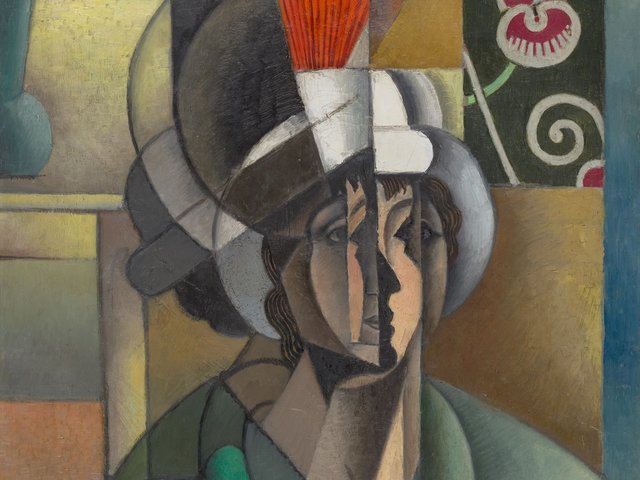
Little in Eskridge’s early life had predicted that infatuation. Born in Philadelphia, he attended the Art Institute of Chicago, studied in Paris with the Cubist painter André Lhote, and travelled across Europe for three years. His style, fusing Art Deco patterns with a form of relaxed realism, won him gigs as an illustrator and artist, culminating in a high-profile commission to produce murals for the lobby of the newly rebuilt Palmer House hotel in Chicago. On the eve of his departure for Tahiti, he chose Marco Polo as his subject. (The murals were painted over in 1966.)
Honouring rich traditions
Falling in love with the South Seas is not a unique experience. Names like Herman Melville, Robert Louis Stevenson and Paul Gauguin conjure lush tropical forests, foam-crested waves lapping pristine beaches, and carefree Islanders performing hula dances: a vision inevitably darkened by the damages wrought by colonialism. The Islanders Eskridge painted, unlike Gauguin’s, are not immobilised by the artist’s desire to project meaning into them. They are walking, working, dancing, fishing and making music, living fully in the present even as they honour their rich traditions.
Eskridge’s enthusiasm for Islander culture finds a perfect match in biographer Cook’s enthusiasm for Eskridge. While the more lyrically effusive passages in this volume might not appeal to everyone, the lavish illustrations drawn from multiple collections and the excellent captions help us understand the breadth, range and sophistication of a supremely adaptable painter who deserves to be better known. (Regrettably, some images—of the lost Chicago murals, for example—are AI-produced).
Eskridge’s paintings, whether they show bustling street scenes or re-create rituals he witnessed, vibrate with life. As a young man, he was entranced with Sandro Botticelli’s The Birth of Venus (around 1485, in the Uffizi Gallery), and that painting’s revelatory spirit lingers on in Eskridge’s bright, luminous colours or in the way he arranges groups of people around a central figure or an activity.
His training under Lhote shapes the cascading abstract forms Eskridge uses in the background of works such as Stone Fishing (around 1930, Gallery Hawaiiana). In this ancient Polynesian fishing practice, men use ropes with stones to herd leaping fish into shallower waters—a communal effort as well as an occasion for individual daring, represented here beautifully by the young man in the middle, who jumps to grab a fish from the air. A later masterpiece is Hilo Wharf (around 1949, Honolulu Museum of Art), a harbour scene, in which Eskridge blends shirtless workers and the bodies of gigantic tuna fish, some already packed up, into an intense drama of shapes, colour and movement.
Since Eskridge treated the Islanders and their culture with respect, they accepted him as one of their own
Since Eskridge treated the Islanders and their culture with respect, they accepted him as one of their own, Cook tells us. They even asked Eskridge to represent them at the Chicago World’s Fair in 1933. Invitations followed to provide Hawaiian-themed murals for the McCoy Pavilion in Honolulu’s Ala Moana Park and, later, to design clothes for the Hawai’ian label Paradise Sportswear.
Always one to defy expectations, Eskridge, at age 64, married Helen Gebhardt and settled in Olympia, Washington. But the Islands kept calling. He died in April 1975 at a hotel in Honolulu named, appropriately, Hale-kulani, “house befitting heaven”.
• C.J. Cook, Robert Lee Eskridge, South Pacific Dreams Publishing, 344pp, 509 col. illust., $59.95 (hb), published 11 August
• Christoph Irmscher is a critic and biographer