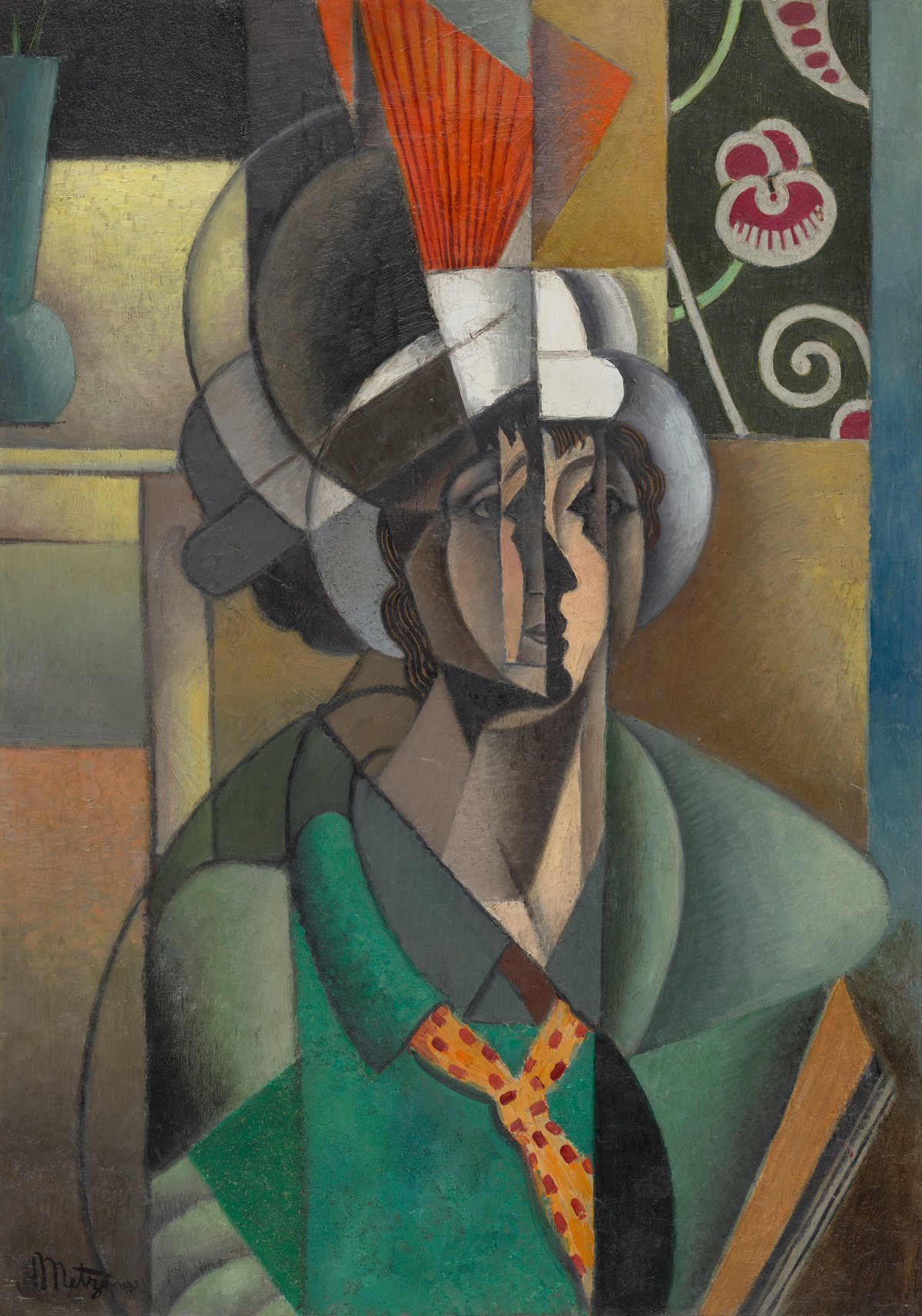
The Art Institute of Chicago has agreed to restitute a painting by Jean Metzinger to the heirs of Emanuel Lewenstein, a Jewish art collector whose family was persecuted by the Nazis in the occupied Netherlands.
The 1913 painting, Woman With a Fan, was auctioned in October 1940 in Amsterdam, months after the Nazi invasion of the Netherlands. Although the exact circumstances of the sale and the identity of the consignor are not known, the Art Institute of Chicago concluded that it was sold as a result of Nazi persecution, says Jacques Schuhmacher, the museum’s head of provenance research.
“In the absence of any evidence to the contrary, it’s appropriate to view the sale as a result of Nazi persecution and therefore a forced sale: it was either confiscated or sold under pressure,” Schuhmacher says.
Metzinger, a leading Cubist theorist, painted Woman With a Fan while he was living in Paris. Paul Citroen, a dealer and a relative of Lewenstein, acquired it in 1919. Lewenstein, the director of a sewing-machine company, bought the painting from Citroen in 1928.
After Lewenstein’s death, his widow is thought to have deposited the painting, along with a number of other works, at the Stedelijk Museum for safekeeping. By the time of the 1940 auction, she had died and Lewenstein’s children had emigrated. The Art Institute of Chicago acquired Woman With a Fan in 1959 from a New York gallery.
Schuhmacher says that as well as conducting extensive archival research, the Art Institute of Chicago’s provenance research team examined the back of the painting. Faint pencil marks on the back, illegible to the naked eye, were inspected using infrared photography. The name of Paul Citroen could then be discerned. Given that he was Lewenstein’s main art supplier, “that allowed us to establish a connection between this painting and the Lewenstein family”, Schuhmacher says.
Stuart Eizenstat, the US official who instigated the 1998 Washington Principles on Nazi-looted art, congratulated the Art Institute of Chicago and described its cooperation with the representatives of Lewenstein’s heirs as “a model for how a museum should apply research, provenance and restitution practices”.
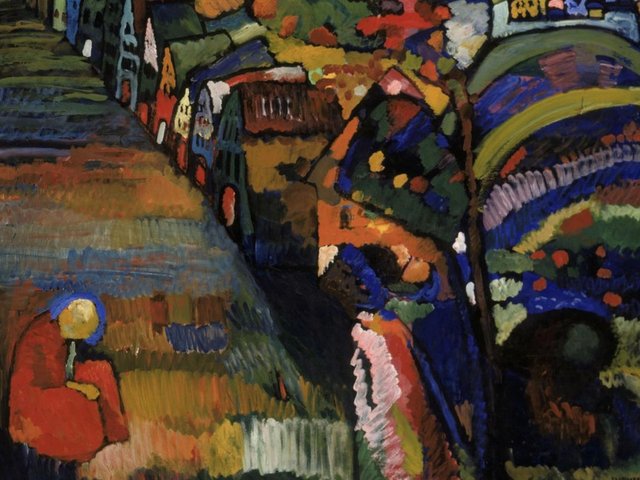
Another painting from the 1940 Amsterdam sale that was restituted to the Lewenstein family, Wassily Kandinsky’s The Colourful Life (1907), is set to be a highlight at Christie’s 20th- and 21st-century evening auction in London on 14 October. The painting was on show at Munich’s Lenbachhaus for more than 50 years. Christie’s expects it to raise more than $30m. The Lewenstein family is still seeking around 100 missing works, according to James Palmer, the founder of Mondex Corporation, which specialises in recovering Nazi-looted art.
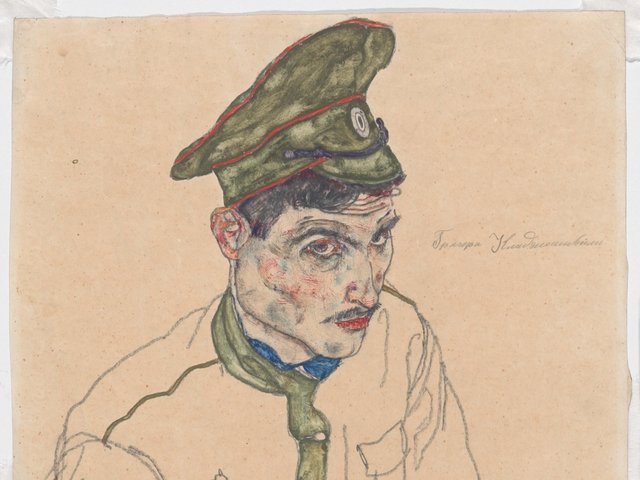
In a separate restitution case concerning the Art Institute of Chicago, a New York appeals court found that investigators overstepped their authority in seizing a drawing by Egon Schiele from the museum’s collection.
In its 17 September decision, the court said that a lower court should not have authorised the Manhattan district attorney’s office to seize the 1916 drawing, Russian War Prisoner, on the basis of the penal code, because criminal law should not be applied in ownership disputes.
“Ultimately, Penal Law § 450.10(5) was designed to provide an expedient means for the return of stolen property to the readily identifiable owner of that property; it was not designed to address complicated, disputed issues of ownership,” the court said.
The decision delivers a blow to the Manhattan district attorney’s office, which, the court said, has cited the penal code in 100 other such seizures.