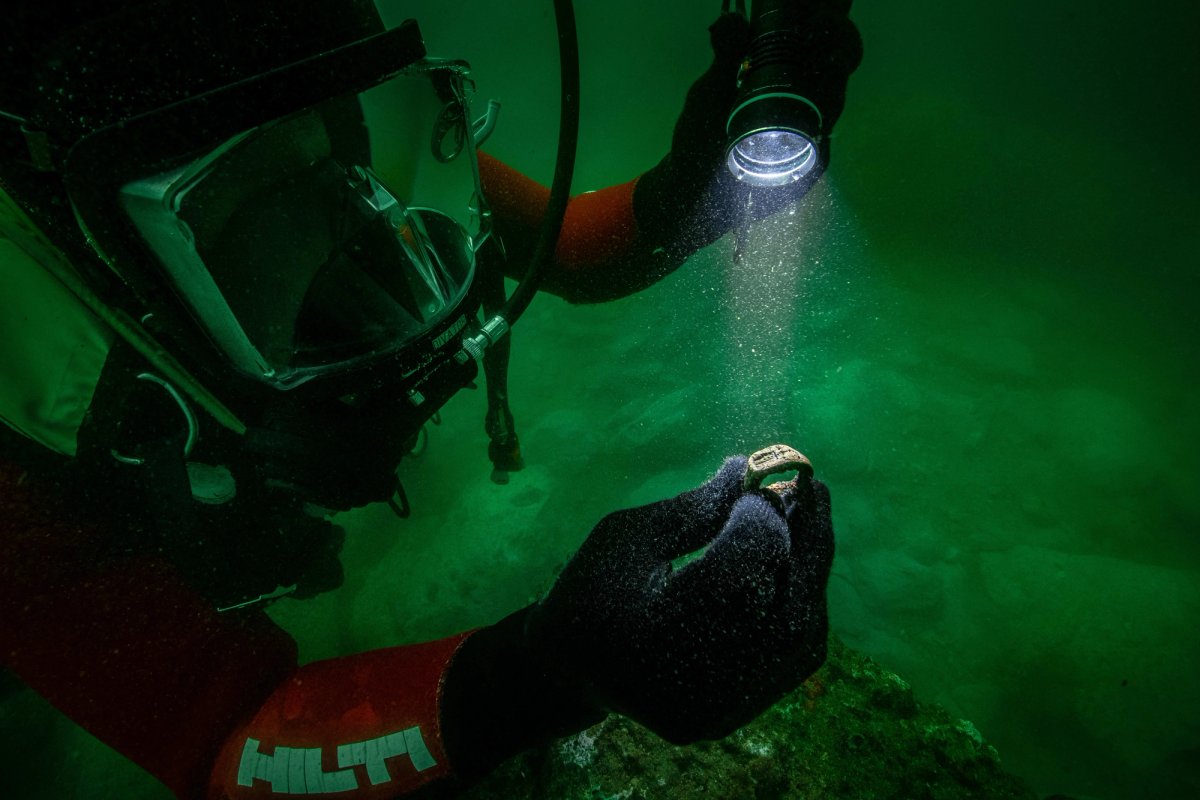
A bronze signet ring depicting the Lighthouse of Alexandria—one the seven wonders of the ancient world—has been discovered on the submerged Royal Island of Antirhodos, in what was once the royal quarters of Alexandria’s Portus Magnus (Great Harbour). The ring, the only of its kind known to exist, was found during underwater excavations by the European Institute for Underwater Archaeology (IEASM) under the direction of Franck Goddio.
“The discovery of the ring-signet is even more important as it has been excavated in the legendary palace of the Island of Antirhodos, that once was a centre of power,” Franck Goddio said in a statement. The statement added that the find demonstrates that the palace—which was visited by the ancient Greek geographer Strabo during his travels to Egypt between 29 and 25 BC—once comprised “offices for administrative functions, including the administration of the famous lighthouse”.
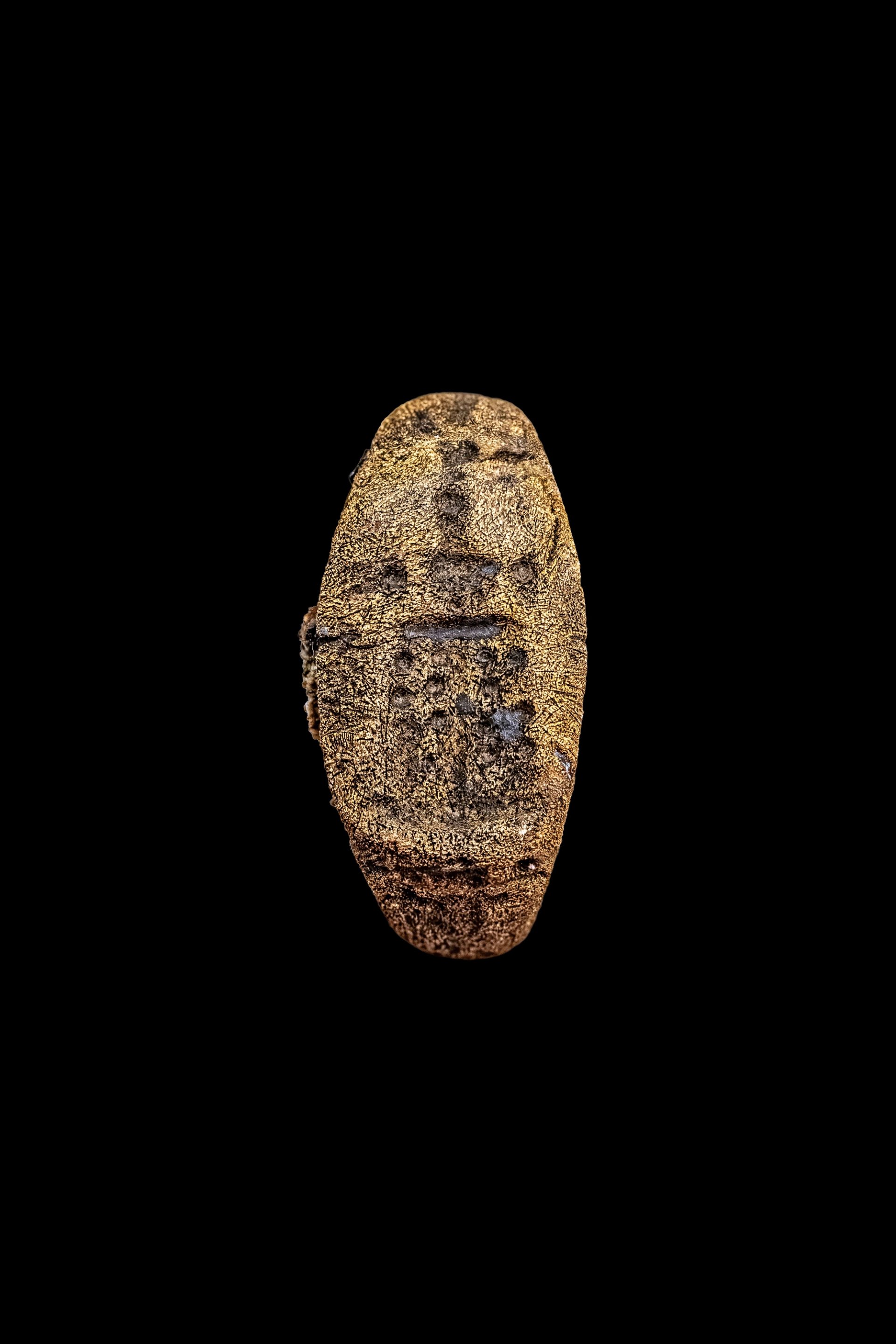
The engraving on the signet ring matches some images of the lighthouse found on coins, according to the Egyptian ministry for tourism and antiquities
Photo: Christoph Gerigk ©Franck Goddio/Hilti Foundation
The underwater archaeological mission of the European Institute for Underwater Archaeology (IEASM) is supported by the Hilti Foundation and is conducted in collaboration with the Egyptian ministry for tourism and antiquities. Excavations on the Royal Island of Antirhodos, the statement says, have over time been revealing architectural remains across an area of several thousand square metres.
In a statement on social media, the ministry said: “The discovery is exceptional, as it is the first time that a picture of the lighthouse has been found engraved on a seal ring, and the shape of the engraving matches known images of the lighthouse on some coins dating back to the second century AD.”
It adds that Sherif Fathi, Egypt’s minister of tourism and antiquities, inspected the excavation work, which additionally uncovered a set of pottery and glass artefacts dating back to the fourth century BC to the fourth century AD.
According to some historical descriptions, the lighthouse was once surmounted by a huge statue, possibly representing either Alexander the Great or Ptolemy I Soter in the form of the sun god Helios. In the Middle Ages, Ahmed ibn Touloun replaced the lighthouse’s beacon with a small mosque, but the entire structure was destroyed by an earthquake in the 14th century. Later in 1477 the Mamlūk sultan Qāʾit Bāy built a fort from its ruins.
According to Hector Williams, an archaeologist and maritime historian at the University of British Columbia who has visited the site several times, “this little ring matches descriptions of the lighthouse as well as representations believed to be of it on ancient mosaics and small objects like terracotta lamps”.
“It is a most interesting and important discovery,” he tells The Art Newspaper. “But until we get a detailed account of just where it was found and whether it was in a dateable context (ie to give us an approximate date) its full importance won't be known.”