The Abstract Expressionist power couple Jackson Pollock (1912-56) and Lee Krasner (1908-84) met in 1941, while preparing for the same group show in New York. When Krasner saw the list of artist names, Pollock’s was the only one she did not recognise, so she paid him a visit at his studio to introduce herself. By the time the exhibition opened, the two were already dating.
“We always knew that Krasner was a great artist who was overshadowed by her famous husband,” says David Breslin, the show’s curator. “But if you look at her reputation in the 1930s and 40s, she was very well connected. There was a real social dynamic to her work, which helped Pollock a lot.”
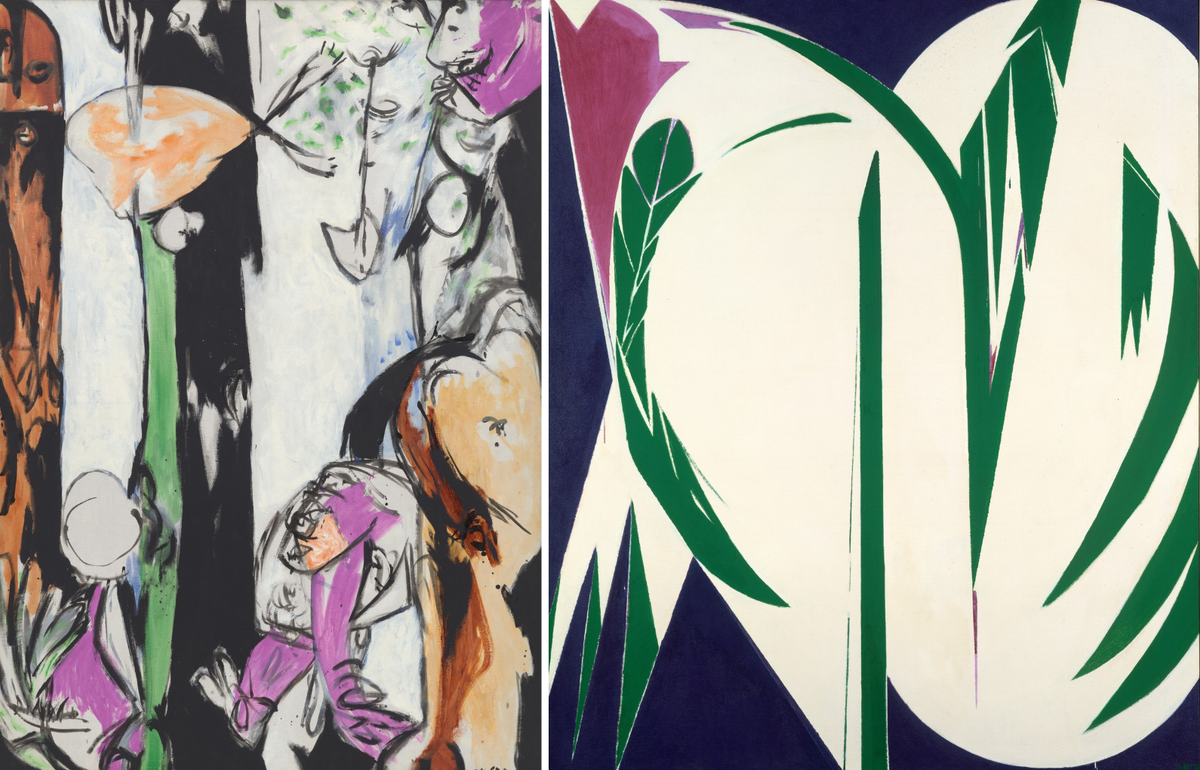
Breslin and Brinda Kumar, his co-curator, explore the complex relationship between the two artists, both personal and professional, in the show Krasner and Pollock: Past Continuous at the Metropolitan Museum of Art this month. Spanning more than 120 paintings, works on paper and ephemera—some from private collections and rarely shown in public—this is the museum’s first major exhibition devoted to either artist. It is also the first show to present their full careers side-by-side, rather than concentrating on their comparatively short time together on Long Island.

One of Jackson Pollock’s “drip” paintings, Autumn Rhythm: Number 30 (1950) © 2026 Pollock-Krasner Foundation/Artists Rights Society (ARS), New York
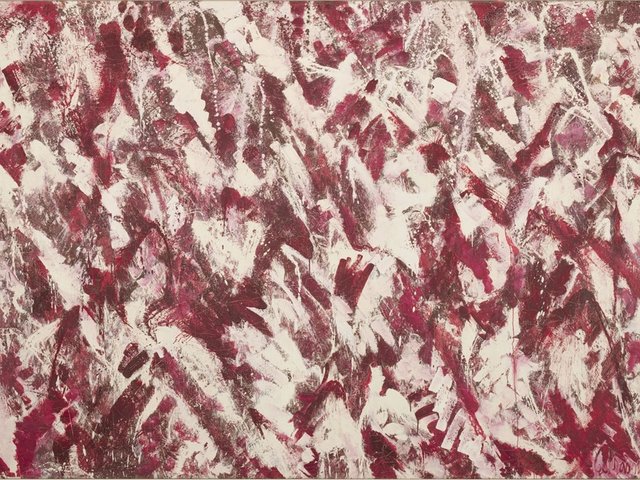
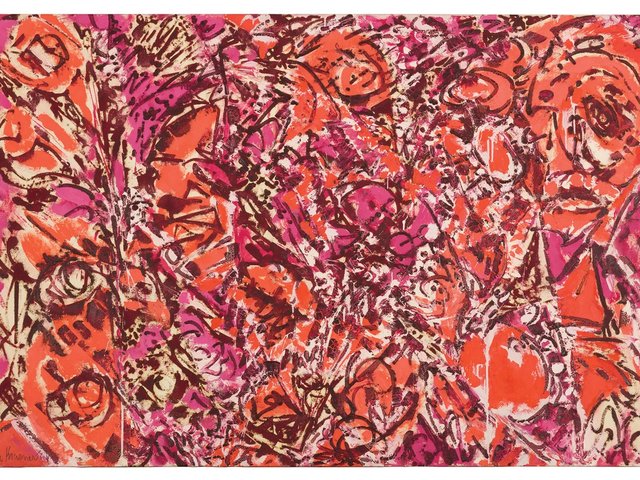
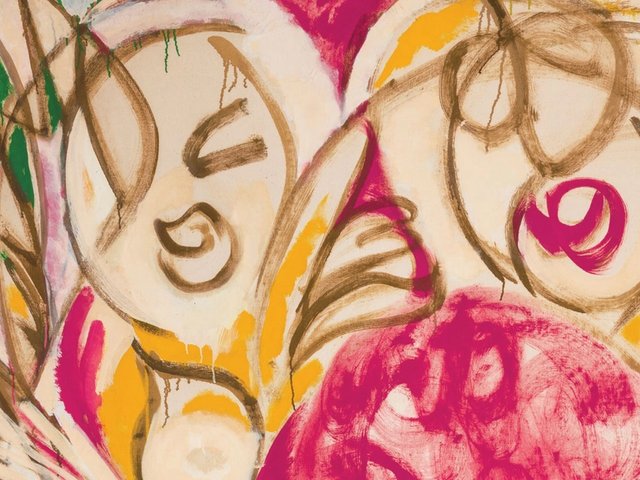
“Exhibitions focused on 1942-56 aren’t fair to Krasner,” Breslin says. “She had a smaller studio space. He had the whole barn. Abstract Expressionism was dominated by scale, so he was more successful. When he died, she took over the barn and started making these amazing paintings.” Kumar adds: “Krasner survived Pollock by many decades, and that was probably her most productive time.”
The Met exhibition will give Krasner’s work the opportunity to break away from Pollock’s shadow. At the same time, it will appreciate the couple’s strong artistic and intellectual connection—as well as what Breslin calls Krasner’s “unseen labour” securing Pollock’s legacy after his untimely death.
Savvy person
“Krasner stewarded Pollock’s posthumous market,” Breslin says. “She was a very savvy person, and she set the bar for Abstract Expressionism at large. It was a combination of faith in Pollock and an incredible faith in herself to manage both her own career and Pollock’s after his death.”
The Met exhibition borrows its subtitle from a 1976 Krasner work made 20 years after Pollock’s fatal car crash. A mixed-media painting incorporating a collage of her drawings from years before, Past Continuous serves as an inspiration for the larger themes of the show.

Lee Krasner’s Combat (1965). Krasner created larger works after Pollock’s death © 2026 Pollock-Krasner Foundation/Artists Rights Society (ARS), New York
“Collage is key in many ways, and the exhibition is bookended by collages,” Kumar says. “Krasner found in them the possibility of new work. It was a way of looking back in order to move forward—whether by using her own student drawings or Pollock’s discarded drawings.”
Breslin adds that collage serves as a metaphor of their lives together as artists. “It’s like putting two materials together,” he says. “Once they’re next to each other, they become a new thing. They’re together but adjacent, two different prisms passing the same light.”
In the Met exhibition, this creative adjacency will be represented through a chronological display of works by both artists. This way, visitors can glimpse the development of each artist over time, both together and individually. The method will also highlight gaps in artmaking through absence, such as the three years in which Krasner made very little work while rethinking her attachment to European Modernism and championing Pollock and his radical style. Or Pollock’s own creative block in the lead-up to his death.
“We hope we’re enriching the narrative,” Kumar says. “Seeing their work side-by-side, they were in many ways each other’s best critic. You can’t talk of a richer dialogue. They were so important to each other’s practice.”
A new angle
While some of Krasner and Pollock’s best-known works will be on view, the curators say they strove to show these a little bit differently. For example, Pollock’s “drip” paintings—which Breslin says are so famous that they have “become like wallpaper”—are installed at different angles and play with reflective surfaces.
“Abstract Expressionist painting is not something you look at, but something that consumes you,” Breslin says. “Pollock and Krasner were making paintings that no one would have wanted in their house at the time. They created a different way of being with art in the world.”
Kumar and Breslin anticipate that the exhibition will not only show audiences the life work of two art giants but also foster a greater appreciation for the collaborative spirit of artmaking itself. “I hope the show undoes this idea that a great artist is a lonely person,” Breslin says, citing Pollock’s reputation as a tortured loner. “There’s a much greater importance to community and a dialogue with others. It’s only the final work that has a singular name attached to it.”
• Krasner and Pollock: Past Continuous, Metropolitan Museum of Art, New York, 4 October-31 January 2027