A newly discovered painting by Gian Lorenzo Bernini is to be unveiled in December at Vienna’s Kunsthistorisches Museum. Known primarily as a sculptor and architect, Bernini’s paintings are rare, with fewer than 20 accepted as authentic. He never signed his work, making attributions complicated.
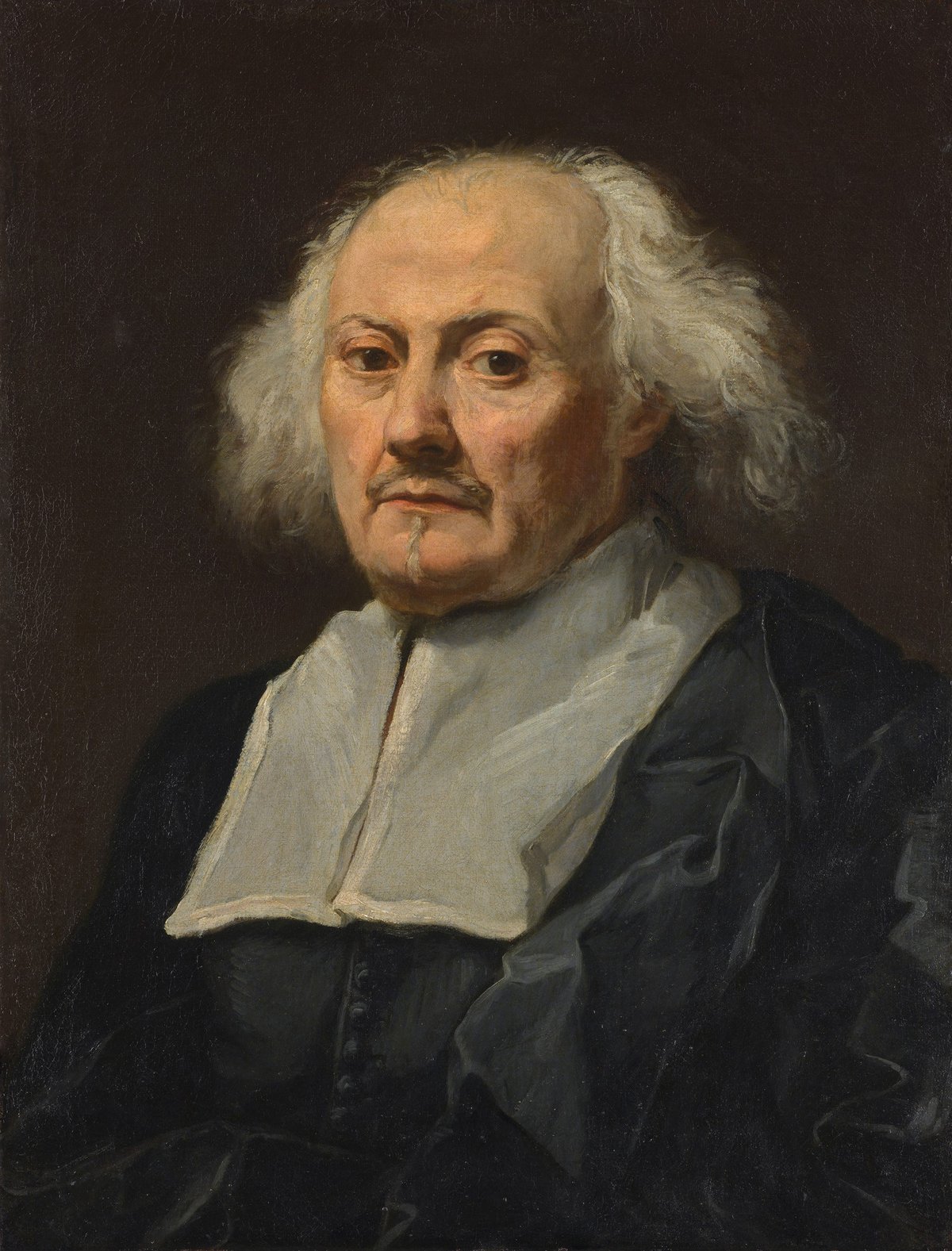
The Vienna painting, Portrait of an Old Man, depicts the nearly life-size head and shoulders of an elderly man with dishevelled white hair, set against a dark background. His intense gaze is directed at the viewer, giving the work vitality. Until very recently, the museum attributed the portrait to an anonymous 17th-century artist working in Rome.
Portrait of an Old Man entered the Kunsthistorisches Museum in 1920 as a work by the Paris-based painter Philippe de Champaigne. It was bequeathed by the Viennese collector Richard Lieben, who had bought it in 1900, and before that it was with Baron Engelshofen. Nothing is known of its early provenance.
Since 1920, the portrait has been variously attributed to an anonymous Italian artist, to the French artists De Champaigne or Jean Jouvenet, and to the Flemish artists Jakob Ferdinand Voet or Erasmus Quellinus the Younger. More recently, the Italian painter Baciccio, Bernini’s collaborator, has been proposed.
Without a firm attribution, the Vienna portrait was banished to the storeroom in 1989. It is not considered sufficiently important for inclusion among the 2,800 paintings catalogued on the museum’s website.
When it comes to dating, the Kunsthistoriches Museum’s curator Gudrun Swoboda believes the man’s garment and collar, as well as his hair style, reflect Rome fashions of around 1670.
Detecting Bernini’s hand
Swoboda’s strongest arguments in favour of the Bernini attribution are comparisons with accepted paintings, drawings and sculptures. She believes that the artist of the portrait paid special attention to creating a sense of space, with an observant eye for anatomy, especially the skull and facial muscles.
The mouth of the old man in the portrait is slightly open and his lips are moulded with precision. Swoboda sees this as the work of an artist with “a sense of the sculptural”. She also sees parallels with Bernini’s masterpiece bust of Louis XIV (now at Versailles), particularly in the corners of the mouth.
Swoboda says the layers of paint in the face were applied in the manner of a sculptor “building up and modelling a face in clay”, using a multitude of short bristle-brush strokes of paint. With the moustache, the artist is “sculpting with the brush”, she says.
There are stylistic parallels between the painted portrait and a fine self-portrait drawing in the UK’s Royal Collection dated to 1675-80. The light that falls from above at a steep angle, as well as the dynamic of the collar and the alert gaze, are similarly handled in the two works.
It is usually assumed that Bernini ceased to paint around 1650, 20 years before the museum’s portrait, which makes the museum’s attribution controversial. However, a scattering of documents mention later paintings, done in Rome.
Although the head and collar in the painting are very finely painted with bold brushstrokes, the black garment and the sitter’s right shoulder are weaker. Swoboda therefore believes that the face was done by Bernini and the lower part by another artist, possibly one of his sons. A recent scientific examination of the painting confirms that it was executed by two different hands.
And who is the elderly man? In his later years, Bernini only worked for friends or dignitaries, which suggests someone from the palace milieu in Rome or a befriended intellectual. The clothing might also indicate a statesman or scholar. Swoboda speculates that it could be Mario Chigi (1594-1669), a brother of Pope Alexander VII. Mario Chigi was a former military leader and Bernini’s most important late patron.
Rethinking Bernini’s career
Although historical sources document that Bernini completed up to 200 paintings (mostly portrait studies), only around 16 surviving works are widely accepted by specialists—and all date from between 1620 and 1640, other than one from around 1666. If the Vienna painting’s new attribution is accepted, along with a date of around 1670, then this will radically reshape our conception of Bernini as a painter. By this year, Bernini was himself an old man, aged 71, but he went on to live to 81, a great age at the time.
Portrait of an Old Man will be the centrepiece of a Kunsthistorisches Museum exhibition at Vienna’s Palais Lobkowitz, Bernini: Painter and Sculptor (2 December-4 April 2027). Outside loans are to include the Galleria degli Uffizi’s Bernini self-portrait painting (around 1635) and the Royal Collection’s self-portrait drawing. Although other specialists have recently been privately invited to comment on the Vienna portrait, the show, with other comparable works, will hopefully provide an opportunity to reach a definitive judgement on the attribution.