

Digital Editions
Newsletters
Subscribe
Digital Editions
Newsletters
Art market
Museums & heritage
Exhibitions
Books
Podcasts
Columns
Art of Luxury
Adventures with Van Gogh
Venice Biennale
Art market
Museums & heritage
Exhibitions
Books
Podcasts
Columns
Art of Luxury
Adventures with Van Gogh
Venice Biennale
Activism
news

Mural in Santa Fe underscores violence against Indigenous women

The work holds weight in New Mexico, which has the highest rate of violent crimes against Native American women in the US

Gabriella Angeleti
9 August 2019
Share
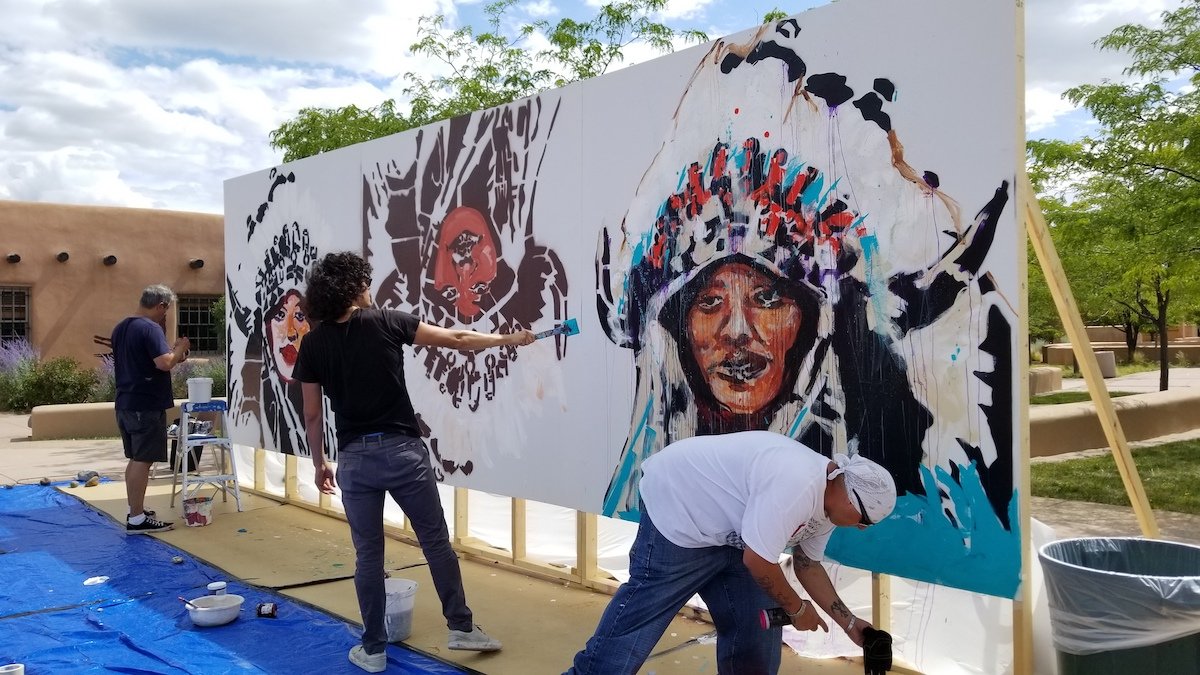
The Romero brothers' mural in progress Courtesy of the artists

The Romero brothers' mural in progress Courtesy of the artists

The Cochiti artists and siblings Diego and Mateo Romero have painted a mural of Native American women outside Santa Fe’s Museum of Indian Arts and Culture to bring awareness to the disproportionate rates of murder and violence suffered by Indigenous women in the US. Native American women are ten times more likely than other women to be murdered, go missing or endure violent crimes, according to the US Department of Justice.

Santa Fe is “ground zero for these cases, with 78 open cases at the moment and Albuquerque being the number two city in the US for open cases”, says Mateo Romero. He adds that the project is a vehicle to “draw our line in the sand and say no more”.

The live painting on 4 August was open to the public to encourage visitors to discuss issues impacting Native American women and share their own stories with the artists. Once complete, the face of the mural was shot in a halo outline with red water-based paint by fire extinguishers.

One of the most poignant interactions of the event, says Mateo, was with the Oglala Lakota poet and activist Layli Long Soldier, who wrote a poem on the mural that “describes her female relative bound under a bridge with duct tape and plastic bags. That's what the red paint symbolises”.

“Our family has been directly touched by the loss of a female relative to this harvest of brown women,” says Mateo. “As indigenous people, we have forgotten or edited histories. This is the place we begin to try and make a change.”

The project coincides with the artists’ current show at the museum of paintings, lithographs and pottery called The Brothers Chongo: A Tragic Comedy in Two Parts, which runs until mid-October.
Subscribe to our daily newsletter

ActivismStreet artIndigenous art Native American
Share
Subscribe to The Art Newspaper’s digital newsletter for your daily digest of essential news, views and analysis from the international art world delivered directly to your inbox.
Newsletter subscribe
Information
About
Contact
Cookie policy
Data protection
Privacy policy
Frequently Asked Questions
Subscription T&Cs
Terms and conditions
Advertise
Sister Papers
Sponsorship policy
Follow us
Instagram
Bluesky
LinkedIn
Facebook
TikTok
YouTube
© The Art Newspaper

Related content

Art marketnews
25 September 2020

Cowan’s auction house returns indigenous war god sculpture to a Zuni Pueblo

The figures, carved by tribal members every winter and left in ceremonial shrines atop a mountain, have regularly been stolen and made their into museums and private collections throughout the US and Europe

Wallace Ludel
Lawnews
24 July 2020

California may grant repatriation rights to unrecognised Native American tribes

A new state bill expands federal rights for Indigenous groups to reclaim human remains, burial objects and other sacred artefacts from institutions

Gabriella Angeleti