Digital Editions
Newsletters
Subscribe
Digital Editions
Newsletters
Art market
Museums & heritage
Exhibitions
Books
Podcasts
Columns
Art of Luxury
Adventures with Van Gogh
Venice Biennale
Art market
Museums & heritage
Exhibitions
Books
Podcasts
Columns
Art of Luxury
Adventures with Van Gogh
Venice Biennale
Monuments
news

Lenin’s four-tonne head goes on show in Medieval Berlin Fortress

Monument of communist revolutionary was dug up for new permanent exhibition on statues of past political leaders

Catherine Hickley
5 May 2016
Share

Vladimir Lenin is back on display in Berlin. Or at least, his head is. The communist revolutionary’s 19-metre-high statue was dismantled from its place of honour on Leninplatz two years after the fall of the Berlin Wall. The monumental granite head, weighing nearly 4 tonnes, was buried in a woodland, the symbol of a fallen political regime that many wanted to put behind them.

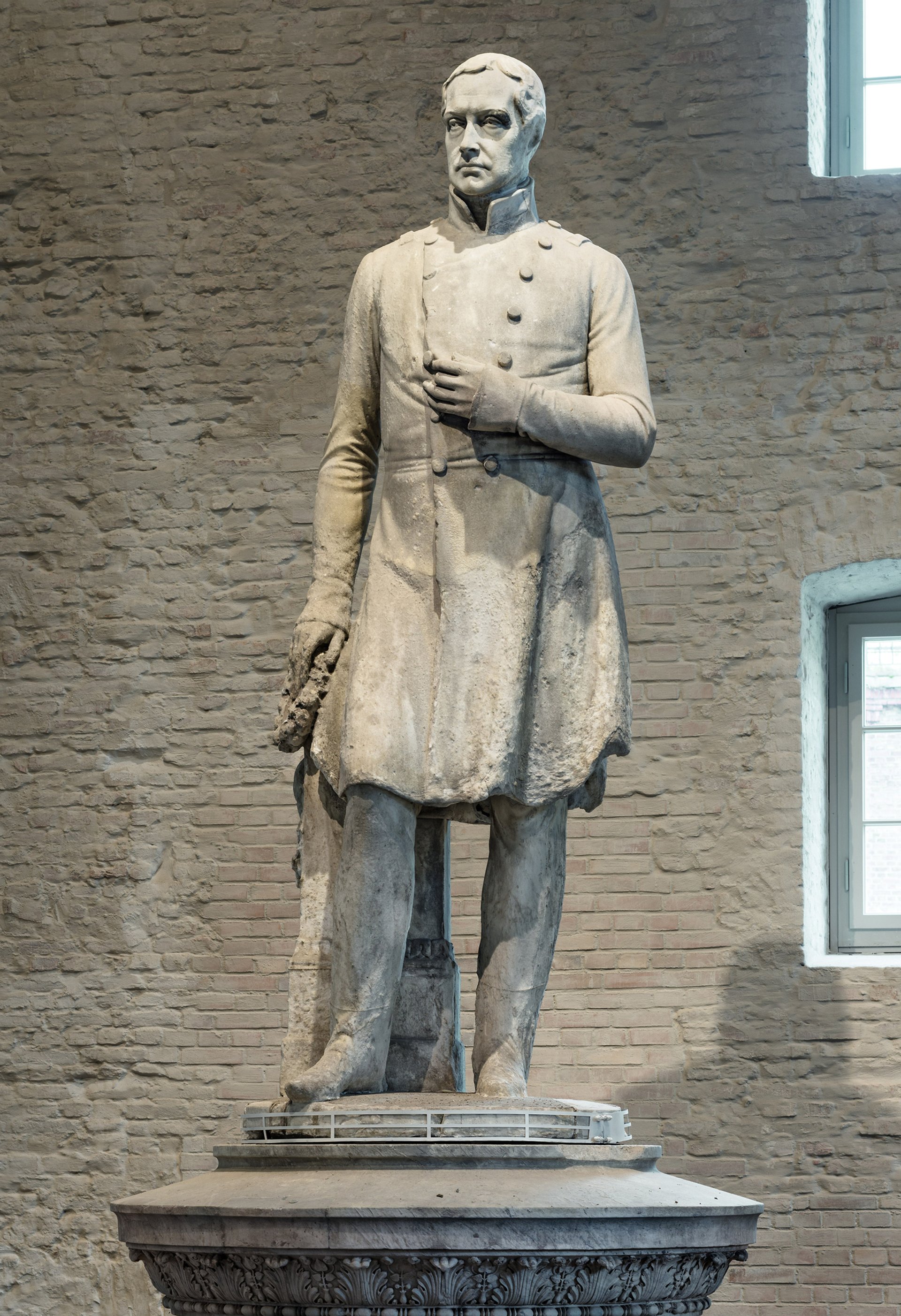
Now it is lying on its side with four metal rods sticking out of the scalp as part of a new permanent exhibition called Unveiled at the Zitadelle, a Medieval island fortress in Spandau in western Berlin. It documents the city’s turbulent history by displaying political statues and monuments that once graced its boulevards, parks and squares, then fell out of favour and were left to decay in burial places or dusty depots.

The monuments have been restored but not repaired. Many of the statues are from the imperial-era Siegesallee (Victory Parade) through the centre of Berlin, where 96 larger-than-life figures and busts in groups of three adorned 32 semi-circular benches positioned at intervals along the boulevard.

Amazingly, these survived the First World War, the 1918 revolution and even the Third Reich. Some were badly damaged in the Second World War. But as part of the Allies’ re-education program after the war, all nationalist and war monuments were to be destroyed. A committed heritage preservationist, Hinnerk Scheper, managed to have most of them buried in the grounds of the Bellevue Palace near the Tiergarten, saving them for posterity.

These now fill three exhibition halls in the carefully converted provisions storehouses of the Spandau Zitadelle. Frederick the Great is missing an arm while his pleasure-loving nephew and successor, Frederick William II, is headless. Otto von Bismarck has never been found.
Subscribe to our daily newsletter

MonumentsNewsExhibitions
Share
Subscribe to The Art Newspaper’s digital newsletter for your daily digest of essential news, views and analysis from the international art world delivered directly to your inbox.
Newsletter subscribe
Information
About
Contact
Cookie policy
Data protection
Privacy policy
Frequently Asked Questions
Subscription T&Cs
Terms and conditions
Advertise
Sister Papers
Sponsorship policy
Follow us
Instagram
Bluesky
LinkedIn
Facebook
TikTok
YouTube
© The Art Newspaper

Related content

Exhibitionsinterview
1 November 2019

From the archive | ‘Public art is propaganda, frankly’: Hank Willis Thomas discusses gun violence and the urgent need for alternative memorials

A host of the artist’s exhibitions and public projects open in various locations across the US open this year

Charmaine Picard
Monumentsnews
18 April 2023

A monumental tribute to Jamal Khashoggi unveiled in his home state of Virginia

Artist Navine G. Dossos created a towering, kaleidoscopic mural in tribute to the assassinated journalist at Richmond's Institute for Contemporary Art

Claire Voon
Public artnews
18 May 2020

Sculpture confronting Germany's colonial past installed at Berlin’s long-awaited Humboldt Forum

Kang Sunkoo’s bronze Statue of Limitations shows a black flag at half-mast

Catherine Hickley
Exhibitionsreview
4 October 2019

The Empire strikes back? Kara Walker's fountain makes a splash at Tate

US artist takes on British Empire’s legacy and the Transatlantic salve trade in Tate Modern’s Turbine Hall

Gareth Harris