In the wake of public retrenchment over the summer, Pace Gallery’s UK registered company, which serves as the parent company for all of the firm’s operations outside the US and Tokyo, has filed its 2024 accounts with Companies House.
The accounts—which were due at the end of December 2025 and filed ten months late—report earnings for The Pace Gallery Limited (“the company”) and various subsidiary undertakings in Asia and Europe (“the group”).
The group incurred a pre-tax loss of $2,429 in 2024, compared to a profit of $6.8m in 2023. Such a drop, the directors’ report states, reflects a "continuation of the sector-wide contraction in global and UK art markets as well as a continued reluctance by some clients to buy which became most pronounced in 2024 and continued through 2025 and into 2026". These market conditions led the directors to "initiate cost saving measures across the group, but despite these measures, difficult market conditions continued".
Total group turnover stood at $67.7m in 2024 (2023: $104.9m), of which some $48m was contributed by its subsidiaries. Only $4.1m of this was sold to the UK (2023: $10.7m) while $60.5m went to the rest of the world.
Net assets amounted to $2.5m as of the end of 2024 (2023: $4.5m), of which $9.4m (2023: $17.3m) was payable to the US parent company, The Pace Gallery LLC. Debts and other amounts owed falling within one year stood at $49m, compared to $50.8m at the end of 2023.
Cost-cutting measures
Although the filings refer to 2024 results, late filing meant they also outline cost-saving measures implemented this summer. “Throughout 2025 the group developed a comprehensive plan to refocus the gallery's mission by streamlining strategy, reprioritising relationships with artists and collectors, and reducing operating expenses,” the report says. This plan was first announced by Pace’s chief executive Marc Glimcher in May, when he told The New York Times that the gallery was cutting 50 artists and 50 staff. Such a diminished artist roster, the filings say, “reduced the number of full-time support roles and resources” needed, hence the concurrent staff cuts.
The group’s global footprint has also been scaled back, the filings say, “which decreased the number of exhibitions the group is engaging in, as well as lowering overheads” (the gallery’s Hong Kong space was shut in October 2025). Such consolidation “will allow the group to focus its resources, better support its artists and collectors, and return to a more efficient and profitable approach,” the filings say. Furthermore, only last month it was reported that Pace is seeking a tenant to share its enormous eight-storey New York headquarters in order to share operating costs.
The Companies House filings mention the partnership with Emmanuel Di Donna and David Schrader to form Pace Di Donna Schrader Galleries (PDS), first announced in December 2025, with the purpose of expanding the group's secondary market business. Along with the “counter-cyclical investment” in the form of a new gallery opened in Berlin in 2025 as “a foothold in Europe”, the directors believe the company is “well placed to take advantage of any improvement in market conditions in 2026 and beyond, despite the ongoing uncertainties associated with geopolitical tensions and inflationary increased in operational expenses.” The report concludes that with the above changes, the directors “have a strong belief in the future of the company and group.”
The 2024 filings also show that severance pay of $1m was paid to one key member of departing management staff, though the gallery declines to identify the employee. Advances of $5.7m were paid to artists (2023: $2.9m), of which $306,235 (2023: $9.4m) have been written down as irrecoverable, whether due to the saleability of the works held on consignment or the saleability of the artist's works more generally.
The Pace Gallery Limited, it should be remembered, is a subsidiary of the US parent company, The Pace Gallery LLC (controlled by Marc Glimcher), which—together with Marc and his father Arne Glimcher—underwrites it. Therefore, these filings only give a partial picture of the broader corporate structure and its international operations.
Debt swaps
Nonetheless it is interesting that the filings reveal a planned debt for equity swap as the UK registered entity, The Pace Gallery Limited, is unable to repay its debt of $19.2m to the US parent company, The Pace Gallery LLC. This unpaid group debt will be turned into shares by the end of 2026. “The proposed debt-for-equity conversion, part of a broader global financial management strategy, reflects a capital structure decision within the Pace group and should not be interpreted as a loss or a liquidity issue for the UK business,” a Pace spokesperson tells The Art Newspaper. The company reviews how its subsidiaries are financed “to ensure that their balance sheets appropriately reflect the long-term nature of the capital invested in those businesses” the spokesperson says. In this case, the parent company has decided that some of its investment in the UK operation “is more appropriately reflected as equity rather than intercompany debt”, they continue: “The proposed transaction is intended to strengthen the UK company's balance sheet and align its capital structure with the long-term needs of the business.”
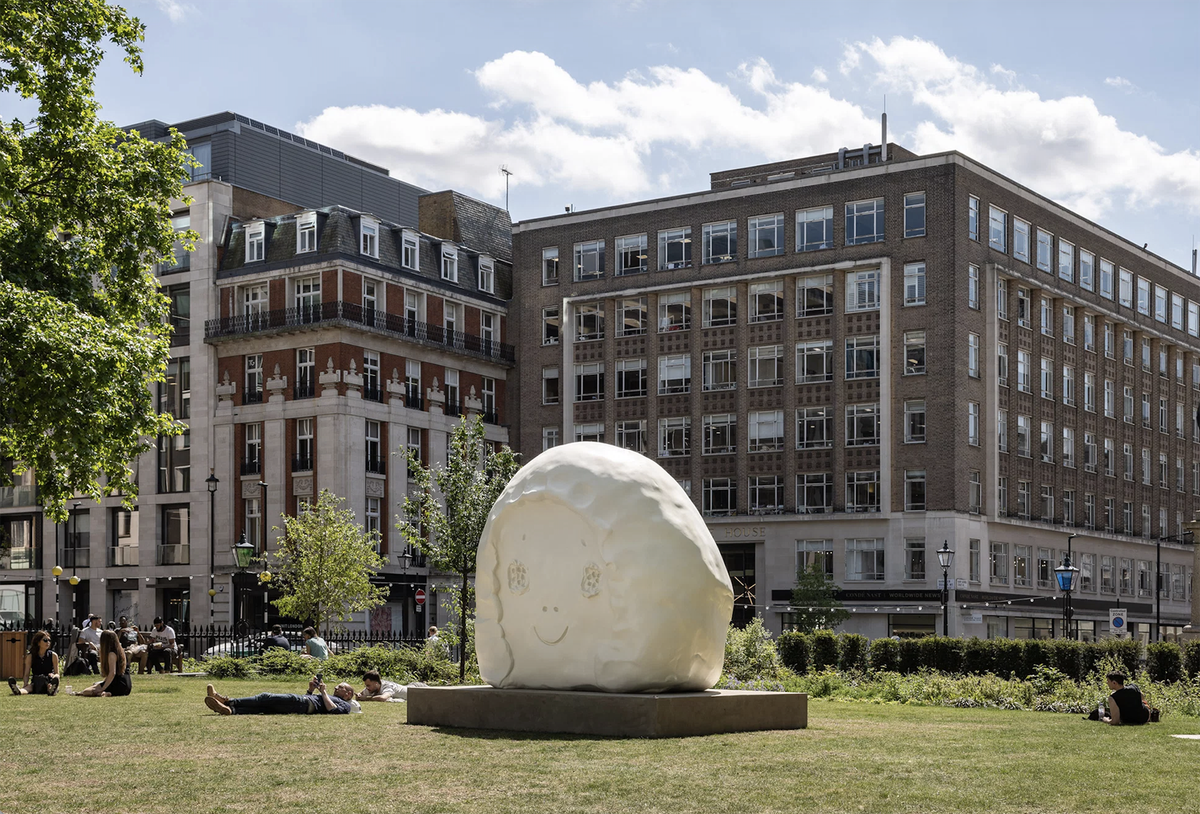
The share issuance will not make any material difference to the running of the UK group, the spokesperson says, and on the planned move of the London gallery’s premises from Hanover Square to a smaller space on nearby Grafton Street in Mayfair, there is no news yet.