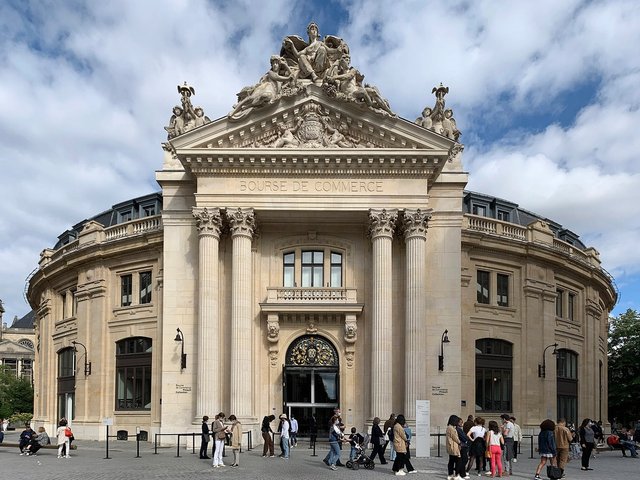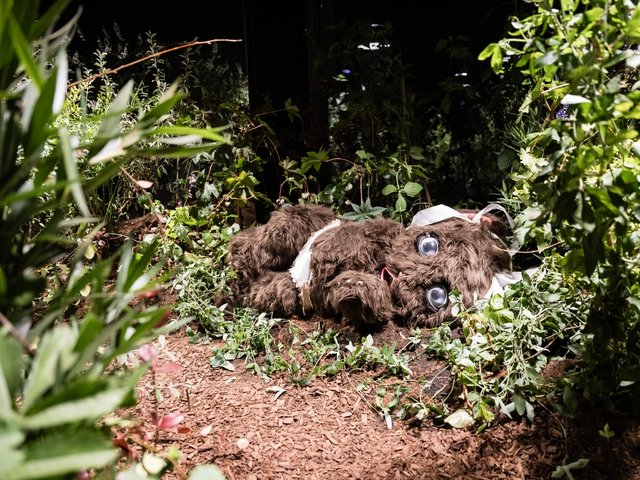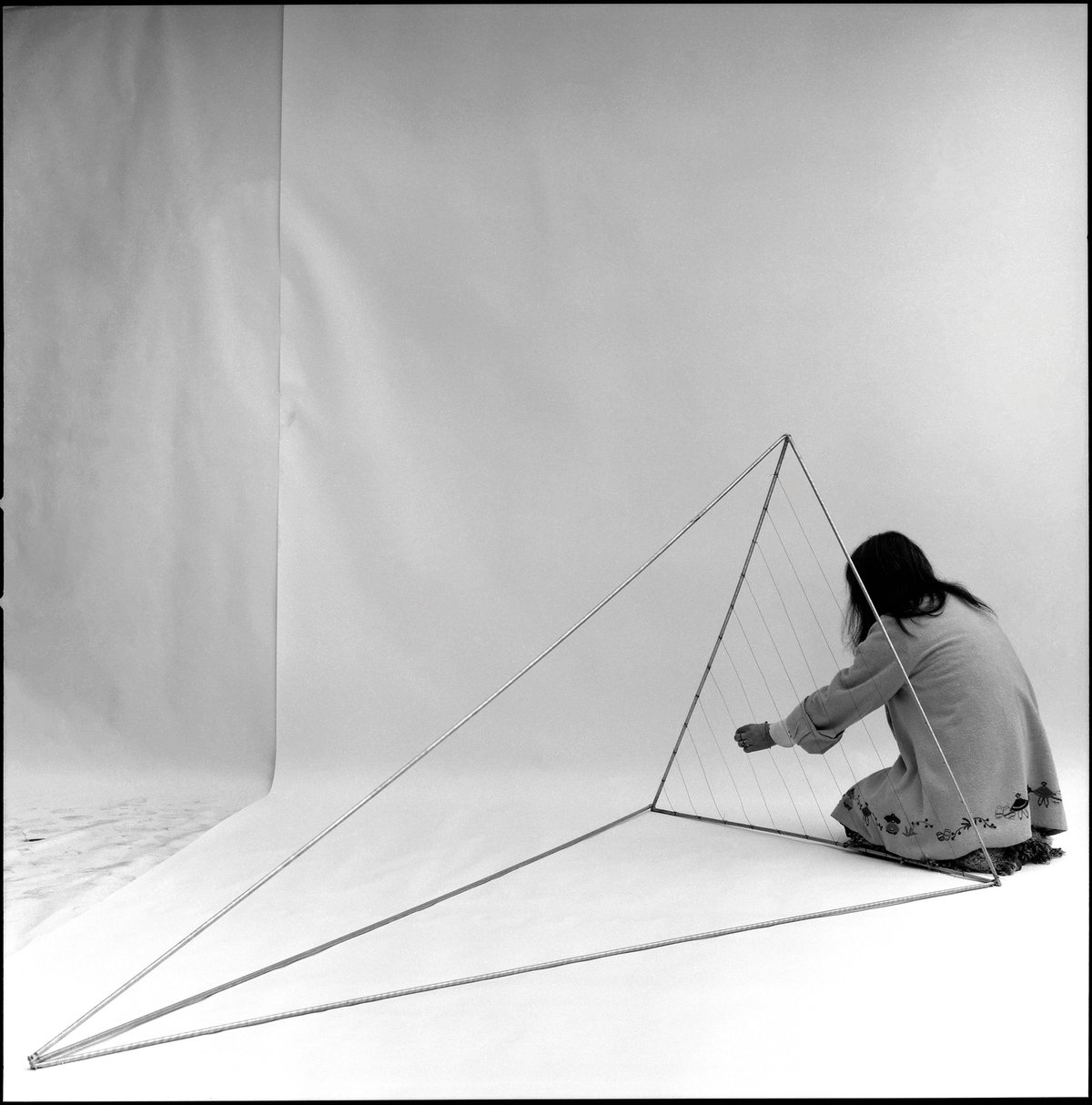
A major survey celebrating Marisa Merz (1926-2019), Arte Povera’s only female artist, will open across three institutions in Turin this week. Marking 100 years since her birth, The Dance of the Hours will take place at the Castello di Rivoli Museo d’Arte Contemporanea; the Fondazione Merz; and the Galleria Civica d’Arte Moderna e Contemporanea di Torino (GAM). It is reckoned to be an undertaking of such magnitude that it is unlikely ever to be repeated.
Though it will be by far the biggest exhibition ever dedicated to Marisa Merz, the project is not unprecedented. In 2005, the same three institutions joined forces to honour Mario Merz, her husband and collaborator, following his death in 2003.
Now, the centenary presents an opportunity for those institutions to explore the career and legacy of Marisa Merz, says Francesco Manacorda, the co-curator, along with Marianna Vecellio, of the exhibition at the Castello di Rivoli.
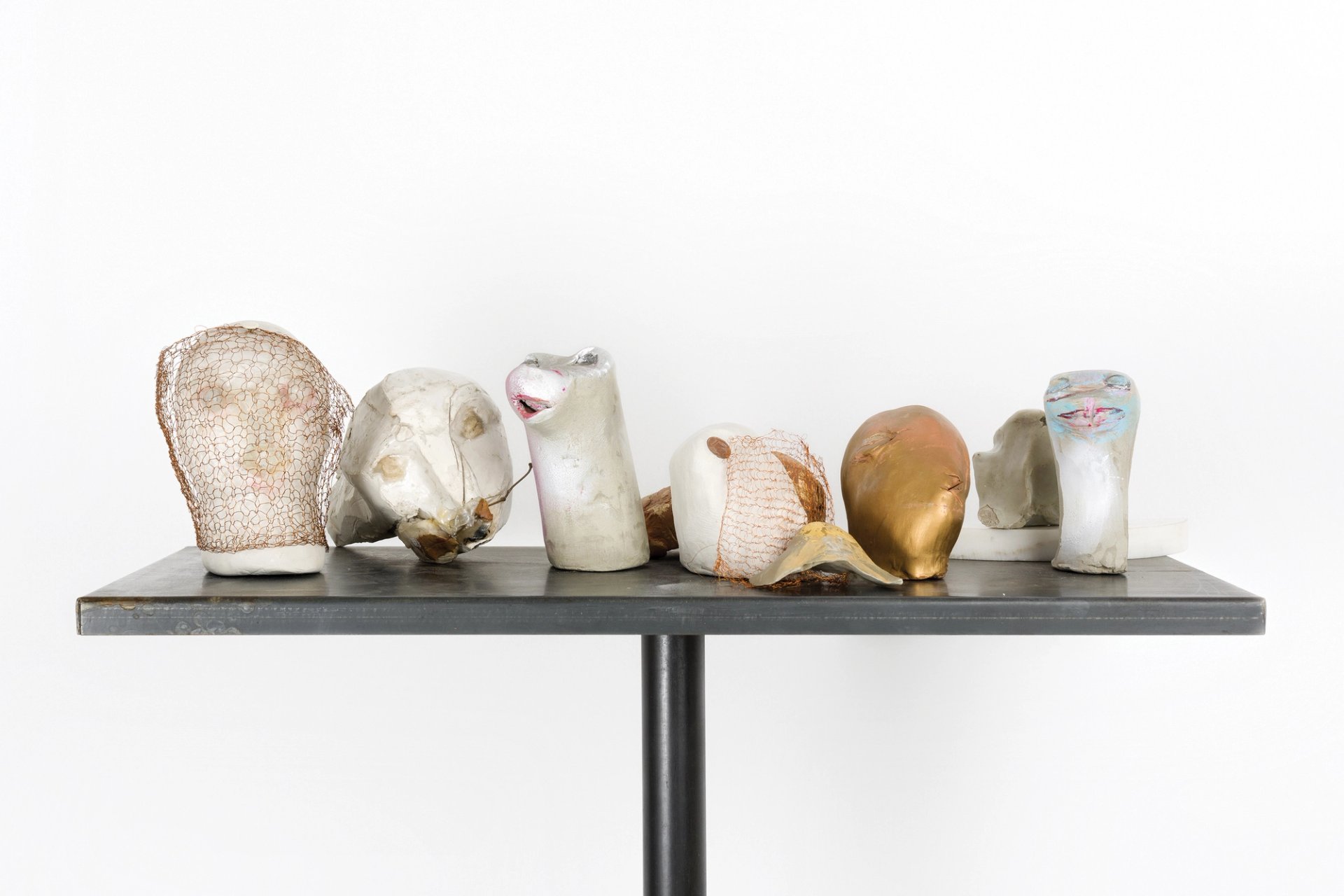
Marisa Merz's Untitled is made up of eight heads on metal table and is going on show at the Fondazione Merz Photo: Renato Ghiazza; courtesy Fondazione Merz
The artist’s estate, represented by Fondazione Merz, retains the majority of her works, which include sculpture, works on paper and documented actions, but the collaboration offers more than exceptional access, Manacorda says. “It’s really three different approaches, and this will give you three different Marisas, which is appropriate, because she created a mystery around herself, and hid herself behind it. There is a ‘polyphonic’ Marisa that it’s possible to bring out.”
The ten contemporary artists commissioned to respond to Merz at Castello di Rivoli are essential to this multi-voiced approach, Manacorda says. Contributions from artists such as Leonor Antunes, Thea Djordjadze and Lara Favaretto, and a film by Tacita Dean, will amount to “a piece of art history”,Manacorda says.
Despite achieving considerable acclaim, including a Golden Lion for Lifetime Achievement at the Venice Biennale in 2013, Merz tended, often deliberately, to slip from view. The details of her life prior to her marriage in 1960 are sketchy and so are the reasons for her decision in the mid-1980s to step back from solo shows. Theories range from a need to concentrate to a dislike of competition or attention. “Some people claim it was a feminist choice—she had a daughter, and she writes about the fact that she wanted to work with [her daughter] Beatrice when she was a toddler,” Manacorda says.
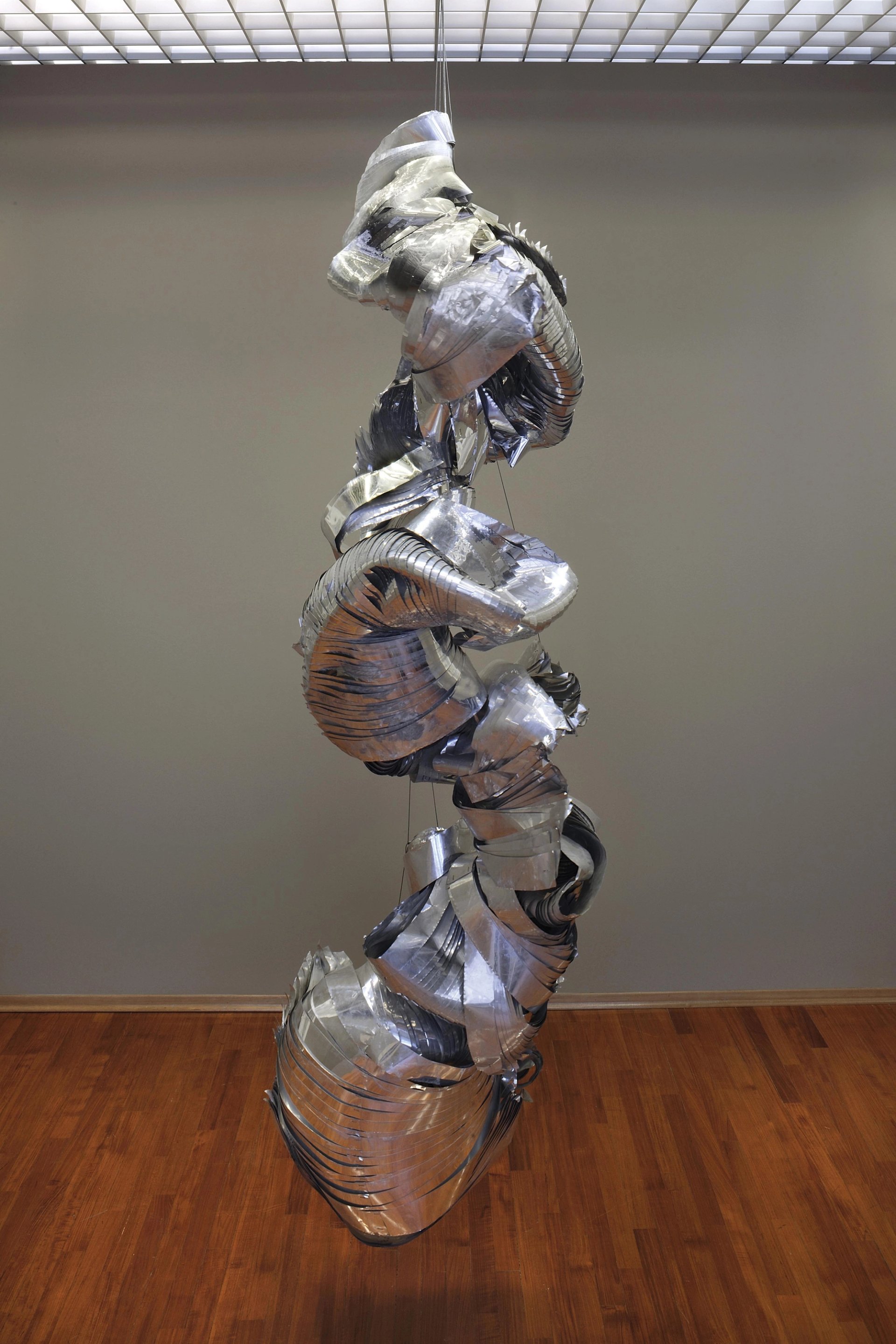
Living Sculpture (1966), made of aluminium and foil stapled together, was Marisa Merz's first major work Gam—Galleria Civica d’Arte Moderna e Contemporanea di Torino
The domestic nature of Merz’s practice set her apart from her fellow poveristi and will provide the focus of the presentation at GAM. The family home was her studio, and her materials and techniques—from kitchen foil, staples and peas to sewing and knitting—were unassumingly homely.
Monstrous domesticity
“The home as a workspace was not a matter of practicality but of methodology,” says Beatrice Merz, who is now the president of Fondazione Merz, whose exhibition will explore process and transformation. “The home itself was an opportunity for making and working”.
Merz’s first major work was Living Sculpture (1966), a sprawling construction of aluminium foil, stapled together in a process that Merz said—surely with irony—was “as humble and modest as embroidery.” Now held by GAM, it was captured most memorably in photographs of her apartment, where its shiny tubes spilled like alien entrails from behind the television, almost engulfing the dining table. Made during hours at home caring for her daughter, Living Sculpture makes visible, and monstrous, maternal labour in a radical rejection of conventional domesticity. The sculpture frightened Beatrice as a child and in 1967 it featured in the avant-garde horror film Il Mostro Verde (the green monster).
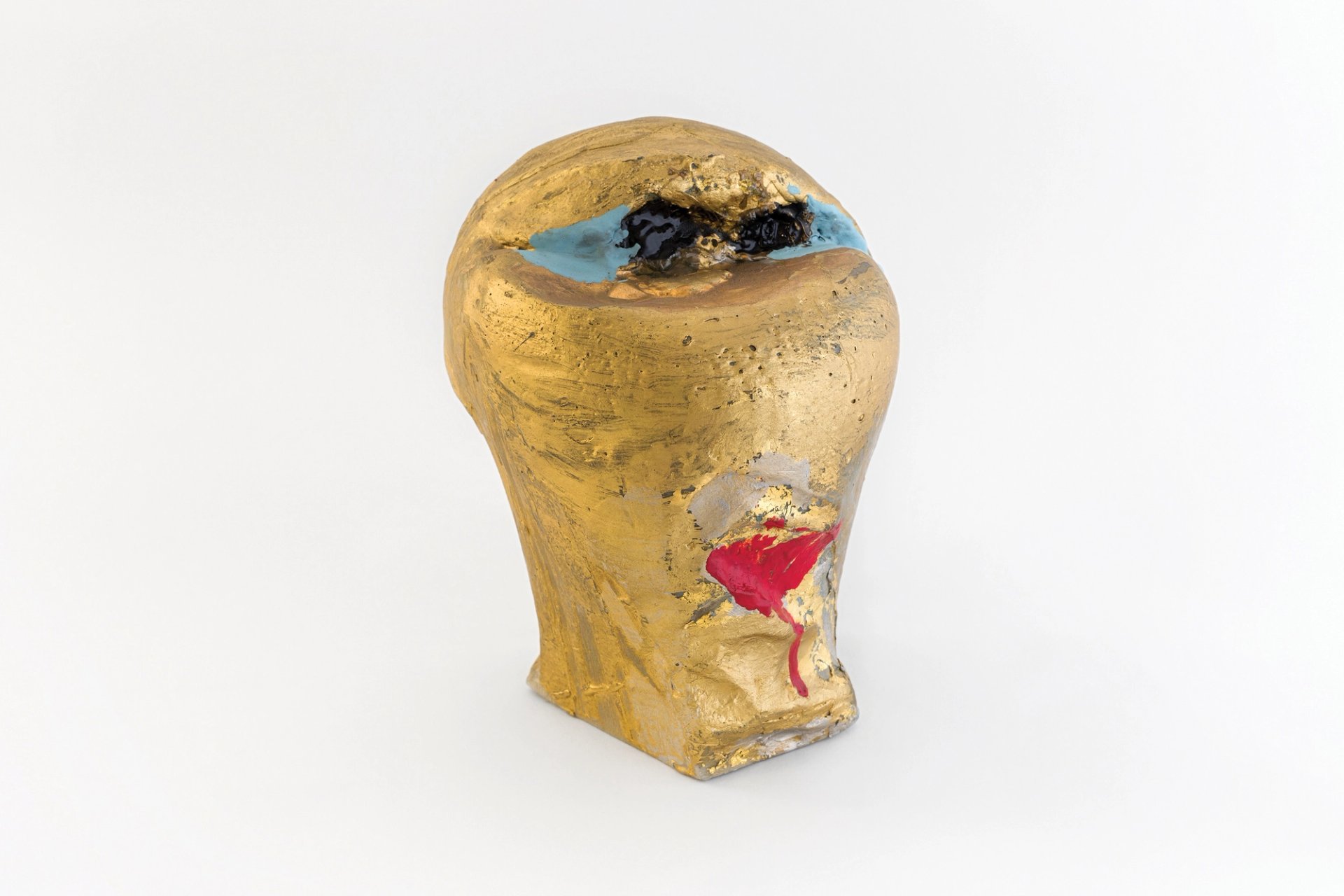
Merz's Untitled Photo: Renato Ghiazza; Courtesy Fondazione Merz
The apartment was left intact following Merz’s death in 2019 and contains unknown quantities of works in progress, “some of which have never been seen, not even by Beatrice”, Manacorda says. The exhibition’s title was taken from one of many Post-it notes that Merz stuck around the apartment.
Even works that made it into the public sphere could lapse into obscurity. The focus of the Castello di Rivoli show is a reconstruction of E il Naufragar M’è Dolce In Questo Mare (roughly translated as “to be shipwrecked is sweet in such a sea”, a line borrowed from a Giacomo Leopardi poem). The work is a complex, multi-part installation that disappeared after its second outing at the Venice Biennale in 1980. Reconstructing it has been a process of recovery, with the arrangement of original elements, such as sheets of brown paper found in the apartment, being guided by photographs and an eyewitness account. Although if Merz were alive today “she would probably make it differently”, concedes Manacorda.
The provisional nature of much of Merz’s work and its inherent fragility makes its ongoing care particularly challenging. Conservation decisions are made on a case-by-case basis and in collaboration, Manacorda says. “The precarity that you perceive really is part of the work, but conservators and collectors are not necessarily ready to accept that fragility.”
• Marisa Merz: The Dance of the Hours, Castello di Rivoli Museo d’Arte Contemporanea, Fondazione Merz and Galleria Civica d’Arte Moderna e Contemporanea, Turin, 29 October-4 April 2027