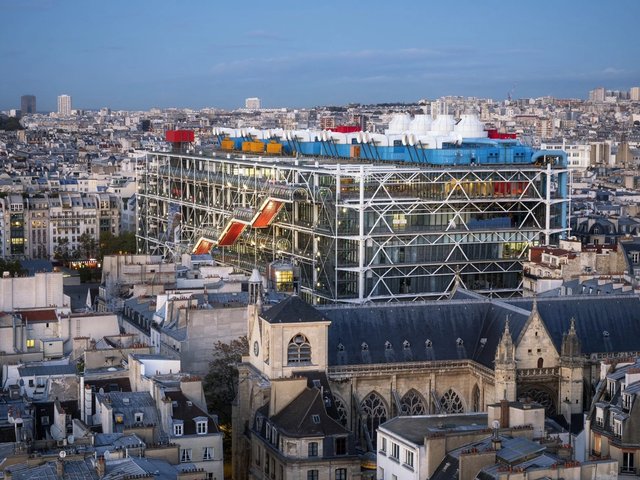
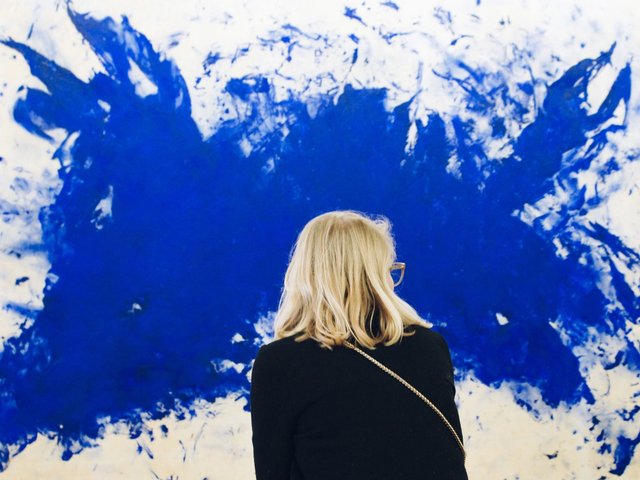
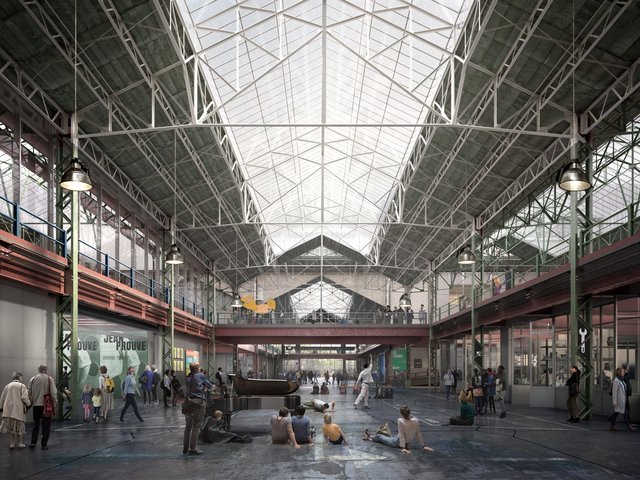
The Centre Pompidou has unveiled a new, large site in a southern suburb of Paris focused on conservation, restoration and storage. Centre Pompidou Francilien – fabrique de l’art in Massy, which will also host exhibitions and residencies, has been open for three “Prélude!” weekends this month ahead of its inauguration in March.
The three-storey rectangular building spans 30,000 sq m. Most of the site is devoted to storage (13,000 sq m) and to conservation and restoration ateliers (4,000 sq m), which are inaccessible to the public. Around 3,000 sq m is open to visitors, including 2,200 sq m of exhibition space.
The impetus for the creation of the institution stemmed from a wish to have a single facility in which to store works from its expansive collection, when they are not on display at its main site, Centre Pompidou, or on loan. This importance of this function has been heightened in light of the Centre Pompidou closing for renovations until 2030.
Centre Pompidou’s holdings comprise some 150,000 Modern and contemporary works of art—more than any other institution in Europe and second globally to New York’s Museum of Modern Art. The works are owned by the French State and held by the Musée national d’art modern, which is located at the Centre Pompidou site.
Over the next two years, 645 trucks will transport the collection, currently dispersed across eight rented spaces, to Centre Pompidou Francilien. Once unloaded, each work will be examined, treated and decontaminated, if necessary, in the studios before being placed in the reserves. There are 20 large storage areas in total; large-scale sculptures and installations will be kept on the ground floor, lighter works on the first and second floor.
The site will also serve as a centre for the dispersal of the around 6,000 works that Centre Pompidou loans each year, an operation that will be facilitated by the site’s proximity to Orly airport.
Speaking to The Art Newspaper, Alexia Fabre, the director of the Centre Pompidou Francilien, emphasises the importance of the workshop facilities. “It is a revolution for the expertise of the Centre Pompidou; it means all our teams working on restoration, framing and conservation will be in the same place,” she says.
A “simple and logical” design
Centre Pompidou Francilien was designed by the architect Philippe Chiambaretta and his Parisian agency, PCA-STREAM. The front of the building, with an exterior created using Douglas fir, overlooks a lake and a park. This side serves as the entrance for the public, providing access to exhibition spaces and the “Belvédère” roof terrace, which hosts works of art. An external escalator pays tribute to the well-known outdoor escalator at the Centre Pompidou.
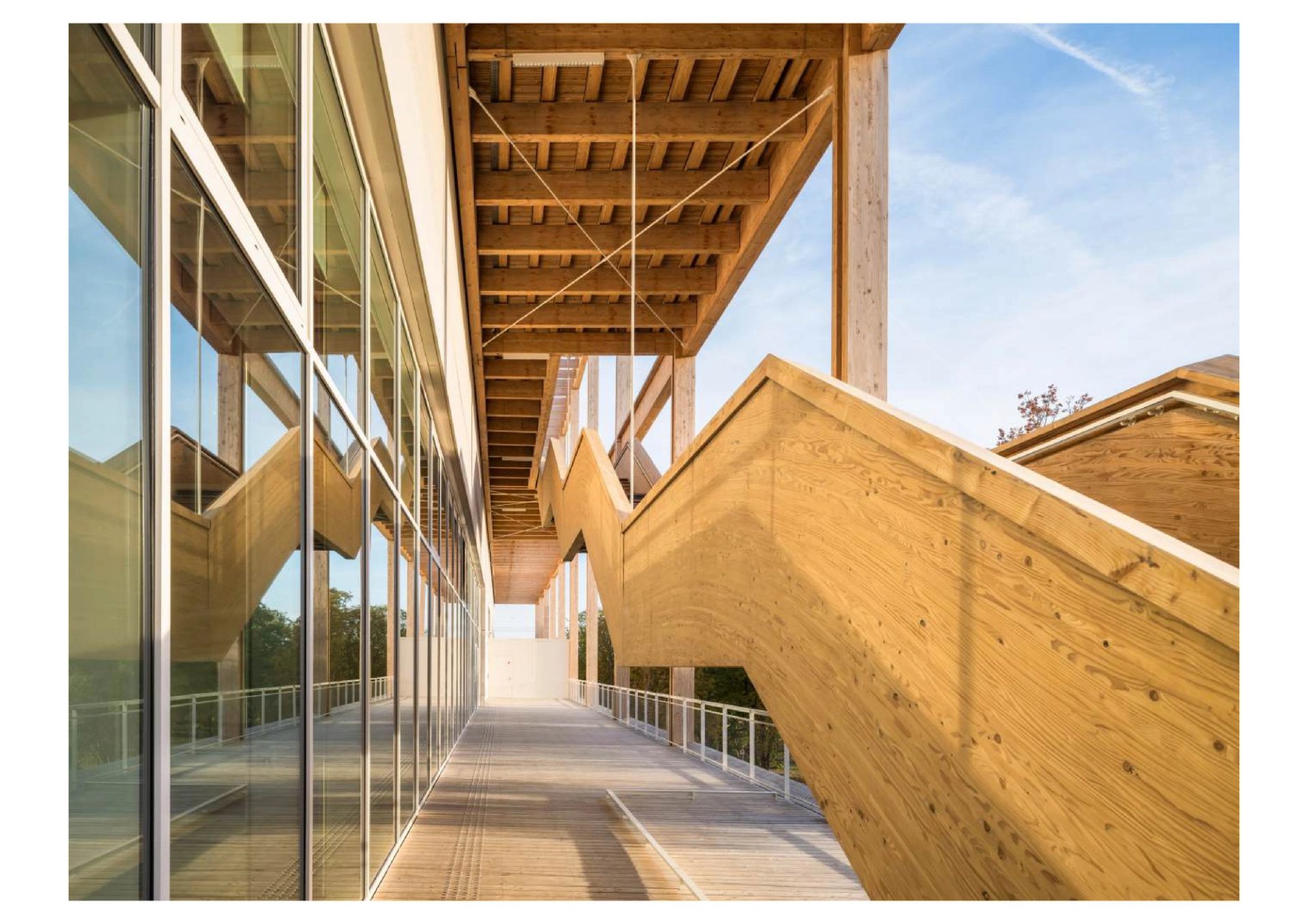
An external escalator nods to the outdoor escalator at the Centre Pompidou’s main site in central Paris
Photo © Sergio Grazia, 2026
The back of the building, adjacent to a rugby pitch, is clad in a double layer of concrete, holding the artworks “like a safe”. “This part is like a hospital, with ambulances coming and going with all the artworks,” Chiambaretta says.
His firm was inspired, he adds, by the approach taken to the design of the Centre Pompidou, which opened in 1977. “We weren’t after a spectacular, wow effect, but something like [the architects] Renzo Piano and Richard Rogers created with the Centre Pompidou—very simple and logical,” Chiambaretta says. “We dived into how they aspired to create a centre for all the arts —cinema, art, music, dance, literature—and the collection is like the [culmination] of 50 years of this philosophy,” Chiambaretta adds.
Greeting visitors on the ground floor is an atelier for families to make objects with recycled materials by Flora Koel and a café. A closed glass door offers a glimpse of works by artist such as Jean Dubuffet and Germaine Richier that are housed in a storage room.
On the first floor are exhibition spaces, which will host two shows a year, as well as a large conference room, workshops and a residency studio. The inaugural exhibition in March, 150,000!, will focus on the history of the collection, tracing acquisitions, the arrival of works of art at the new site and conservation issues that have arisen. There will also be conferences and workshops exploring how works are restored.
The preview programme
The preview weekends are set to continue despite planned protests this Saturday (24 October), which follow widespread demonstrations across France that escalated into violence last weekend.
Works have been put on view in these spaces for this period. They include Elsa Werth’s text-based installation that developed from staff at the institution asking local residents to respond to titles of works of art; a video by Hicham Berrada depicting chemicals being mixed together to create an aquatic landscape; and Xavier Veilhan’s black-and-white film Vent Moderne (2015) in which dancers are shown performing in Modernist villas, their movements responding to the architecture.
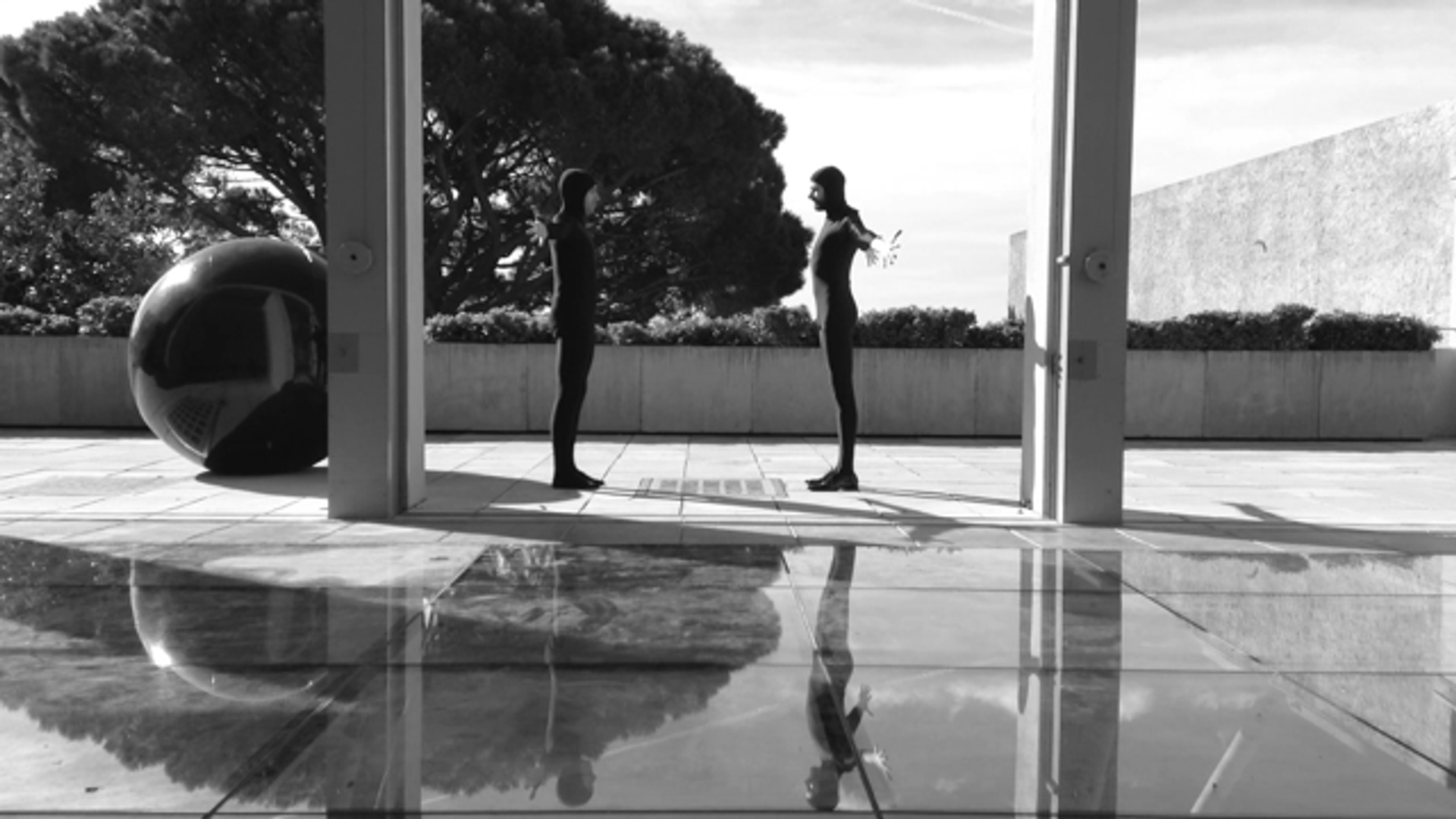
A still from Xavier Veilhan's Vent Moderne (2015) Courtesy of Xavier Veilhan's studio
The institution is partnering with the Paris-Saclay university campus. “We want to work with [scientific teams at] the universities on climate issues concerning restoration, and develop dialogues between artists and scientists,” Fabre explains.
Fabre is keen to forge relationships with and promote access for the local population of Massy, a historically working-class neighbourhood that has been undergoing gentrification. School groups will be able to book to visit before the centre opens to the public. Admission fees to Centre Pompidou Francilien are low relative to other large institutions in Paris: €10, €6 reduced ticket (students, senior citizens, large group bookings), and exhibitions are free up to the age of 26 and for job seekers.
The project has cost €105 million, with €42 million provided by local authorities, including the Île-de-France region (€20 million), the department of Essonne (€10 million), the Paris-Saclay scientific research hub (€9 million) and the town of Massy (€3 million). The French state and the Centre Pompidou are financing the remaining sum, through a loan agreement with Vinci Construction. The town of Massy donated the site, which is a former football pitch.
François Durovray, the president of the departmental council of Essonne, wrote on X that the unveiling was a “historic day for Essonne” and that the site was a “fantastic promise of openness, discovery and transmission”.