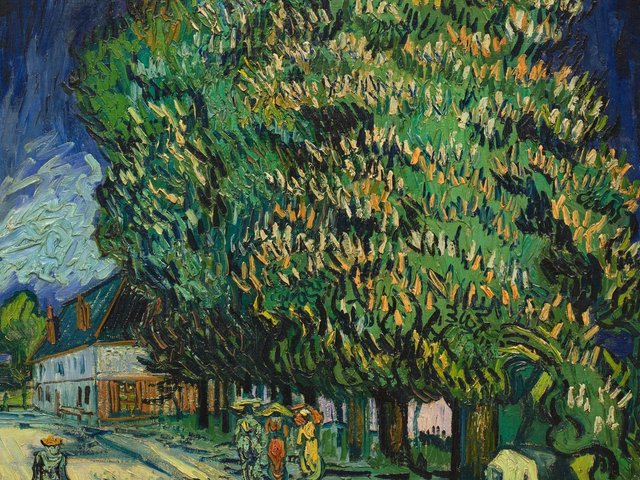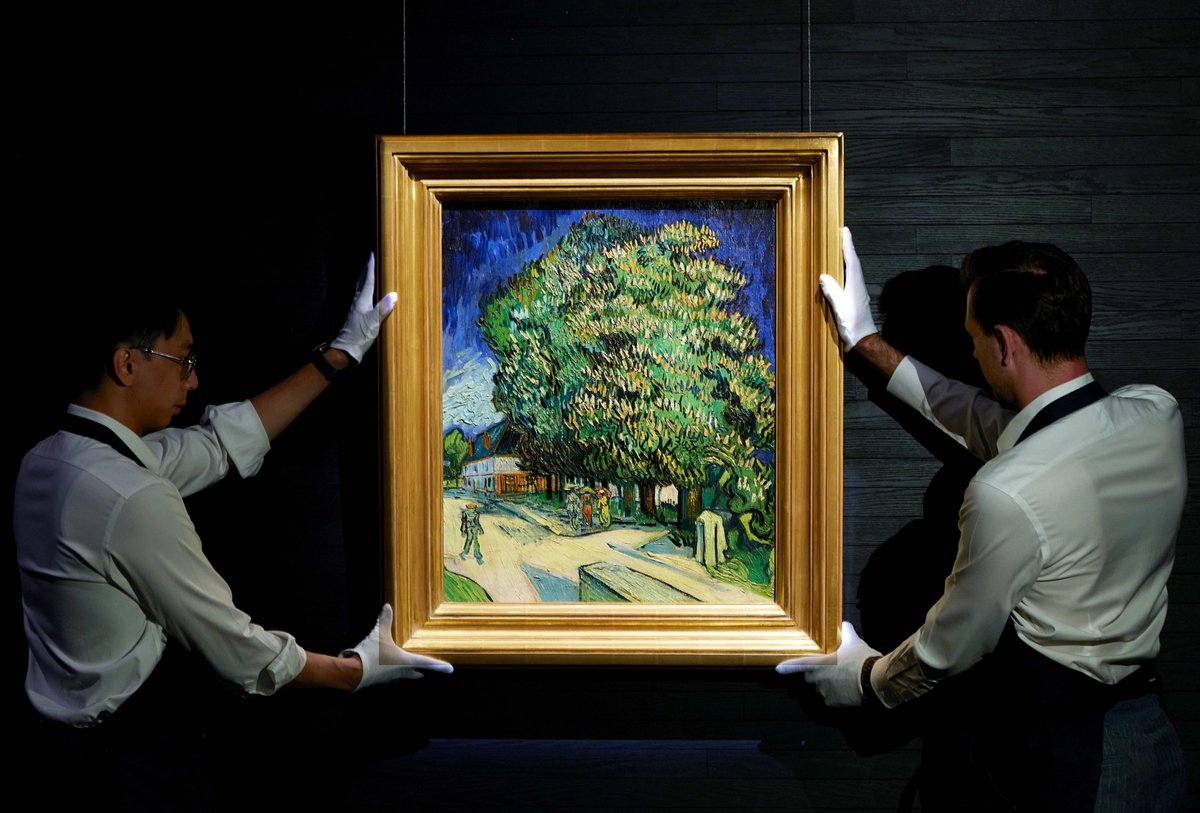

Blossoming Chestnut Trees is expected to fetch a record auction price for a Van Gogh on 18 November, when it comes up for sale at Sotheby’s New York. Its estimate is around $180m and this sum, with the buyer’s premium and other fees, would push up the price to at least $207m.
It has only now emerged that one of the painting’s earliest owners was Gustave Fayet, one of the most important collectors of Modern art just before the First World War. He is currently the subject of a major exhibition at the Fondation Louis Vuitton in Paris, Gustave Fayet: Collector - Artist Designer (until 8 March 2027). The Fayet provenance for the picture has until now been unrecorded in the Van Gogh literature.
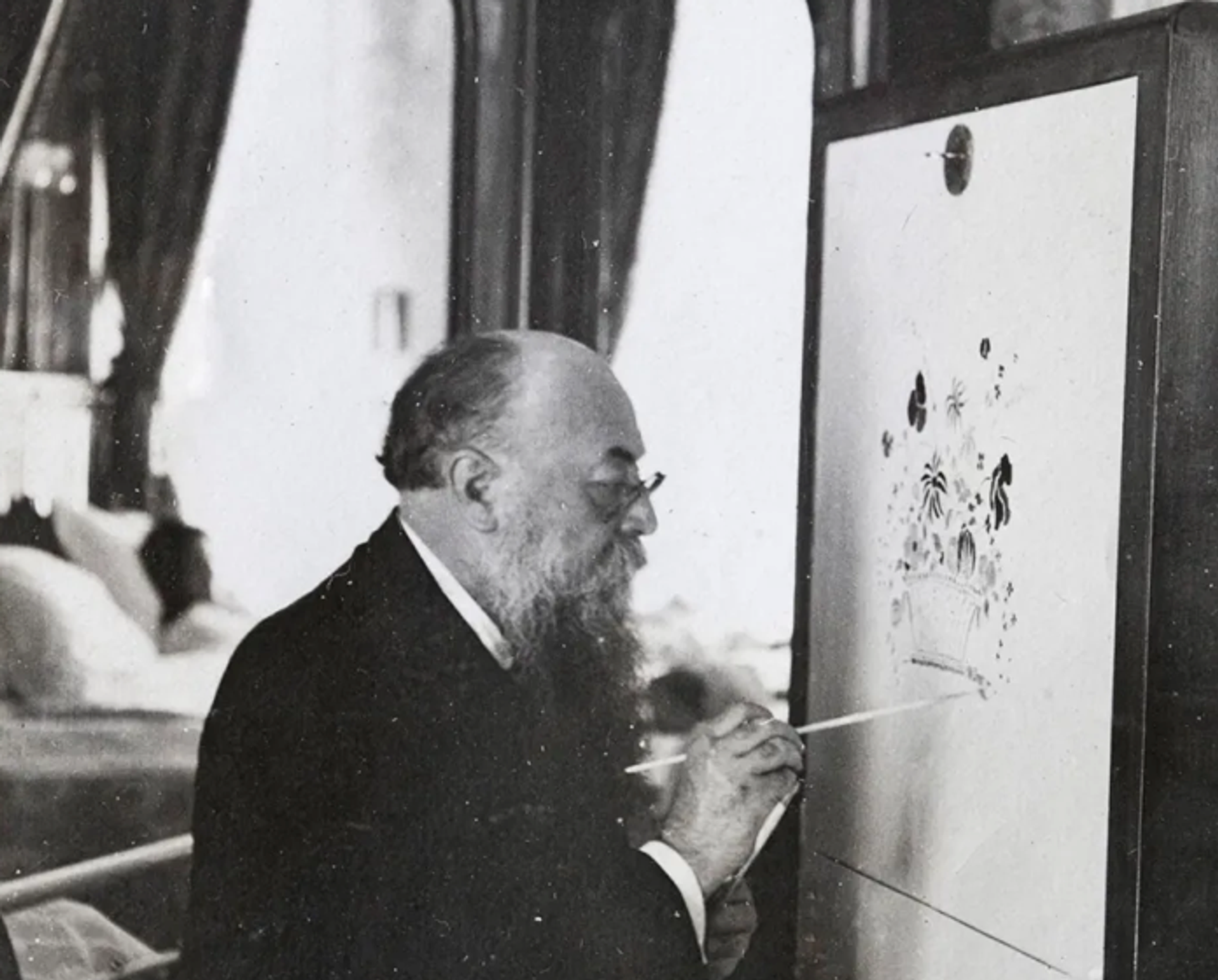
Gustave Fayet painting (1920-22)
Archives familiales Gustave Fayet (© Association du Musée d'Art Gustave Fayet à Fontfroide)
Blossoming Chestnut Trees was originally going to be lent to the Paris exhibition and is included in the catalogue. But at a late stage the loan offer was withdrawn, which allows it to be included in next month’s auction. It will now be the lead lot in the sale of the collection of the Argentinian Blaquier-Arrieta family.
An entry in Fayet’s 1909 diary reveals that he paid 3800 francs for Blossoming Chestnut Trees, then the equivalent of $750. The sale was handled by the Paris dealer Eugène Druet, who had acquired it from the Prince de Wagram, an aristocratic member of the French Rothschild family.
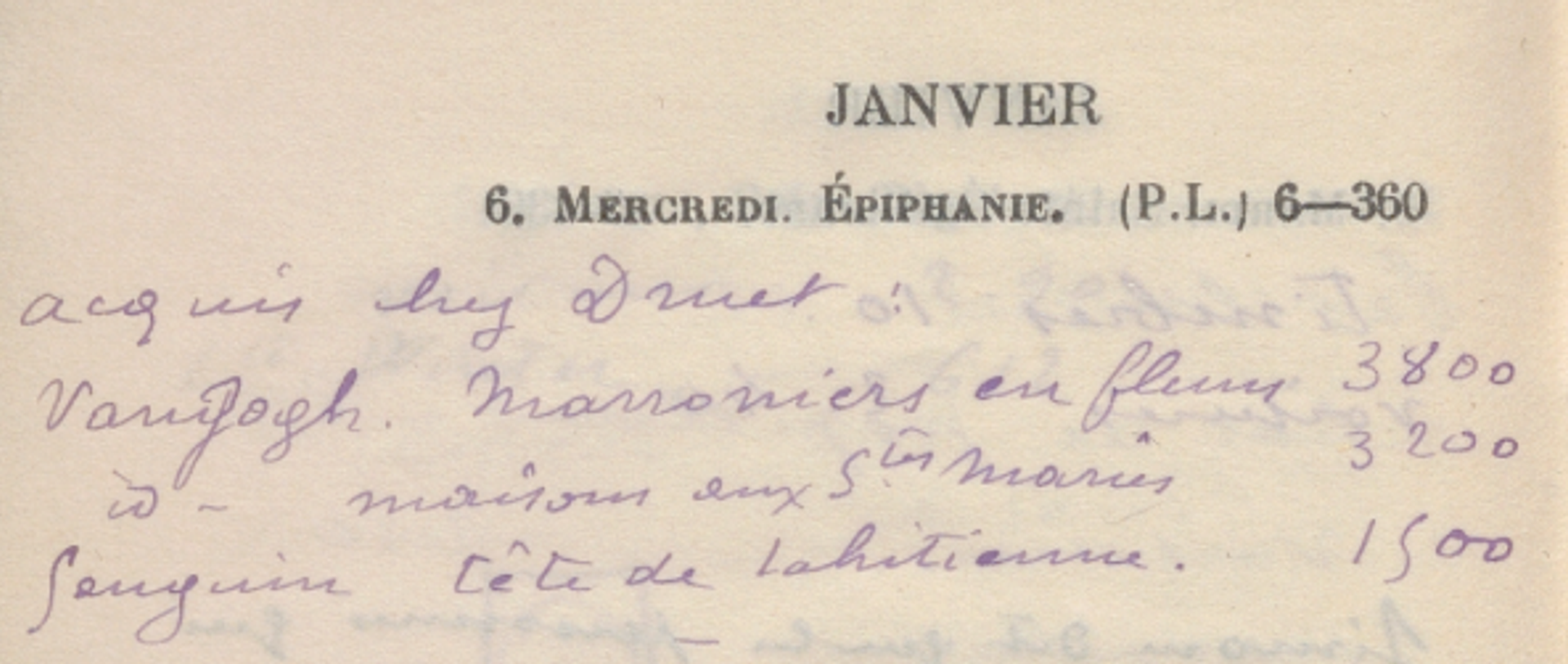
Fayet’s diary account entry for 9 January 1909, revealing the purchase of “Marronniers en fleurs” from the dealer Druet for 3800 francs
Archives familiales Gustave Fayet (© Association du Musée d'Art Gustave Fayet à Fontfroide)
The Fondation Louis Vuitton catalogue also notes that Fayet described the painting as including “a house on the road taken by passers-by”. This confirms it is the Sotheby’s picture, not Van Gogh’s other Auvers-sur-Oise landscape centred around a chestnut tree (now at the Kröller-Müller Museum, Otterlo), which does not include people.
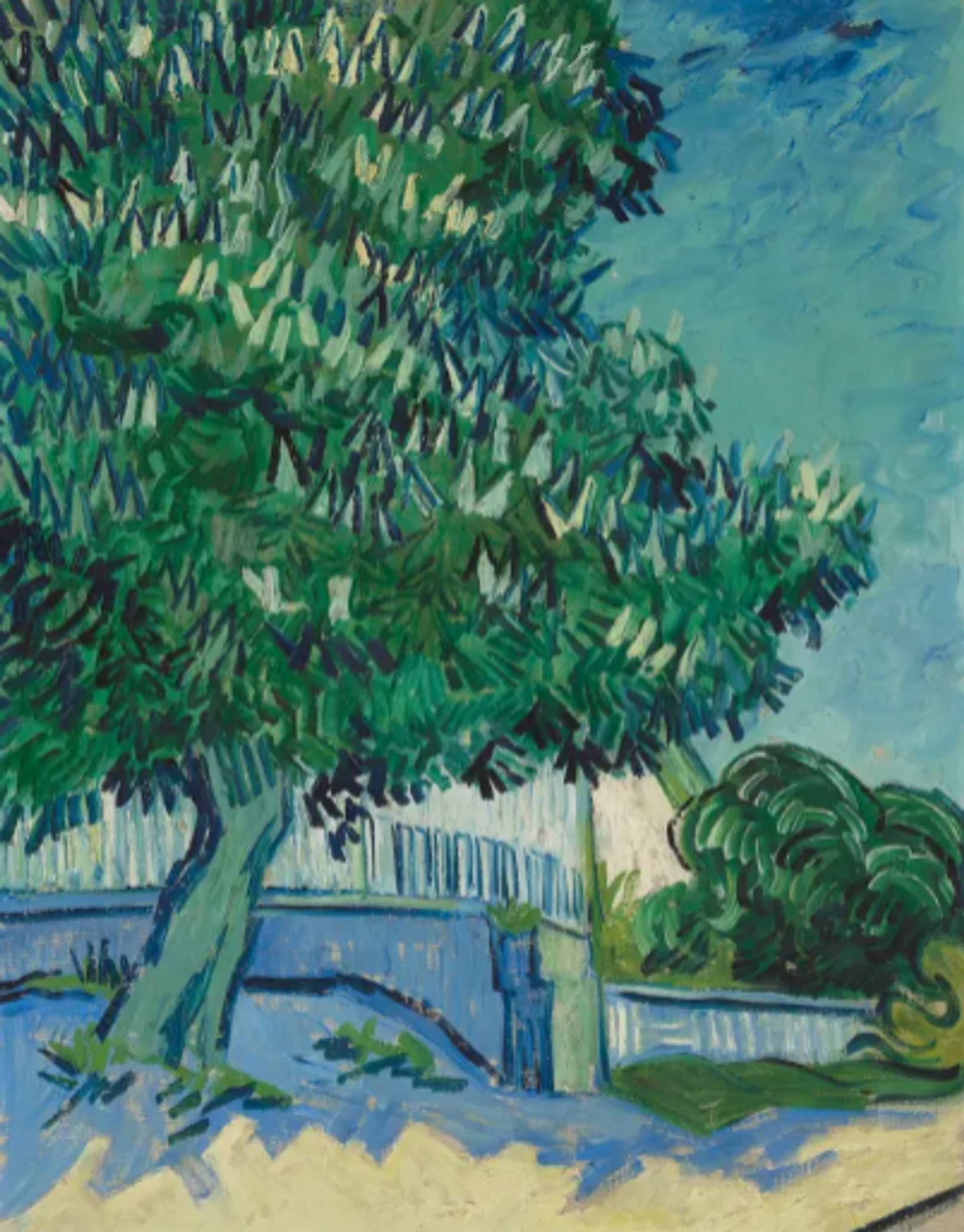
Van Gogh’s Blossoming Chestnut Trees (May 1890)
Kröller-Müller Museum, Otterlo
On the same day, Fayet also bought a second Van Gogh from Druet, White Huts at Saintes-Maries (June 1888). He kept this painting until his death in 1934 and it later passed to the Kunsthaus Zürich. This landscape is now included in the Fondation Louis Vuitton exhibition.
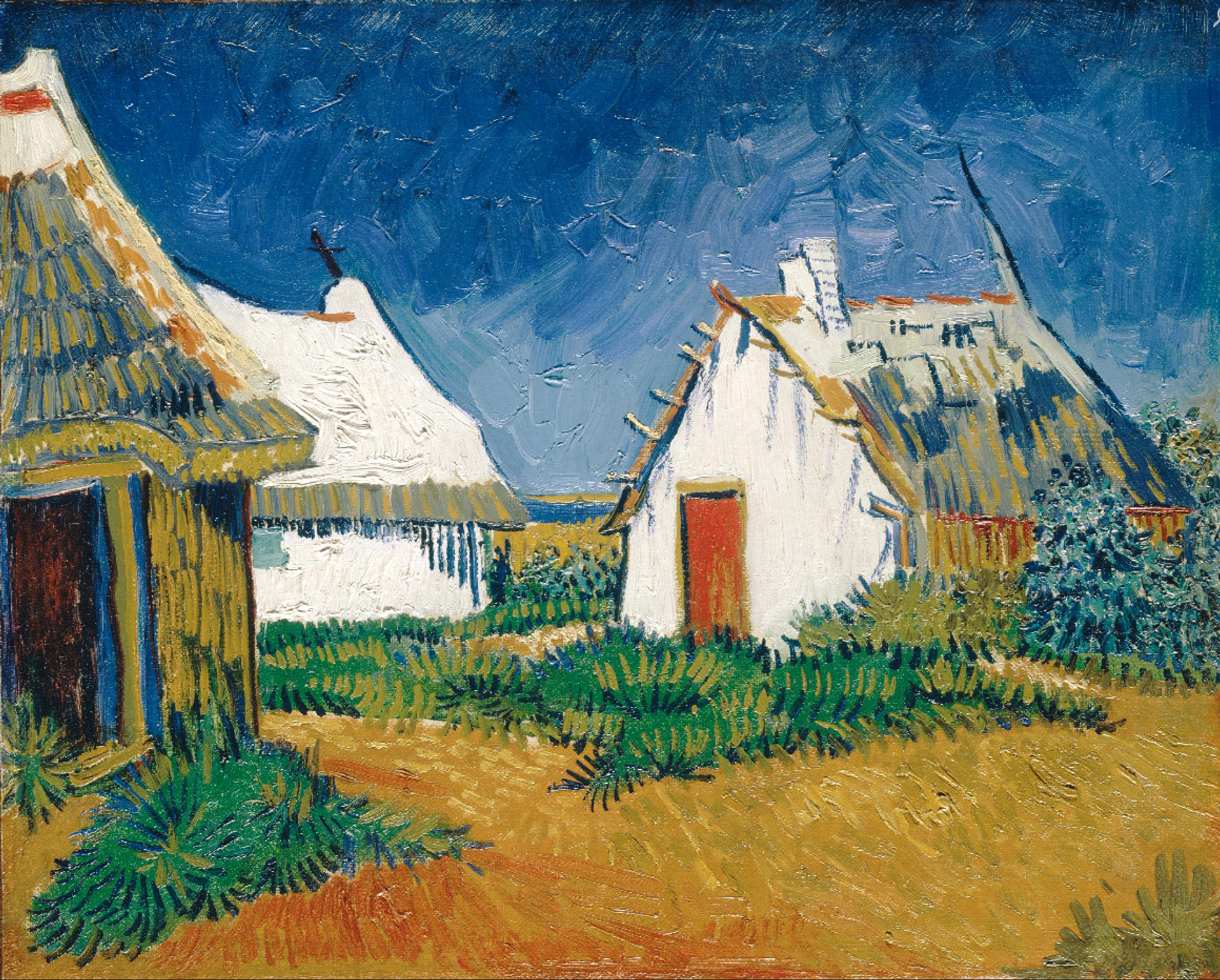
Van Gogh’s White Huts at Saintes-Maries (June 1888)
Kunsthaus Zurich
However, Blossoming Chestnut Trees did not remain long in Fayet’s collection. He sometimes would sell or return works, often to buy something else. But in this case, he purchased the painting just a year after he had bought the Abbaye de Fontfroide, an historic property in southwest France which had involved him in considerable expense. By November 1909 he had sold Blossoming Chestnut Trees to another Paris dealer, the gallery Bernheim-Jeune.
Fayet was a prescient avant-garde collector at a time when Van Gogh was still shunned by the museum world. On 1 April 1909, just three months after buying these two Van Goghs, Fayet had written to a third Paris dealer, Paul Rosenberg, expressing his concern at the conservative taste of French museums. He anticipated that “an artistic revolution” would be required before the Musée du Louvre would buy a Van Gogh. Fayet added that this was a cause which he would be “glad to assist”.
In 1911, just two years later, the Louvre accepted the bequest of Imperial Fritillaries in a Copper Vase (spring 1886) from Isaac de Camondo. Fayet’s revolution came earlier than he had expected.
Other Van Gogh News
The Widow Van Gogh: A Life of Johanna van Gogh-Bonger is what the author, Joan Martelli, categorises as “a fact-based narrative”; that is non-fiction which “reads more like a novel”. It is based around the story of Jo (Johanna) Bonger-Van Gogh, Vincent’s sister-in-law. What gives the book its credibility is the 32 pages of notes at the end, which record the main sources for her novel-like account. To be published next week in the US (and on 3 December in the UK), she describes it as a “tri-biography of Vincent, Theo and Jo”.
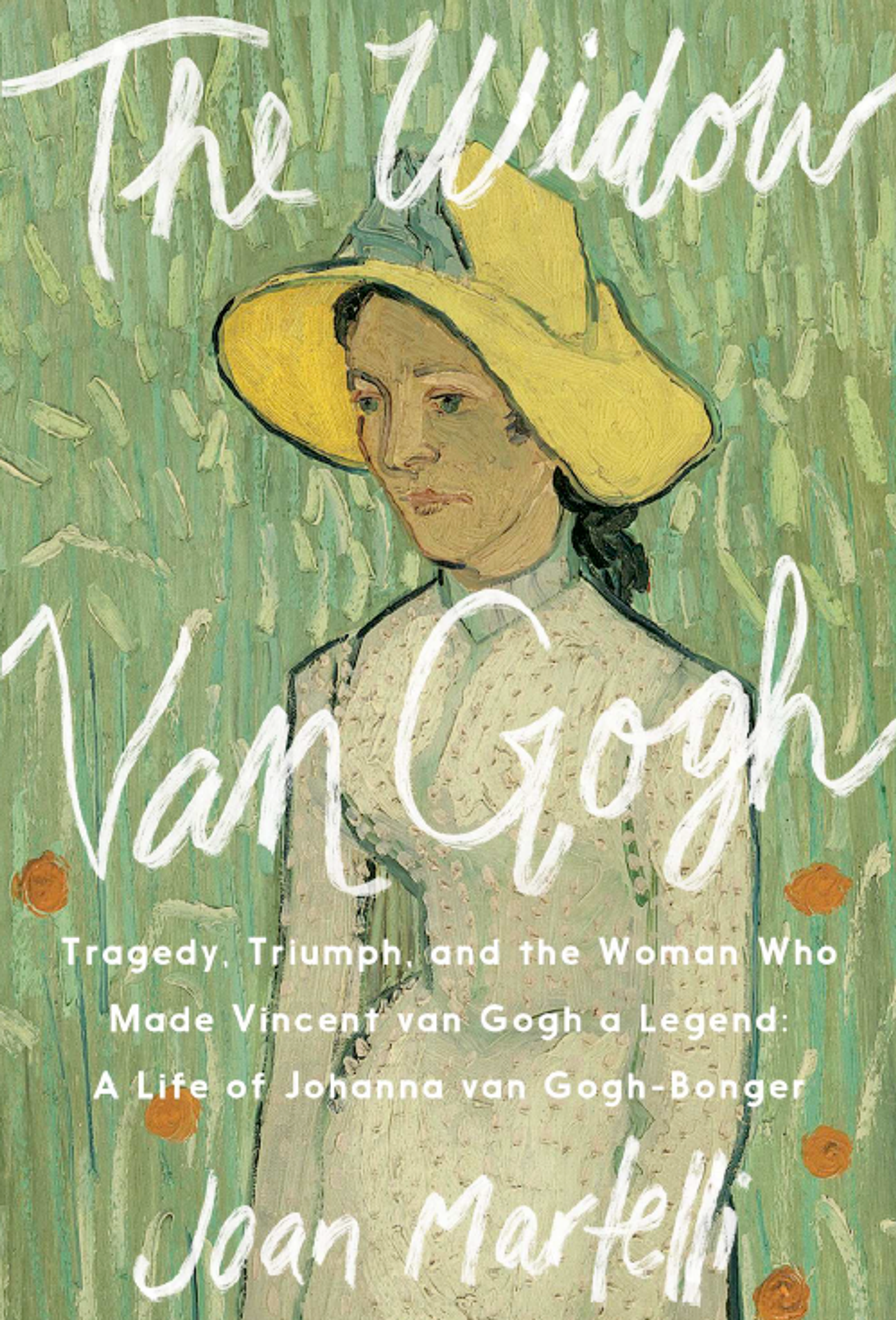
Cover of Joan Martelli’s The Widow Van Gogh: A Life of Johanna van Gogh-Bonger
Pegasus Books, New York