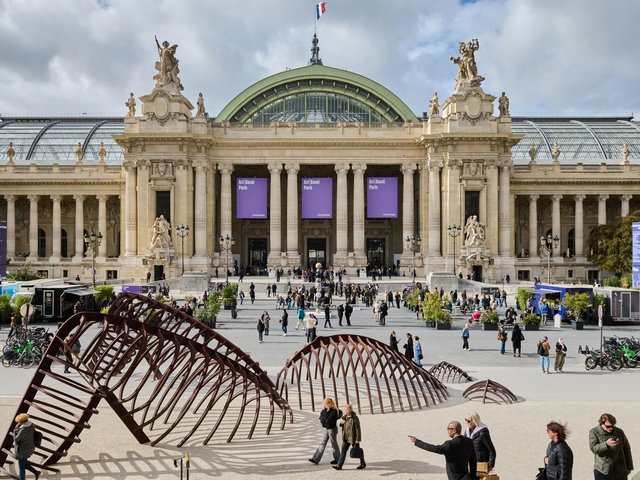
Over the weekend of 17 and 18 October, large swathes of France were set ablaze after student protests were joined by gangs of masked thugs. It was hardly an ideal time for Art Basel Paris to unveil its fifth edition.
VIPs were quickly informed that the fair was working to ensure their safety, with anti-ram barriers installed around the Grand Palais and additional security drafted in. During the fair's preview days (20 and 21 October) guards with dogs were patrolling the perimeter of the fair and police sirens sounded throughout the city.
And despite quite a few collectors, according to some dealers, deciding not to come to Paris, plenty did arrive over the weekend. “Many had already booked and decided to come anyway,” said Andreas Gegner of Sprüth Magers. Indeed between a rapid clean-up operation and some areas—such as those around the Grand Palais—seemingly spared by the destruction, there were little visible signs of the looting. Some shops were boarded up but the real problems were further east, in the Bastille and République quarters, where whole-scale smash-and-grabbing had taken place, with cars burnt, shops destroyed and slogans sprayed on every available surface.
The fair kicked off on Tuesday 20th October with Avant Première, a super-VIP opening between 3-7pm that was first introduced last year. Galleries are invited to submit six names (each with a +1) of their best clients, the idea being that they would have a quieter environment to meet and talk to them before the “first choice” VIPs were let in the following day. This decision did not go down terribly well with those without the select entry, and indeed it was quite difficult to tell the difference between the two days: Art Basel does not communicate daily visitor figures. Among many collectors spotted were Patrizia Sandretto re Rebaudengo, Christian Boros, Pamela Joyner, Uli Sigg, Graźyna Kulczyk, Adam Lindemann and Jessica Seinfeld.
Indeed, the fair and the plethora of other events during the week were a powerful attraction for visitors. There were at least 12 satellite fairs, as well as private showings of art in splendid Parisian flats, the opening of Large, a vast new private initiative on the site of the former Renault factory, as well as impressive museum shows.
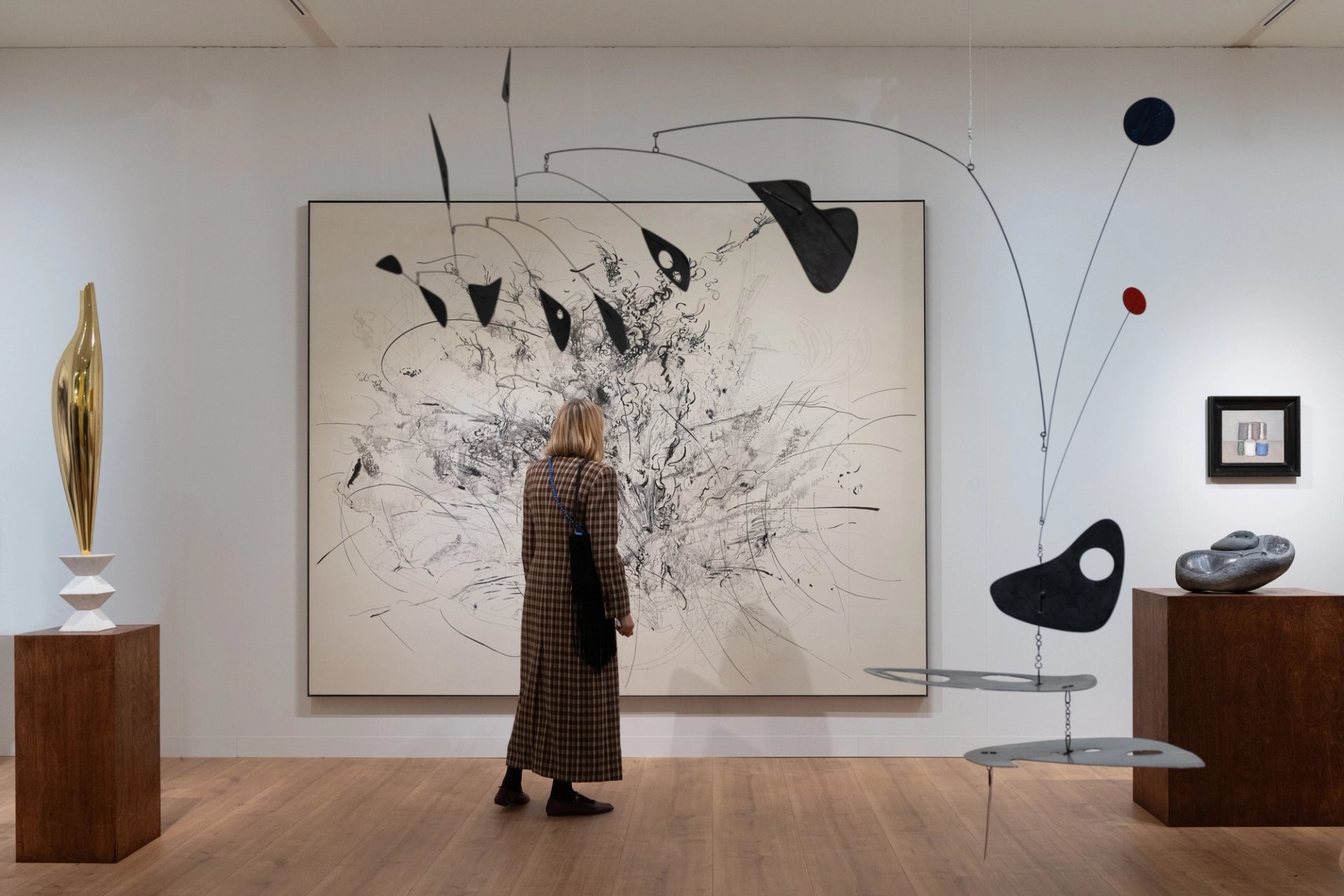
White Cube's stand at Art Basel Paris 2026
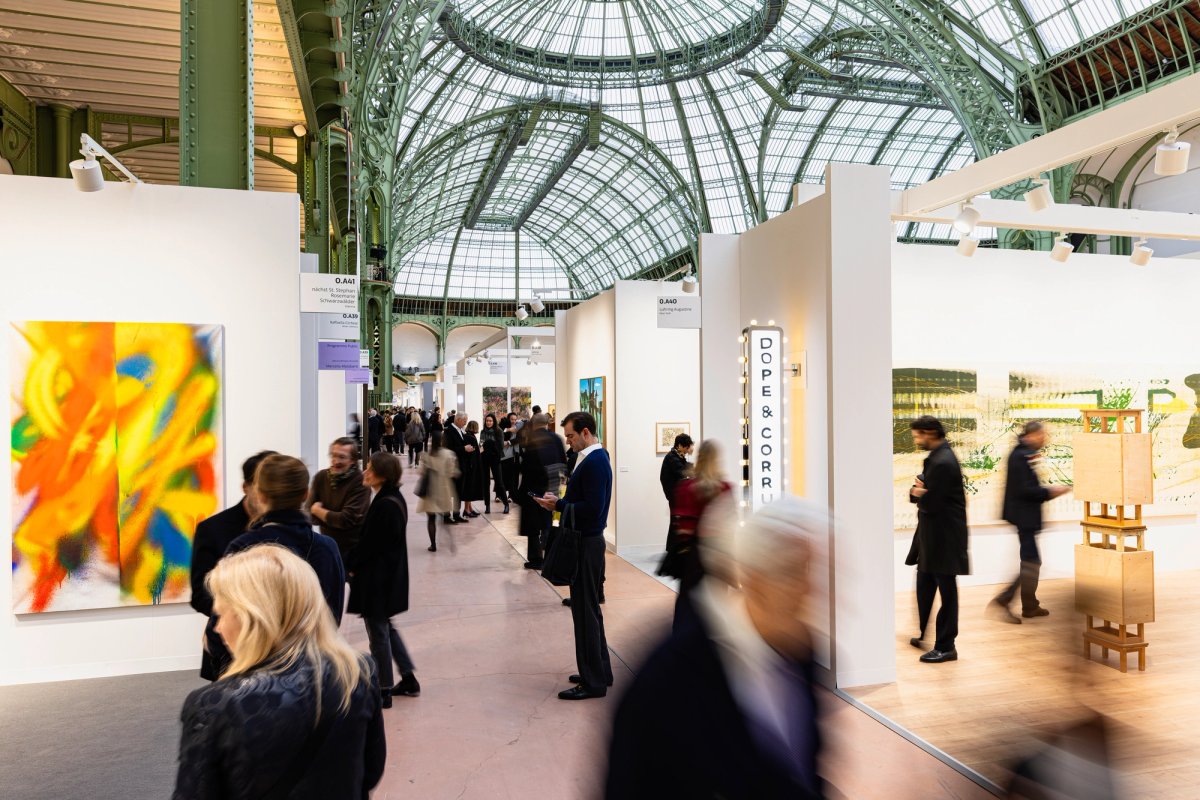
The central nave of the Grand Palais, under that vast, soaring roof that bathes the art in limpid light, houses all the major galleries, with the biggest hitters at the front and then smart secondary dealers towards the back. Upstairs are smaller galleries—you can see them from the nave but footfall is inevitably lower. Worst placed was the Premise section, tucked away to one side with just twelve exhibitors including Amanda Wilkinson from London, showing Derek Jarman (two sold at £22,000) and the Parisian Zlotowski, with the Hungarian media artist Vera Molnár. However it offered some excellent works: Hilla Rebay at Durazzo (€15,000-€40,000) or Arthur Ruiz Piza at Raquel Arnaud Gallery (most under €15,000).
Sales appear to have been good on the first day, with the usual blast of emails trumpeting successes. Pilar Corrias placed virtually all of her solo show of paintings by Christina Quarles, with Aerial! (2026) selling to a Midwestern American museum (no price disclosed). Sprüth Magers reported a string of sales including George Condo ($2.2m), Jenny Holtzer collaboration with Lady Pink ($450,000). White Cube had no less than 16 early achievements, from Julie Mehretu’s Rise of the New Suprematists (2001) tagged at $7.8m, to two reclaimed tyre ply works at €100,000 each by Ibrahim Mahama, who has an extraordinary display at the Fondation Cartier just nearby. Almine Rech sold an orange-hued Conjunction 23-96 (2023) by Ha-Chong-Hyun for $390,000 and had replaced it with a blue work by the same artist on the second day. The gallery was also showing Taryn Simon’s One Little Room on Fire, (2026) but had not sold it on day two.
There was a curious outlier—a small watercolour by William Turner, View in the Val of Aosta, (1836) on Gladstone’s stand, priced at $380,000—not sold by the second day.
Attracting enormous attention was Jeff Koon’s giant stack of corks, 10 foot high and looking like, well, corks, but in fact made of bronze. In an edition of three, Corks (Couple) (2011–2018) is apparently, if you squint the right way, in fact a portrait of embracing couples. It cost “seven” figures, a Gagosian representative said, adding that one had sold at the fair.
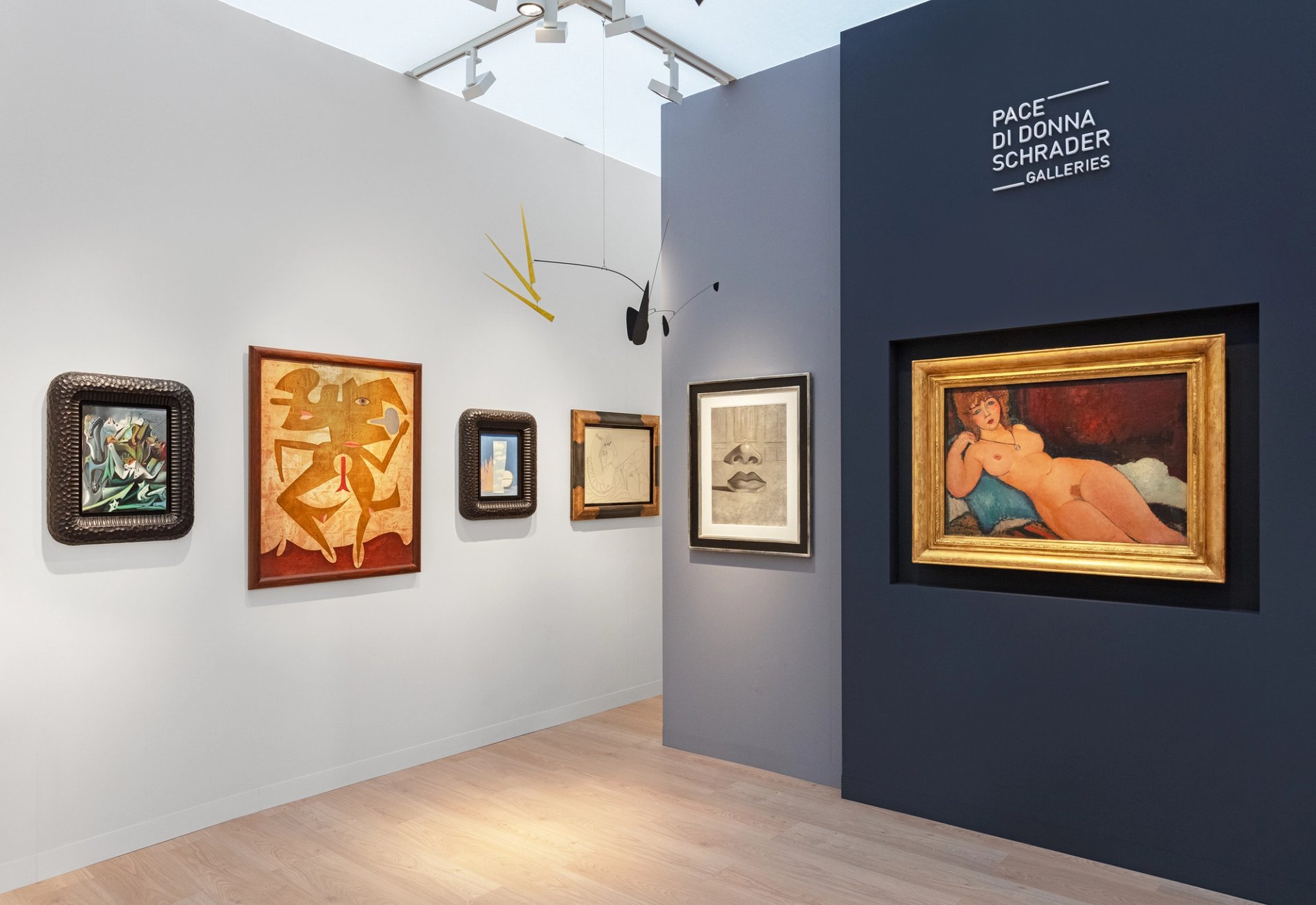
Pace Di Donna Schrader's stand at Art Basel Paris 2026, including Modigliani's Nu étendu (Lolotte) valued at more than $100m
Much more expensive was the Modigliani reclining nude from 1917 on the Pace Di Donna Schrader stand, priced at over $100m according to Emmanuel Di Donna. Entitled Nu étendu (Lolotte), the work is not in Ceroni—until now the bible for authentication of the Italian painter—but is in Marc Restellini’s new catalogue raisonné. This might be a test of the catalogue, which the author hopes will become the authority on the artist. That is a very powerful price, particularly as the subject does not have the characteristic mask-like features of some of Modigliani’s portraits. But it is certainly extremely sensuous, and sex sells.
Another pricey work was dramatically unveiled at the fair: Gerhard Richter’s Rococo Table, (1965) a black-and-white illustration of a rather grand side table the artist saw in Charlottenburg Palace. Hauser and Wirth sold it at Avant-Première for $10.5m, it reported
By the second day, dealers seemed happy on the whole, but one fear was hanging over the whole event. The issues that caused the demonstrations in the first place have not gone away, and the “gilets jaunes” (yellow vests) were threatening to protest as well, as they have in the past. “For the moment, we are monitoring the situation, we will follow the advice of the Préfet de Paris and if necessary close the event,” one Art Basel staffer said.
Whether Art Basel Paris will continue as planned, or close early because of more rioting remains up in the air. "We remain in close contact with the Paris Police Prefecture and all relevant authorities, and will communicate any decision as soon as practicable," a statement said.