The US artist Donald Judd (1928-94) remains one of the most celebrated and studied figures of post-war American art—and one of its most difficult to pin down. In a new book, The Sculpture of Donald Judd, the art and architectural historian Neil Levine offers a fresh reading of the Minimalist artist’s work, tracing its development from painting to three-dimensional objects in the first chronological analysis of the artist’s practice. A friend of Judd’s from roughly 1965 to 1975, when the two had a falling out, Levine draws from decades of following the artist’s practice, as well as anecdotes from their friendship.
The Art Newspaper: A lot has been written about Judd—and by Judd. Why did you decide to write this book?
Neil Levine: I’ve had a long-standing belief that theory and art practice are very different. What artists write is writing, and what artists make is art, but the two do not necessarily correlate. A lot of Judd’s writings are about other people’s work. They give clues to what Judd was thinking about his own art, but these writings are not directly about his work. I love the language he used, but writings, like his often-quoted [essay] Specific Objects are totally opaque. If we keep using Judd’s writing to discuss his work, does it illuminate anything about the objects? I feel there are other meanings to discover.
Did you come across any discoveries while writing the book?
I had not been as aware of the importance of the found object on Don’s work. I always knew of the famous black painting with a baking tin inset that is in the Museum of Modern Art [in New York], but I never put it together how significant found objects were to Judd’s early work. I think there’s a clue to some of the meaning: that in its relationship to real objects, Judd’s work stands as a form of concrete art rather than abstract art. In its concreteness, it’s critical of the abstractness of modern life.
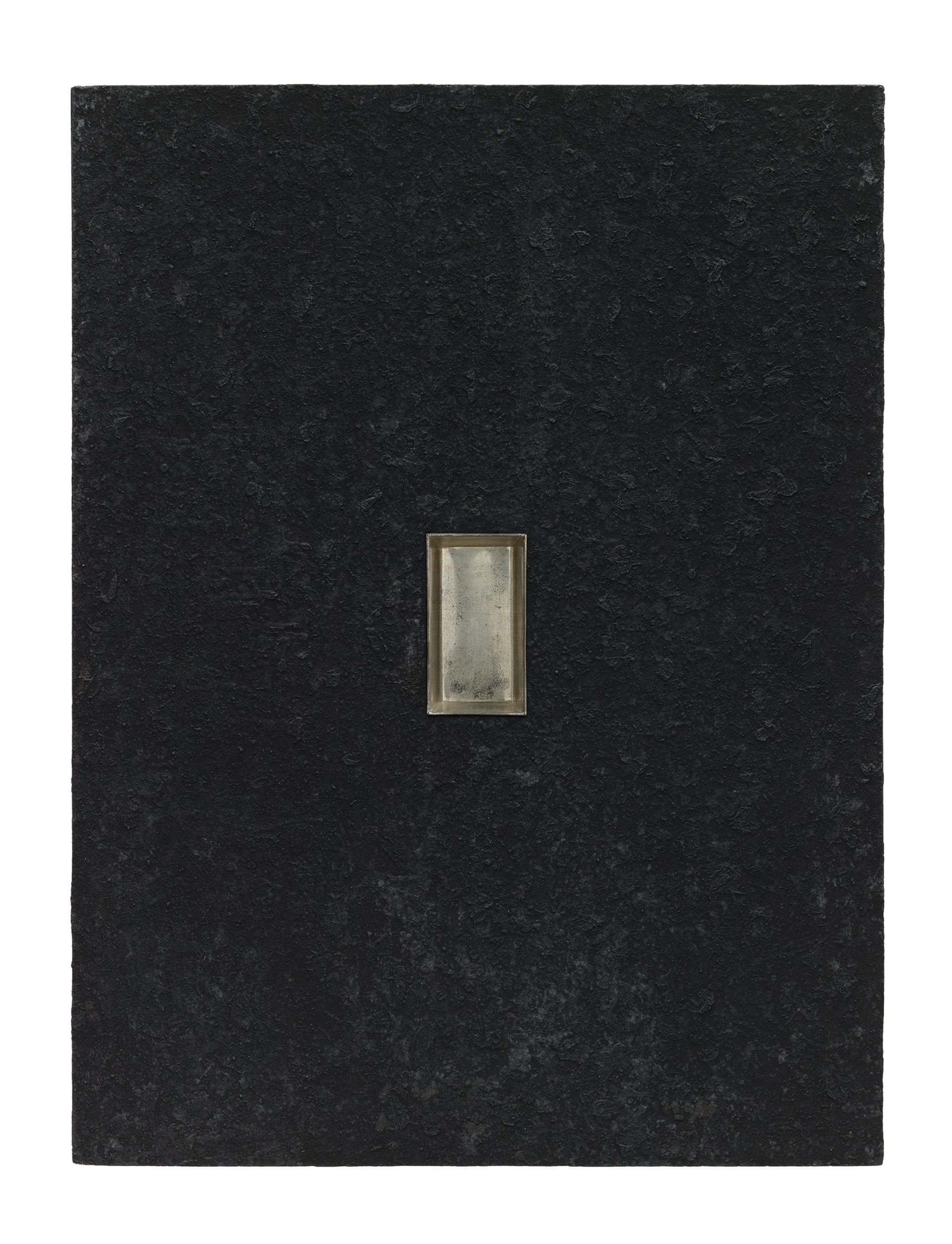
Judd's Untitled (1961) is in the collection of the Museum of Modern Art in New York art: © 2026 Judd Foundation / ARS, New York; Photo: MoMA, New York. Gift of Barbara Rose
Did having a personal relationship with Judd affect the way you approached writing about him?
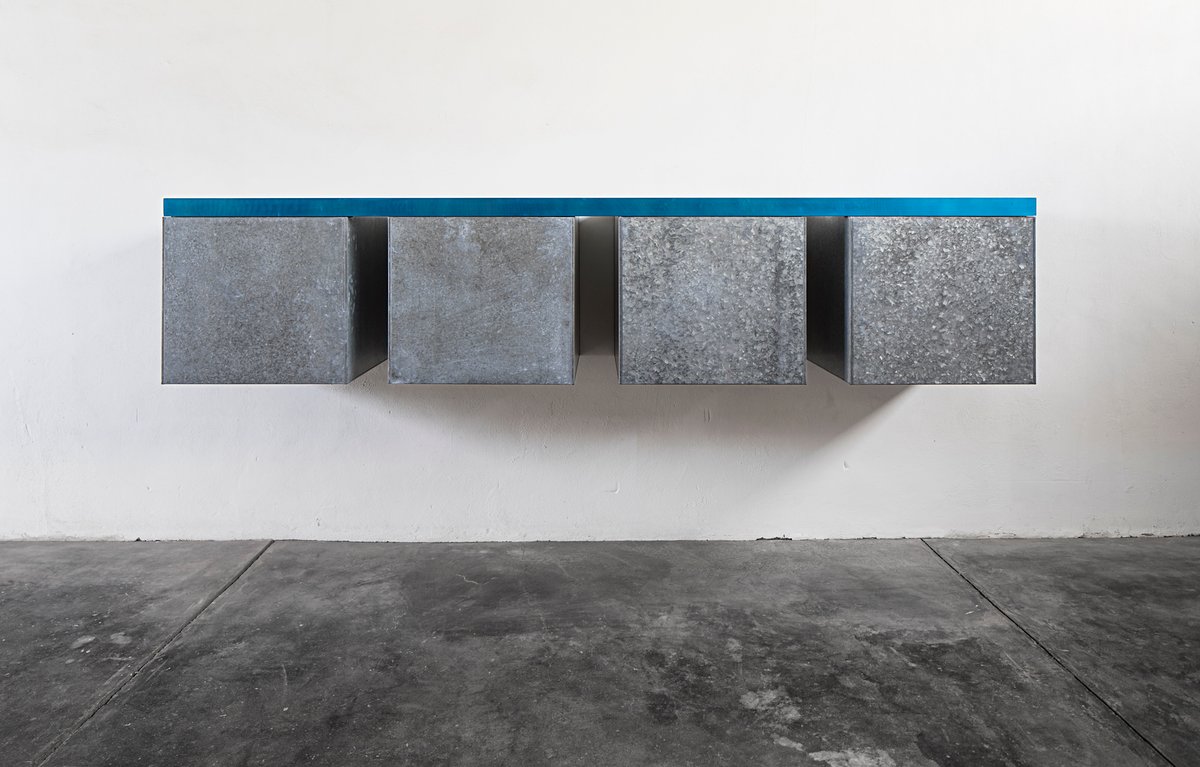
Yes and no. Before even meeting Judd, I had a challenging relationship with writing about him. I wrote for Artnews after college and was assigned to review a group exhibition at Green Gallery that included Judd. This was the spring of 1965, and there was a sculpture called To Susan Buckwalter, of projecting volumes hanging from the wall, that just knocked me over. It scared me, it was strange. I’d never seen anything like it. I was so nervous that I was unable to review the show. That piece is on the cover of my book now.
Being friends with Judd didn’t mean getting to know him in the way you might think. One of the reasons I was keen to take the trip to France in 1975 was to get into his head. In the evenings, we’d sit outside and I’d ask him questions, but the answers were never very forthcoming. My comments struck a nerve, and this trip, as I share in the book, was the last time Judd and I spoke. There’s a reason he’s known as having been taciturn.
• Neil Levine, The Sculpture of Donald Judd, Yale University Press, 180pp, $40/£30 (hb)