The global art market grew 4% last year, to $59.6bn. It is the figure everyone repeats, but it is close to useless, because it combines two markets moving in opposite directions. Works above $10m fell 44% in the first half of 2025 and are down 72% from the 2022 peak; not one lot sold above $50m, against 13 in the first half of 2022. Dealers selling below $250,000, meanwhile, reported sales up 17%. The top is in retreat, the bottom expanding, and the aggregate describes neither. Anyone trained in commodities knows the mistake: you never publish one price for a market that trades in grades. That the flagship research leads with it is a clue about who the research is for.
Strictly defined, Art is not a commodity: a painting is unique and unsubstitutable, and its price may never settle at any “correct” level—the economist William Baumol argued in 1986 that art behaves like a floating crap game, because nothing forces its price toward a fundamental. He was right, and the concession is smaller than it sounds. Art behaves like a commodity everywhere that matters—in how it is supplied, hedged, financed and traded—and the market has built an entire apparatus that treats it as one.
Oil had every excuse that art now has
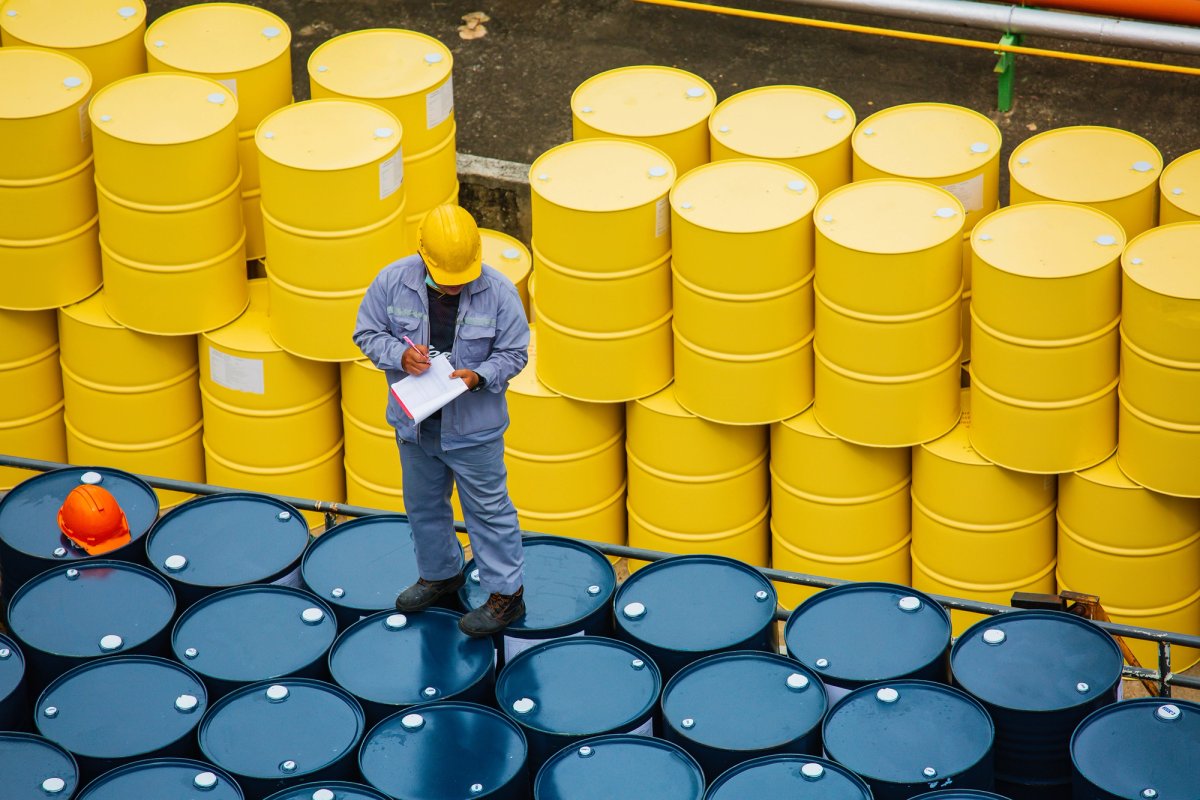
Crude oil in the early 1970s looked exactly as unanalysable as art is said to be now: hundreds of non-comparable grades, sold at prices posted by a few powerful sellers through relationships rather than exchanges. With no benchmark and no public record of what anything traded for, its supply was managed by a cartel, Opec (Organization of the Petroleum Exporting Countries). Then the infrastructure arrived: futures markets in the 1980s, and a reporting agency, Platts, that gathered the day’s real bids and trades and published an assessed price, turning a private trade into a public one by method alone. Oil did not become legible because its nature changed; rather, someone built the layer that made it legible—a feat that art has not achieved.
The parallels are clear. A gallery that sets a price, keeps it private and offers it selectively is running a posted-price market, as the oil majors did before 1980. An estate metering an artist’s work, or a gallery choosing who may buy and cutting off quick resellers, is doing what Opec does with a quota. A third-party guarantee is a written option; when a guaranteed lot sells to its guarantor, the reported hammer is not a clearing price but the exercise of a hedge. And the most honest number in any commodity market—how much offered supply failed to sell—is the one art buries. The buy-in rate is the clearest demand signal available, and it never leads the report; the record lot does.
None of this makes art a commodity. It fails the definition at its root—fungibility—and no pile of structural matches repairs that. What the parallels capture is structure, not definition, and structure is what finance operates on: a market plumbed like a commodity can be financed like one even though it is not one. The parallels do not prove art is a commodity—they explain how it came to be treated as one.
Commodified on a different plane
The market could not make a painting fungible, so it wrapped the painting in instruments that are. Lending against art turns a unique object into collateral. Funds pool works so a share is interchangeable, though no two holdings are. Fractional platforms slice a canvas into tradable shares. None of it makes a painting a commodity; all of it makes claims on paintings behave like one — as finance has always done with unique assets. But every instrument needs a valuation to function, and the wrapper inherits no anchor the object never had. A credentialed appraisal profession exists, but an appraisal is a point-in-time opinion, not a continuous market price, and it says nothing about who owns a work, in what fractions, against what liens. That record does not exist at all.
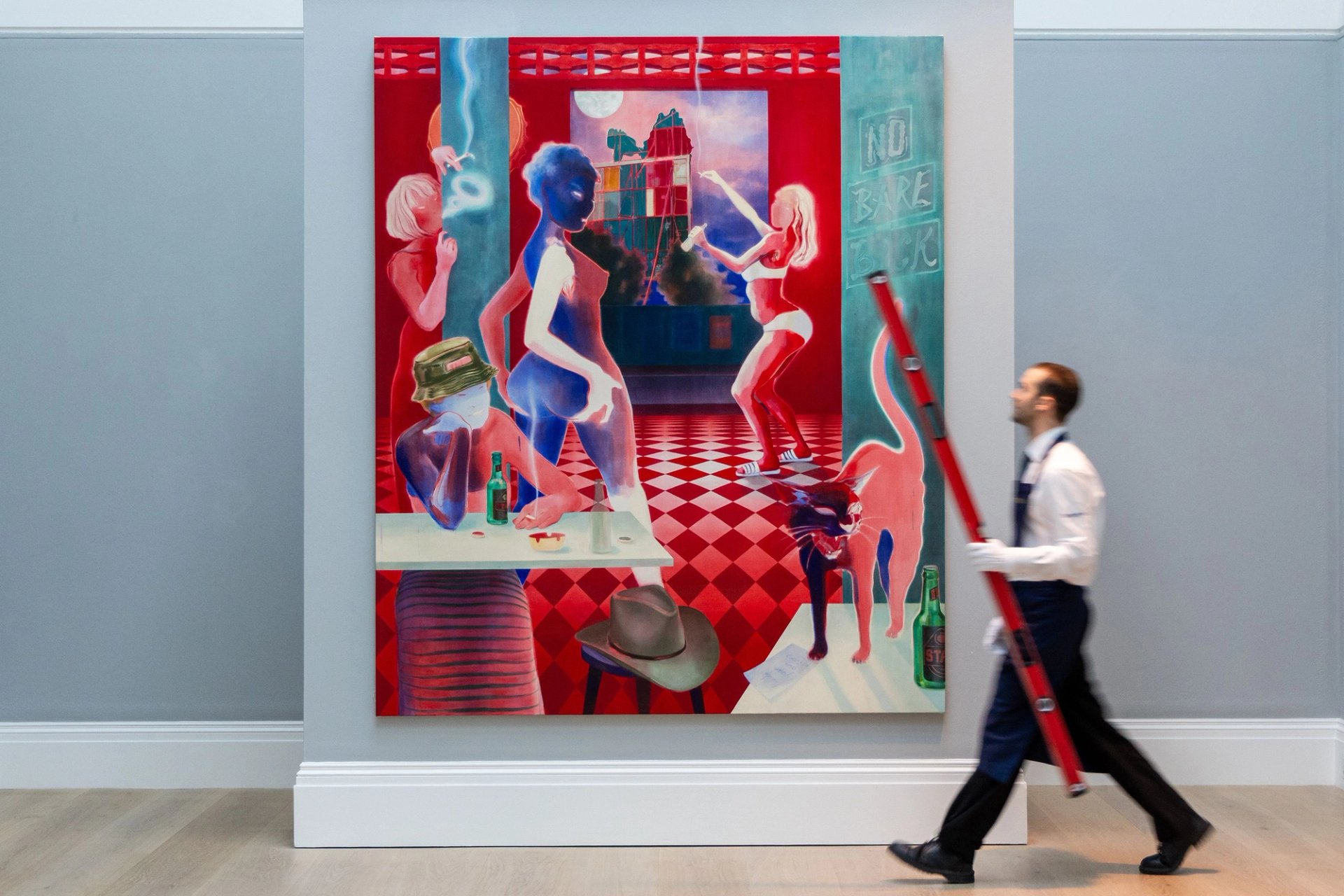
Hot property: Lisa Brice’s After Embah (2018) sold for £5.4m last year at Sotheby’s © the artist; courtesy of Sotheby’s
Which is how you get Inigo Philbrick. Between 2016 and 2019 he built a business on these very instruments and defrauded collectors and lenders of more than $86m in what the FBI said was the largest art fraud in US history. Philbrick’s was not a valuation fraud—the works involved had plausible values—but an ownership one: he sold more than 100% of individual works to multiple buyers and pledged the same pieces to lenders who knew nothing of each other, because nothing existed to tell them. The prosecutor’s diagnosis was exact: he exploited “the lack of transparency in the art market”. Philbrick is the prosecuted extreme of a quieter, legal exposure sitting in the market every day—the loan against a stale appraisal, the claim written against an ownership no one confirmed.
The markets the index cannot see
The cost is highest where data is thinnest. Bonhams’s live Modern and contemporary Middle Eastern art sale last November made £3.2m and set multiple records; its online sale in February took $287,000, with two in five works unsold. Same house, same department, months apart. Read the first and the market booms; read the second and it fails; read the buy-in rate across both and you learn the truth: demand concentrated among committed buyers, not the broad market the record implies.
The capital behind this fast-growing regional market is, at one remove, hydrocarbon revenue on a lag; an analyst who can model that holds a forward indicator on a market most researchers cannot see at all. African art tells a subtler version: Sotheby’s has folded these artists into its premier sales rather than a separate category, and in the main room they reach prices the niche never produced—the South African painter Lisa Brice set a record at £5.4m in March 2025. That is a re-rating, not a rally.
None of this is a market waiting to be discovered. The capital has already arrived, without the price infrastructure that would let a lender, insurer or fund verify what it is underwriting. The missing layer does not gate the money, it gates the safety of money already in motion. If anything, the opacity selects, deterring the disciplined and leaving the field to those willing to write claims against unconfirmed marks. Financialisation is not being prevented by the absence of infrastructure, it is racing ahead of it.
There is a reason the market’s own research does not say this. The institutions producing the flagship studies also lend against art, manage collections, and insure and audit it. Nobody whose revenue depends on volume leads with a buy-in rate, and the most-cited index, Mei Moses, is owned by Sotheby’s. Independent research exists, but none yet combines independence with private-market coverage, transparency and segment detail.
So the claim is not that art is a commodity. It is that art is being financialised faster than it is being made legible—the apparatus treating it as a commodity has outrun the infrastructure that would verify its marks. The notion that art lies beyond economics has always served those who prefer it not examined too closely. It is superb public relations. But it has never been an argument.
• Faustine Jean-Louis is an art market economist and the founder of Apotheosis Advisory