Modernism is often seen as a radical break from traditional art, with the rejection of realism and embrace of abstraction. Driven by industrialisation and other societal shifts, this period of art prioritised individual expression and experimentation as a means to capture the human experience. But by looking at the period through a queer lens, another Modernism becomes visible.
This is the premise behind Queering Modernism: Visual Languages of the 20th Century, the curated queer visual history thread at Frieze Masters this year, organised by Anke Kempkes. To read Modernism through a queer lens is to “uncover a striking wealth of unconventional, at times distinctly anti-
canonical, aesthetic languages, subjects and forms of representation”, Kempkes says.

Anke Kempkes is curating the new thread, which is spread across Frieze Masters Photo: Lina Bertucci
Kempkes recently curated the 2025 exhibition Queer Modernism 1900 to 1950 at K20 Kunstsammlung Nordrhein-Westfalen in Düsseldorf. Now, this section at Frieze Masters, spread across the fair rather than contained within a single area, traces queer experience and LGBTQ+ representation from the early 20th century through to the emergence of a Postmodern queer art scene in the 1980s.
For artists working when homosexuality was censored or punished, openly showing same-sex desire was often impossible, leading them to instead express it through myths, religious stories, nude figures, portraits, clothing and in other subtle ways. Kempkes describes this as a culture of “innuendo” and the “known secret”, in which artists could use familiar historical or mythological imagery to encode identities and desires that could not be shown directly.
Artists could cloak homoeroticism in established iconographies, “deploying familiar [tropes] as a kind of historical drag”, Kempkes says. Among the most enduring of these allegorical figures, she notes, is Narcissus, immortalised in paintings such as Caravaggio’s Narcissus (around 1597-99).
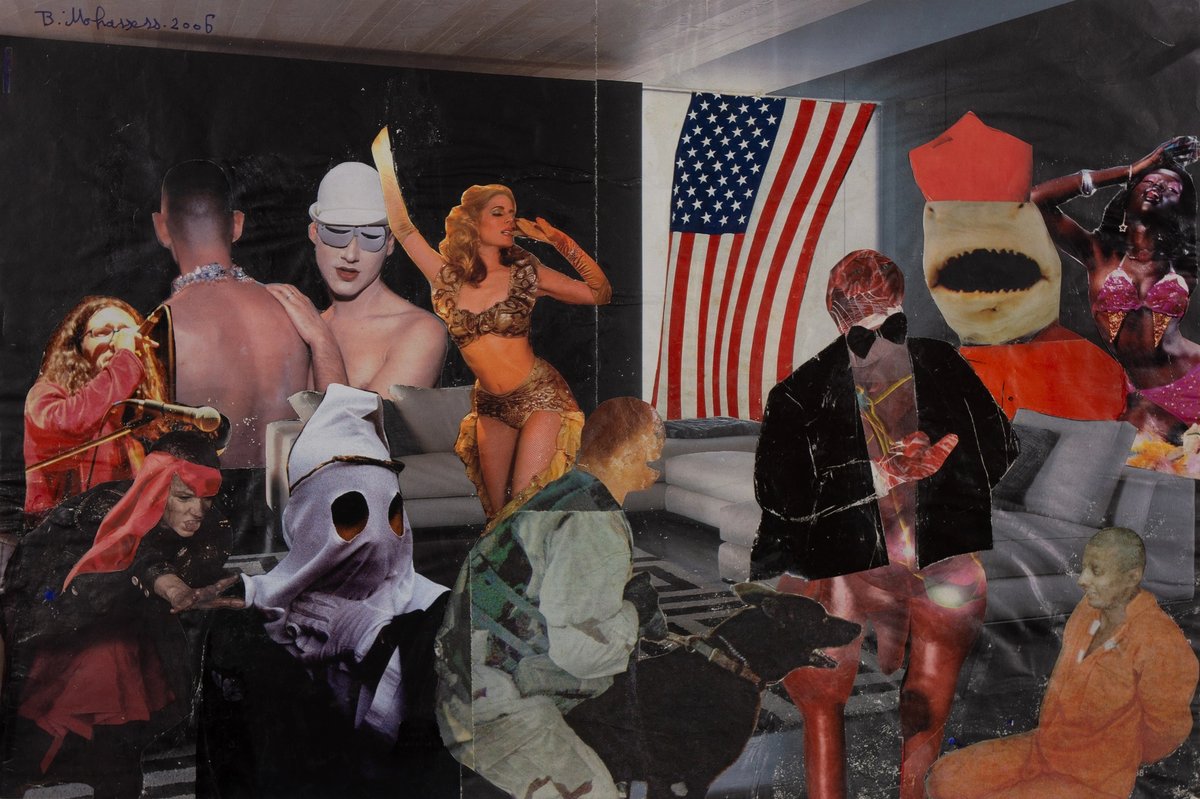
Kempkes connects this history to the Iranian artist Bahman Mohassess, who worked in Tehran from 1954 onwards, in the aftermath of Iran’s coup d’état. Mohassess’s work is presented at Frieze Masters by Ab-Anbar Gallery, which will showcase a variety of his paintings, collages, bronze sculptures and other works. Frieze describes the presentation as “re-evaluating an artist who destroyed many of his own works to mirror the erasure of his identity”.
For the gallery’s director, Salman Matinfar, Mohassess was both a product and a challenger of his time. His art was “heavily political and you can see his sexuality in the work”, Matinfar says. Mohassess was a daring and mysterious figure whose work was almost unknown, even among Iranian collectors, until recent years. Mohassess’s mythological figures of the 1960s were “marked by an existentialist worldview—a theatre of scarred, limbless and doomed bodies that offered a powerful indictment of political injustice, war, state violence and the looming ecological crisis”, Kempkes says.
Global story
By the 1970s, Mohassess’s fauns and minotaurs had become “increasingly charged with homoeroticism and sexual provocation,” she says. His bronze nude Faun Musician, erected in 1971 in front of Tehran’s new City Theatre, was removed and mutilated during the 1979 Islamic Revolution. In the 1980s Mohassess “effectively started to queer the Minotaur”, which was one of Pablo Picasso’s most obsessive self-allegories.
Mohassess’s practice “unsettles the Eurocentric canon of postwar art,” Kempkes says. Openly gay, queerness permeates his work, “often through an engagement with the grotesque, as both an aesthetic and critical force, intertwined with his larger confrontation with violence, authoritarianism and the alienation of modern life”. Kempkes has resisted treating queer Modernism as exclusively European or American, and Mohassess is one artist whose work helps to tell a more global story, given that queer experiences vary markedly across countries and cultures.
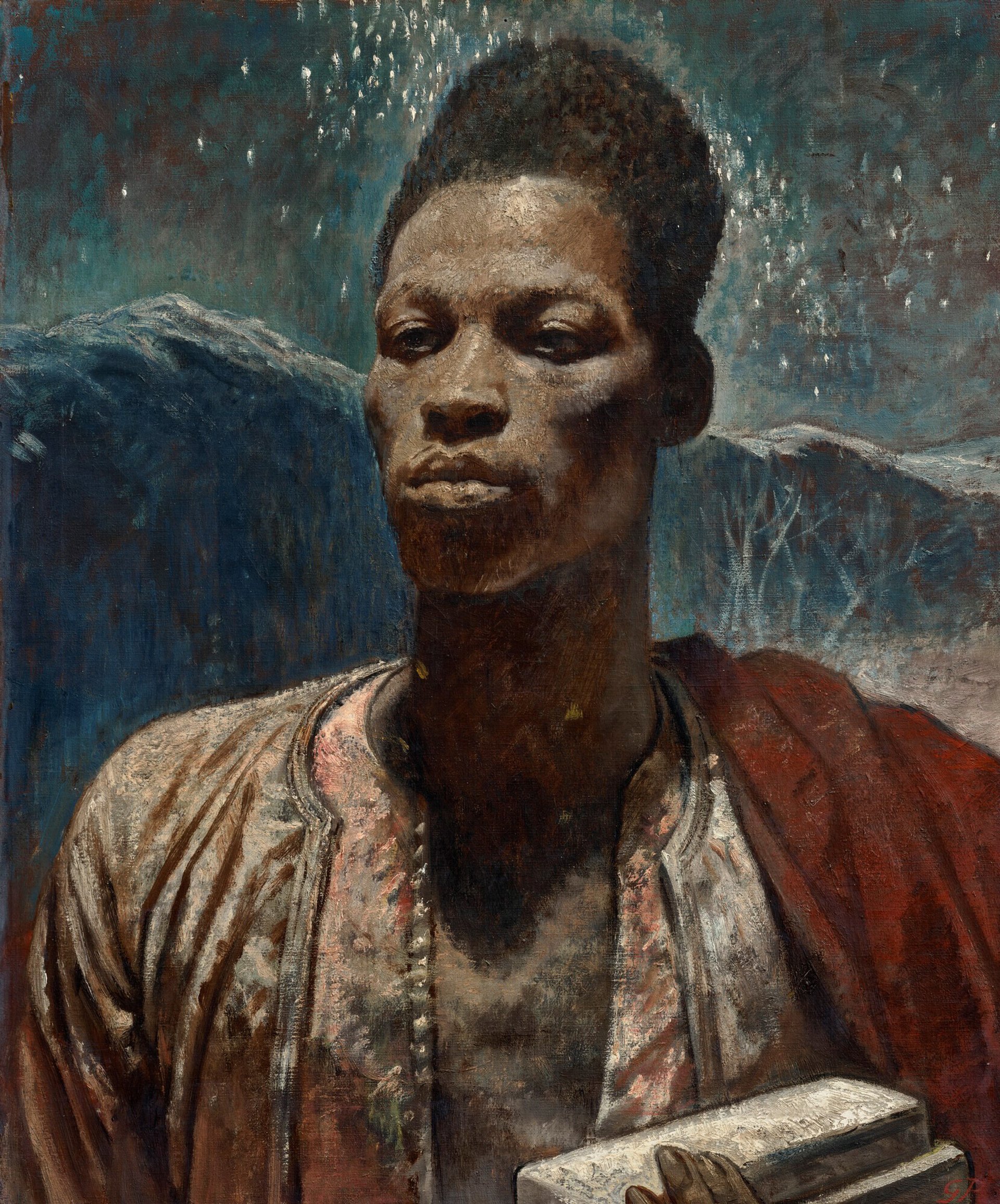
Glyn Philpot’s King Balthazar (1929), featuring Henry Thomas, the artist’s Jamaican-born sitter, is on show with Agnews Courtesy of Agnews
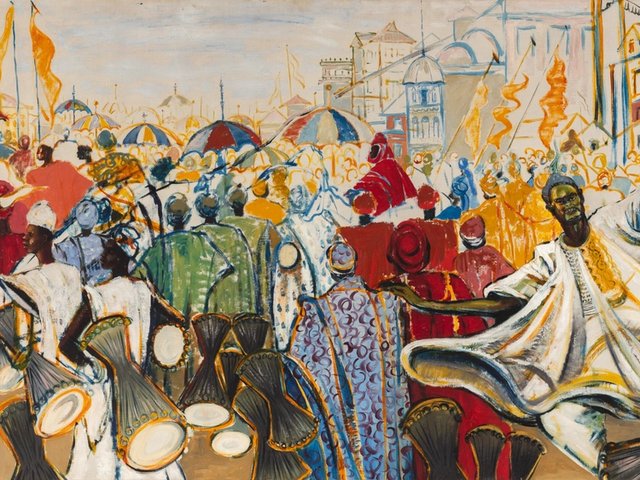
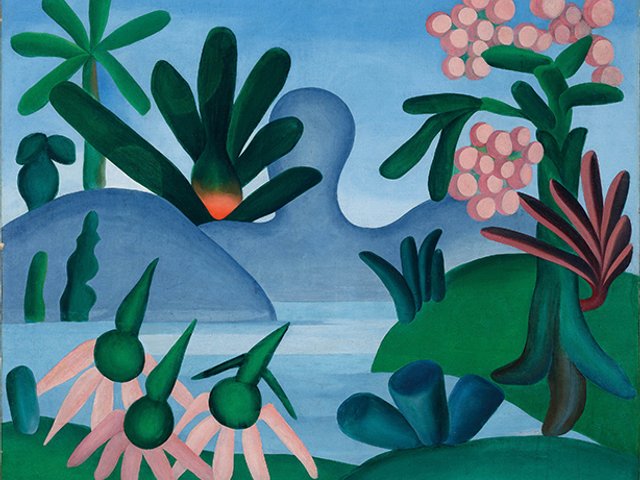
Another fascinating example is Ismael Nery, whose practice “emerged from very different non-Western contexts, while forging transnational as well as local perspectives on Modernism,” Kempkes says. Presented by Danielian gallery from Rio de Janeiro, Nery developed in 1920s and 1930s Brazil an “intensely personal, mystical language of androgyny and gender fluidity”, she says. The artist used androgyny to challenge fixed identities, while others explored gender and sexuality through portraiture.
Two portraits at Agnews bring together very different stories of artistic and personal identity. Glyn Philpot’s King Balthazar (1929) depicts Henry Thomas, a Jamaican-born sitter who would become the artist’s most celebrated model.
Alongside it is Lotte Laserstein’s Portrait of Louis Hahne (1939), painted after she fled Nazi Germany. Laserstein left the country at the invitation of gallerist sisters Signe Schultz and Alice Lagerbjelke, whose intervention helped save her life.
The practice of mutual portraiture among artists during this period “functioned as a form of intimate currency”, vividly illustrated by Laserstein’s “prolific, gender-dissident portraits of her close companions”, and as a way to dismantle social hierarchies, as seen in Philpot’s use of the Biblical king to “navigate complex questions of identity and representation in interwar Britain”, Kempkes says. Thomas was “far more than a passing muse”, Kempkes adds. He became Philpot’s “primary model for years to come, as well as his manservant and romantic interest”.
Death of a movement
The Düsseldorf exhibition’s endpoint in the 1980s is also significant. For Kempkes, this period demands renewed attention. It marks a rupture in which the Aids crisis cut short artists’ lives and careers while leaving many queer artists’ practices vulnerable to disappearance. “Artists often died without direct heirs, leaving entire bodies of work vulnerable to dispersal or even erasure,” Kempkes says.
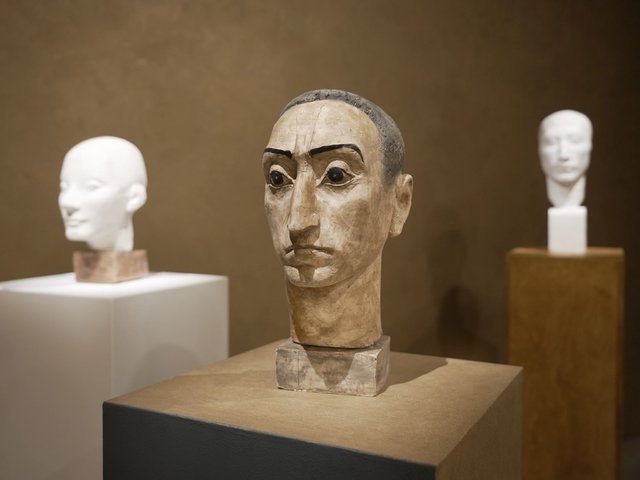
The Colombian artist Luis Fernando Zapata, presented jointly by Galería Elvira Moreno and Alonso Garcés Galería, represents one such case. Diagnosed HIV positive in the mid-1980s, Zapata increasingly turned towards mortality and transcendence in his work, such as in his final series of 12 sarcophagi, including Sarcofagi N° 9 (1992-94), which is in this section. “Yet rather than functioning simply as emblems of death,” Kempkes says, works such as Sarcofagi N° 9 possess the simplicity of cradles—“vessels of cosmic rebirth rather than merely funerary containers.”
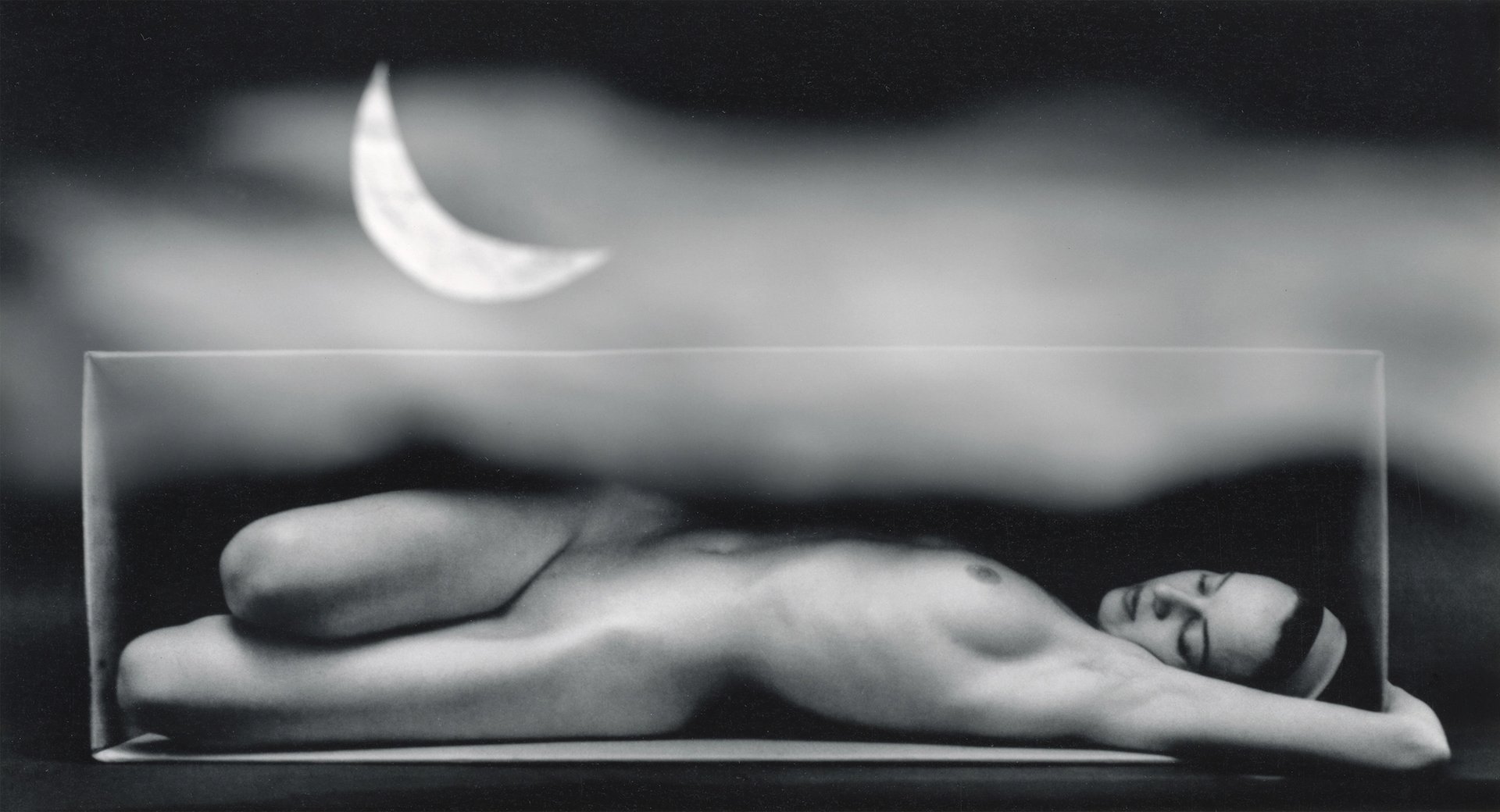
Moonrise (1962) by Ruth Bernhard is one of a number of the artist’s photographs presented by Galerie Albrecht Courtesy of Galerie Albrecht
While the work of these artists can be viewed through a queer lens, the dealer Susanne Albrecht, who is presenting the work of Ruth Bernhard on her Galerie Albrecht stand, is wary of reducing it to that category alone. “I don’t think the photographs are limited to the ‘queer’, but of course one can interpret her love of female bodies from a queer perspective,” she says. “You can sense the love and respect she feels for the female body, which is not merely a body. It has a soul. There is no voyeurism,” Albrecht says of Bernhard’s carefully staged images.
Bringing this history into a major art fair like Frieze Masters inevitably raises the question of what happens when the rediscovery of overlooked artists becomes part of the market.
Kempkes argues that the market itself can become a mechanism of art-historical recovery. Many queer artists lived outside conventional family structures and frequently had no direct heirs to safeguard their legacies, or, in other cases, family members rejected or distanced themselves from the content of the work they inherited, Kempkes explains. These circumstances have made the preservation and reconstruction of their work “particularly difficult”, and so the “extraordinary efforts” of participating galleries “should not be underestimated,” she says.
At the same time, Kempkes adds, “We should be careful not to assume that queer Modern artists were necessarily marginalised in their own time or remain undervalued today.” Many of the artists in Queering Modernism are “highly celebrated and sought-after figures within their respective geo-cultural contexts”, she says. And the rarity of available works shows that their market values are “already firmly established at a high level”.
Ultimately, Queering Modernism is about seeing Modernism in a different way. The artists at Frieze Masters come from different places and employ a variety of mediums and styles. Some were open about being queer, while others expressed it more secretly. Together, they show that queer art was an important part of 20th-century Modernism and help challenge ideas about modern life, identity and the body.