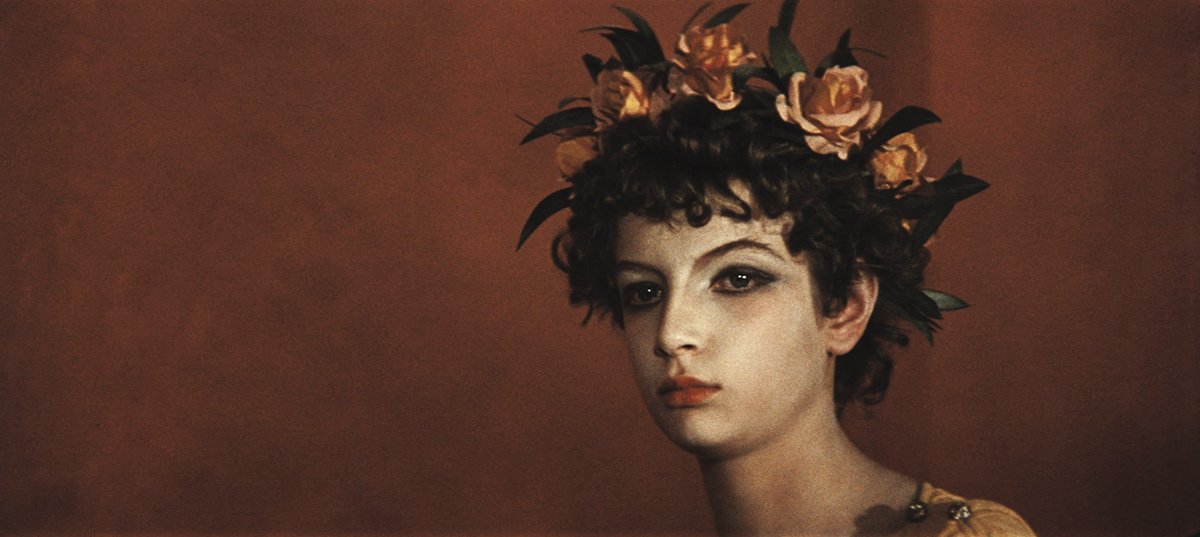
Recordings made by the castrato Alessandro Moreschi (1858-1922) remain some of the only documents that explain his enduring appeal. But the voice was not his only significant characteristic. His (adoptive) lineage connects him to another renowned artist, the Italian film-maker Federico Fellini. As the musicologist Martha Feldman explains, this relationship—Alessandra, the “last” castrato’s granddaughter, married Fellini’s brother Riccardo—can deepen our understanding of Fellini’s films and aesthetic, along with the complexities of Italian notions of masculinity in the 20th century.
Castrato Phantoms abounds with historical detail about the sacred and secular worlds through which both Moreschi and Fellini moved. It also explains how some of those boys from poor families who survived the mutilation (many died) developed such distinctive voices in later life, although very few achieved success as singers within the Catholic Church or European elite culture such as the Opera Seria.
Figures of curiosity
Feldman observes how, over the centuries, castrati were “endlessly displayed on stages, collected in scores and portraits, and latterly exhumed and scrutinised by scientific teams”. It is a passage that points to the parallel ways that castrati were objectified as figures of artistic veneration and scientific curiosity.
The most famous and idolised of all was Carlo Maria Broschi (1705-82), known as Farinelli, whose portrait was painted many times and then circulated via engravings across Europe. It is one of several ways in which Feldman explores castrati as an inherently paradoxical and contradictory subject. This paradox overlaps compellingly with the work of Fellini, where a puckish irreverence and a yearning for transcendence coexist.
Feldman’s exploration of the Fellini filmography turns up several instances where the artistic legacy of castrati can be felt, including the invocation of a beautiful singing voice in I Vitelloni (1953) and the presence of characters who elude gender norms, such as a hermaphrodite in Fellini Satyricon, the 1969 film based on the ancient Roman text. In her discussion of Fellini Satyricon, Feldman zeroes in on Fellini’s use of striking cinematic visuals alongside sound. She writes: “Once a cartoonist, Fellini famously turned Petronius’s text into near comic book cinema, assimilating its fragmentary, open nature to
that of Italy’s popular fumetti [‘little puffs of smoke’, the Italian name for comics].”
Angelic motif
Feldman connects castrato figures to “other angelic kinds” that became a motif across Fellini’s career, such as a trio of characters played by “the angelic Giulietta Masina” in several films.
As Feldman reveals, Fellini was not the only lauded artist to find Moreschi’s distinctive voice and onstage presence compelling. In a conversation included in a new edition of Vernon Lee’s collection Hauntings (2025), novelist and critic Gretchen Felker-Martin addresses how Lee (the pseudonym of Violet Paget) describes a character who transcends binary notions of gender: “… every time Zaffirino shows up, the narrative is consumed with how feminine he is and how beautiful he is, and how angry it makes the protagonist to look at him and see his beauty. It shows a really sophisticated understanding of not just what gender is and what gender roles are, but how people who are outside consideration of those roles react to their violation.”
Moreschi died in 1922, as Futurism was giving way to fascism in Italy and Benito Mussolini was gaining political power. Feldman points to the “Fascist fetishisations of heroic masculinity”, with one result involving “castrati being heaved out of conscious memory”.
As Feldman shows, the onscreen work of Fellini, along with Divorce Italian Style director Pietro Germi, serves as a kind of reclamation of the history of castrati, with all the paradoxes and complexities that accompany it.
• Martha Feldman, Castrato Phantoms: Moreschi, Fellini, and the Sacred Vernacular in Rome, Princeton/Zone Books, 480pp, 10 colour, 142 b/w illustrations, $38/£32 (hb), published February/April 2026 (US/UK)