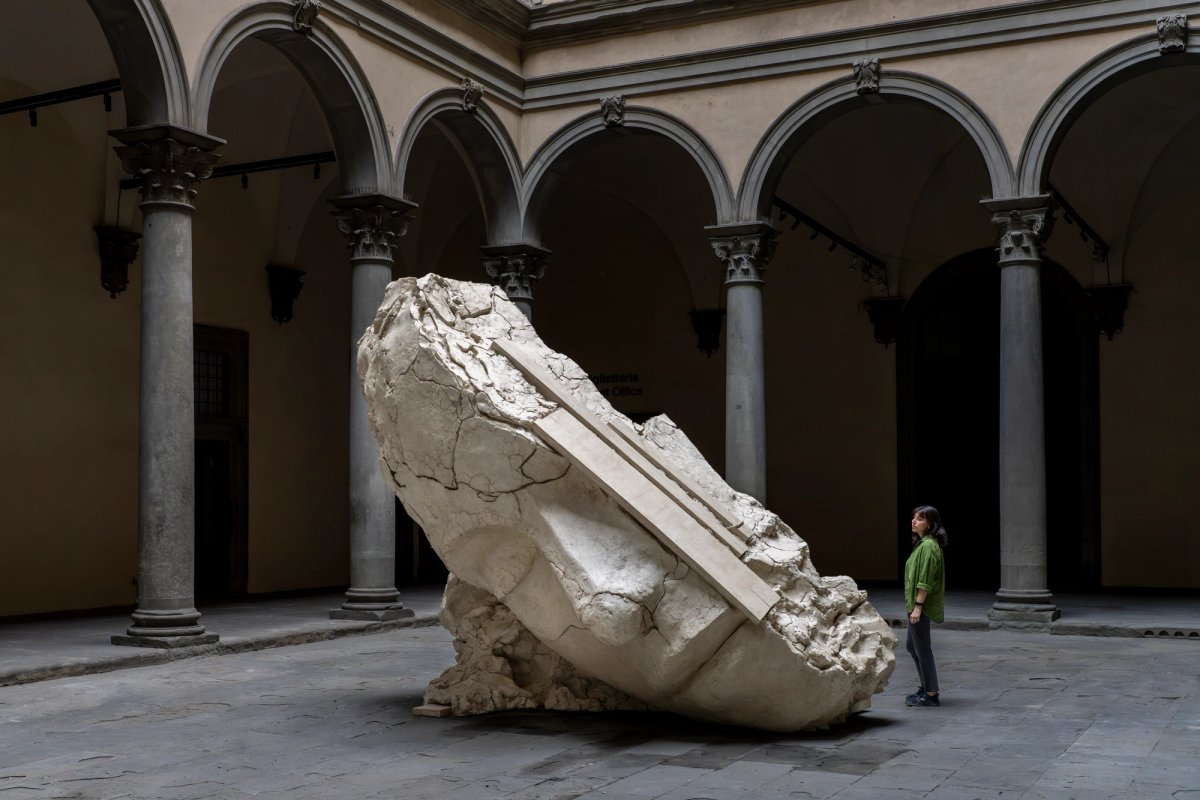
When a colleague at Washington, DC’s National Gallery of Art (NGA) remarked that he had always wondered what it would be like to curate an exhibition devoted to fragments, Claude Douglas Dickerson, then a curator at the museum, did not give the idea much thought. But during the Covid-19 lockdowns, as Dickerson began planning projects for the period after pandemic restrictions were lifted, he found himself returning to it.
“I began thinking about his idea and realising that there’s something about a fragment that is in need of exploring,” says Dickerson, who is now dean of the NGA’s Center for Advanced Study in the Visual Arts. “There are stories that can be unpacked that provide a kind of awareness and perspective that other exhibitions can’t provide.”
That realisation has resulted in Broken, a wide-ranging and eclectic exhibition spanning more than 4,500 years of global history, which will open this month at the Palazzo Strozzi in Florence before travelling, in a slightly modified form, to the NGA early next year. The two institutions have shared previous projects, including a 2015 exhibition of Hellenistic bronzes and a 2019 show dedicated to Verrocchio. Arturo Galansino, the director of the Palazzo Strozzi, says the museum was selected by the NGA because of its ability to host “complex, highly scholarly shows”.
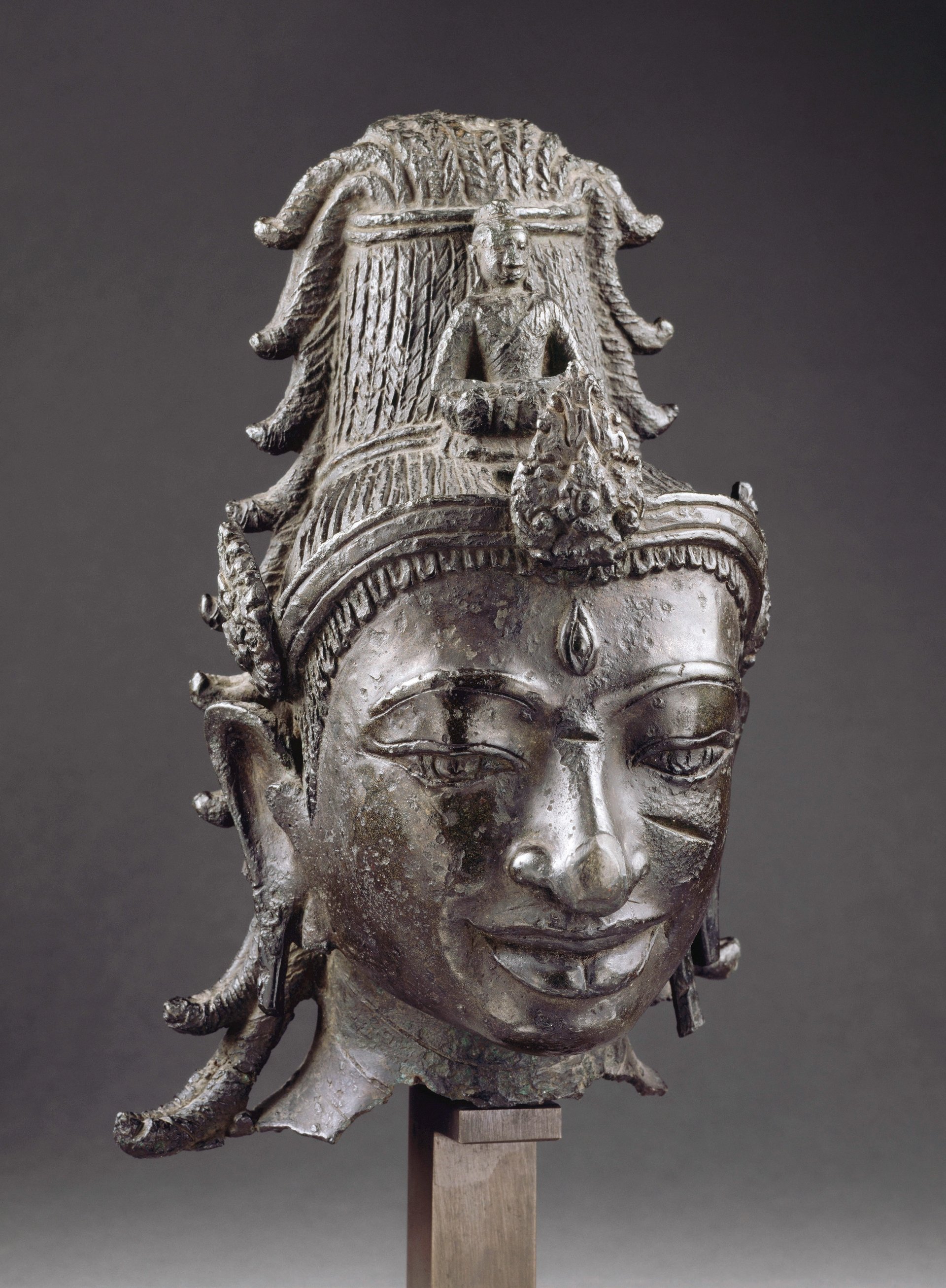
A broken head of Bodhisattva Avalokiteśvara (around AD700–800) appears in the show © RMN (Musée Guimet)/Thierry Ollivier
Bodhisattvas and dictators
The exhibition, curated by Dickerson with Andrew Sears, the NGA’s assistant curator of northern European paintings, will feature 80 works including ancient artefacts, Modern sculptures and contemporary pieces. Among them will be a copper head of the Buddhist Bodhisattva Avalokiteśvara (around AD700-800), a bust of the Italian dictator Benito Mussolini (1923) and a pastiche of an ancient sculpture by Francesco Vezzoli (2023).
Some works on display were destroyed through iconoclasm, vandalism, wars or natural disasters, while others were creataed by artists to look as though fragmented. Dickerson is particularly interested in how damaged works can sometimes provoke a stronger emotional response than intact ones. He sees them as a lens for looking at larger historical and cultural questions, such as why people destroy images and monuments, and how fragmentation has inspired artists.
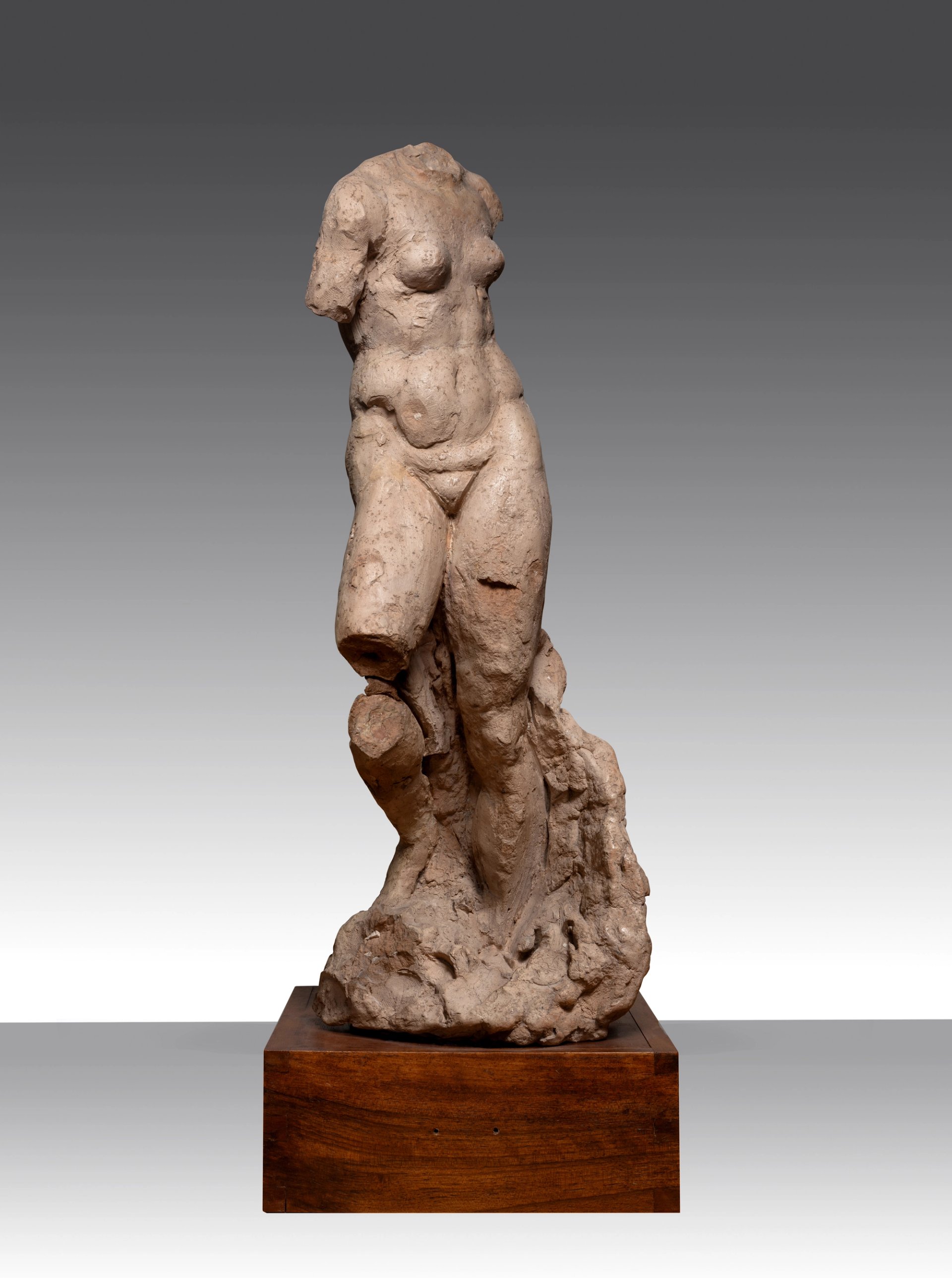
Michelangelo’s Model of a Nude Woman (around 1533)
The exhibition will feature major loans from institutions around the world, including a fragment of a right hand with a pointing finger from Rome’s Capitoline Museums, associated with Constantine the Great (emperor from AD313-324), which Dickerson describes as a “canonical fragment”. It also includes an ancient Mesoamerican figure (around AD150-250), lent by Mexico’s Museo Nacional de Antropología, which is believed to have been deliberately broken during a ritual killing.
Other highlights will include Michelangelo’s terracotta Model of a Nude Woman (around 1533), which new research suggests may have been intentionally created incomplete, with several body parts missing, such as the arms. Another work is a neo-Hittite sculpture (around 1000BC) excavated by German archaeologists in modern-day Syria, later placed in a museum and destroyed during Allied bombing in the Second World War. The sculpture was painstakingly reconstructed from hundreds of fragments over two decades.
One of the greatest challenges, Dickerson says, was deciding which objects to display. However, the curators have found space in the Florence presentation for a section devoted to the city’s devastating 1966 flood, which killed 35 people and damaged countless works of art. “In the 60th anniversary [year] of the floods, we wanted to explore how sculptures are challenged by climate problems,” Galansino adds.
• Broken, Palazzo Strozzi, Florence, 25 September- 24 January 2027; National Gallery of Art, Washington, DC, 13 March-27 June 2027