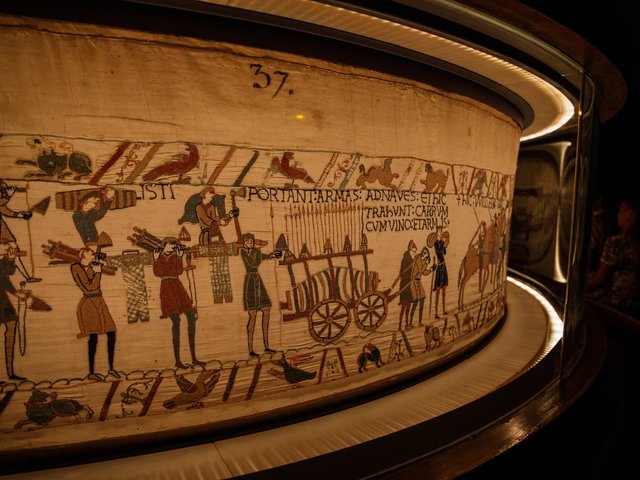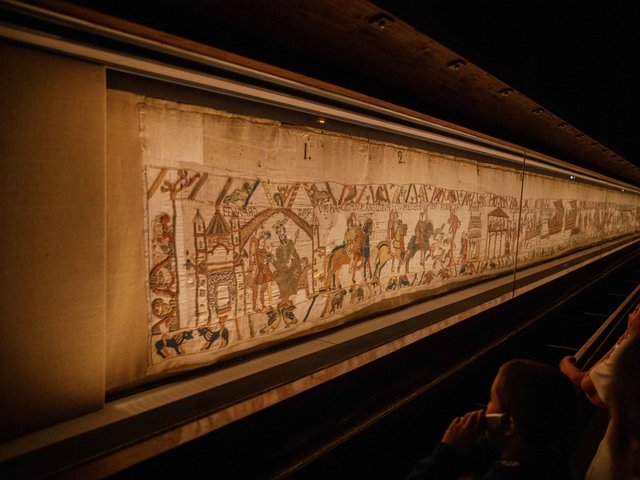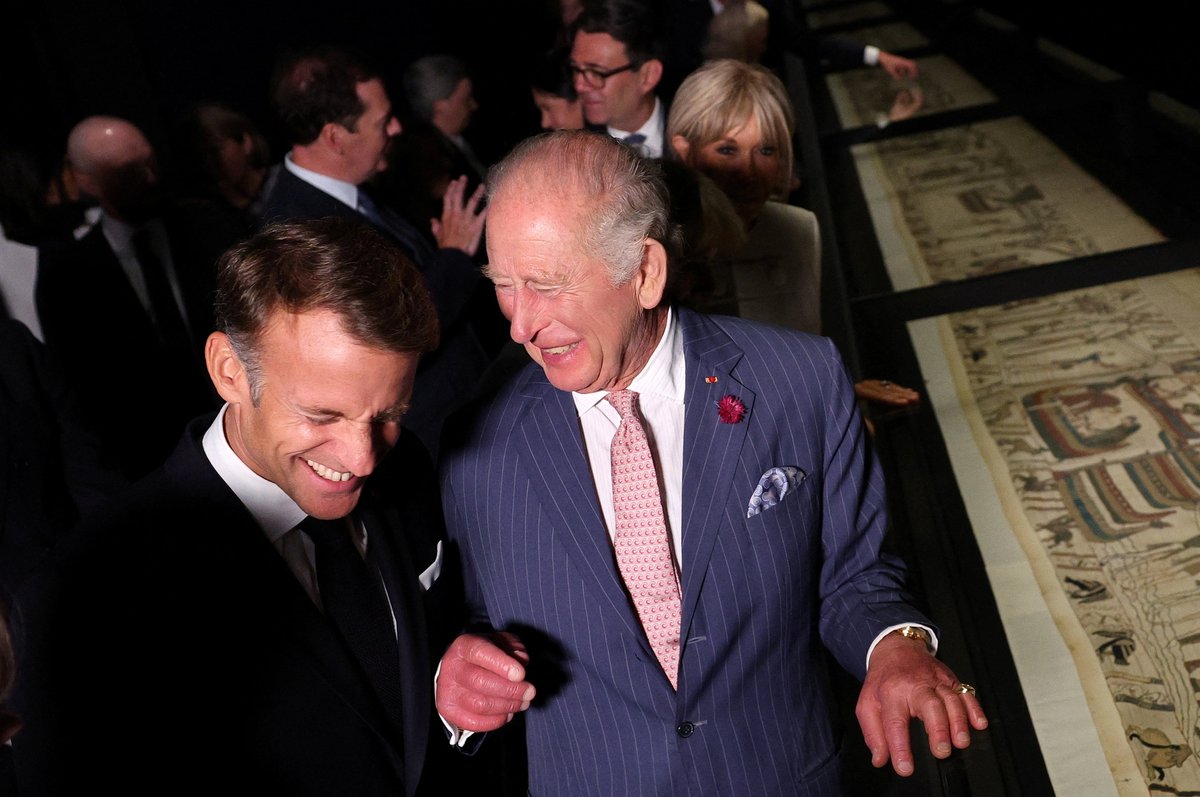
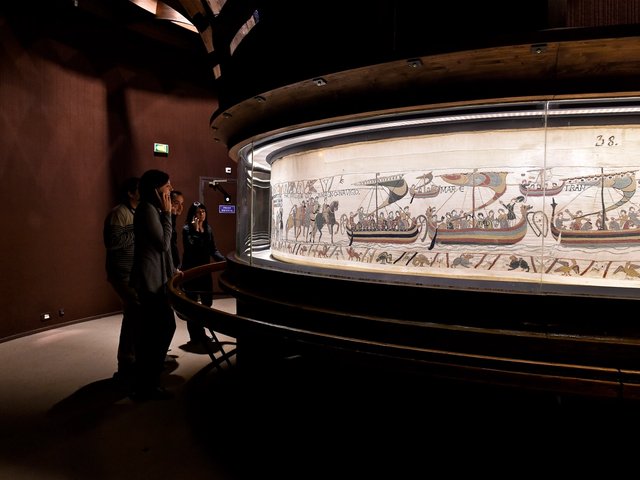
Cultural diplomacy reached new heights at the British Museum yesterday when King Charles III and President Emmanuel Macron of France viewed the Bayeux Tapestry before its long-awaited opening to the public next week. The King said in a speech that the exhibition in London is an example of how “we are united” and a “reminder of what our countries can do if they join forces”.
He added that the tapestry’s tale “is not merely an English story, nor only a Norman one. Indeed, from the moment of its creation, it may have brought together our two peoples: commissioned in Normandy, yet most likely to have been embroidered in Canterbury by English craftspeople. The Bayeux Tapestry, or the Canterbury Embroidery as it might just have been called, recounts a conflict, yet here it is today, nearly a thousand years later, as a precious symbol of trust, at a time when trust seems sadly to be in short supply between nations.”
The King also joked that the tapestry is safe following its journey in July by lorry through the Channel Tunnel on a 350-mile trip reportedly lasting 11 hours, according to The Telegraph. “It’s very well insured,” the King told Macron.
Macron meanwhile said in his speech that negotiations over the tapestry loan “required a little patience”, adding that “since the first British request dates back to 1931, I choose to regard eight years as something of a speed record”. The French President first announced the possible loan at an Anglo-French summit with Theresa May, then the prime minister, at Sandhurst in 2018.
The chair of the museum trustees, George Osborne, highlighted that the loan was negotiated by three UK prime ministers: May, the former Labour leader Keir Starmer and the current prime minister Andy Burnham, also in attendance, who quipped: “Thank you for this elaborate, 70m reminder of Britain’s biggest defeat.”
The Bayeux Tapestry, which depicts the 1066 Norman invasion and the Battle of Hastings, will be displayed in the Sainsbury Exhibitions Gallery from 10 September until 11 July 2027, while the Bayeux Tapestry Museum undergoes renovations.
The lead curator of the exhibition, Michael Lewis, told the Maxwell Museums newsletter how the loan was subsequently made possible by the museum shutting down. “Crucial in the timing of the loan this time is the closure of the Bayeux Tapestry Museum [in Normandy], which shut in September 2025, so that it can be extended and refurbished,” he said.
The British Museum also secured the loan over rival venues, such as the Victoria and Albert Museum, because when it was announced last year that the tapestry would come to the British Museum, “it was clear that no other space could realistically display it, especially in the 14-month time scale”, said Lewis.
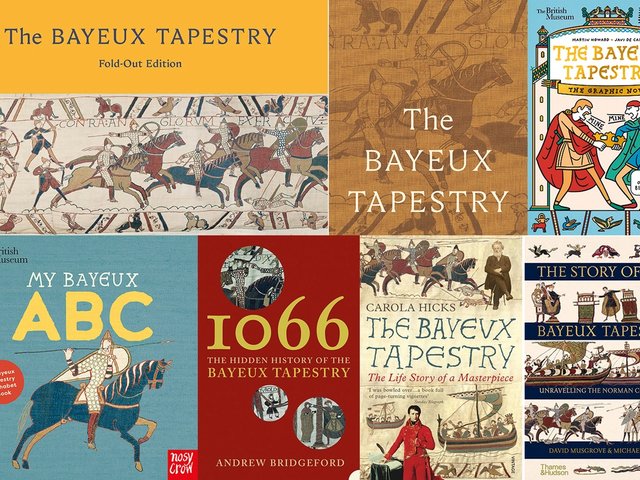
He also revealed he is working with his French colleagues on what “scientific testing of the tapestry we could do when it is conserved, a few years down the road. Little is known about the material aspects of the tapestry (like where the wool is from and the processes of producing the tapestry) that could be tested by science.” The Story of the Bayeux Tapestry: Unravelling the Norman Conquest by Lewis and David Musgrove (Thames & Hudson, 2021) has been revised and updated.