Digital Editions
Newsletters
Subscribe
Digital Editions
Newsletters
Art market
Museums & heritage
Exhibitions
Books
Podcasts
Columns
Art of Luxury
Adventures with Van Gogh
Venice Biennale
Art market
Museums & heritage
Exhibitions
Books
Podcasts
Columns
Art of Luxury
Adventures with Van Gogh
Venice Biennale
Exhibitions
preview

Unbridled enthusiasm for the art of horse racing on show in France

Exhibition at Domaine de Chantilly is the first on the development of the painting tradition

Anna Brady
25 June 2018
Share
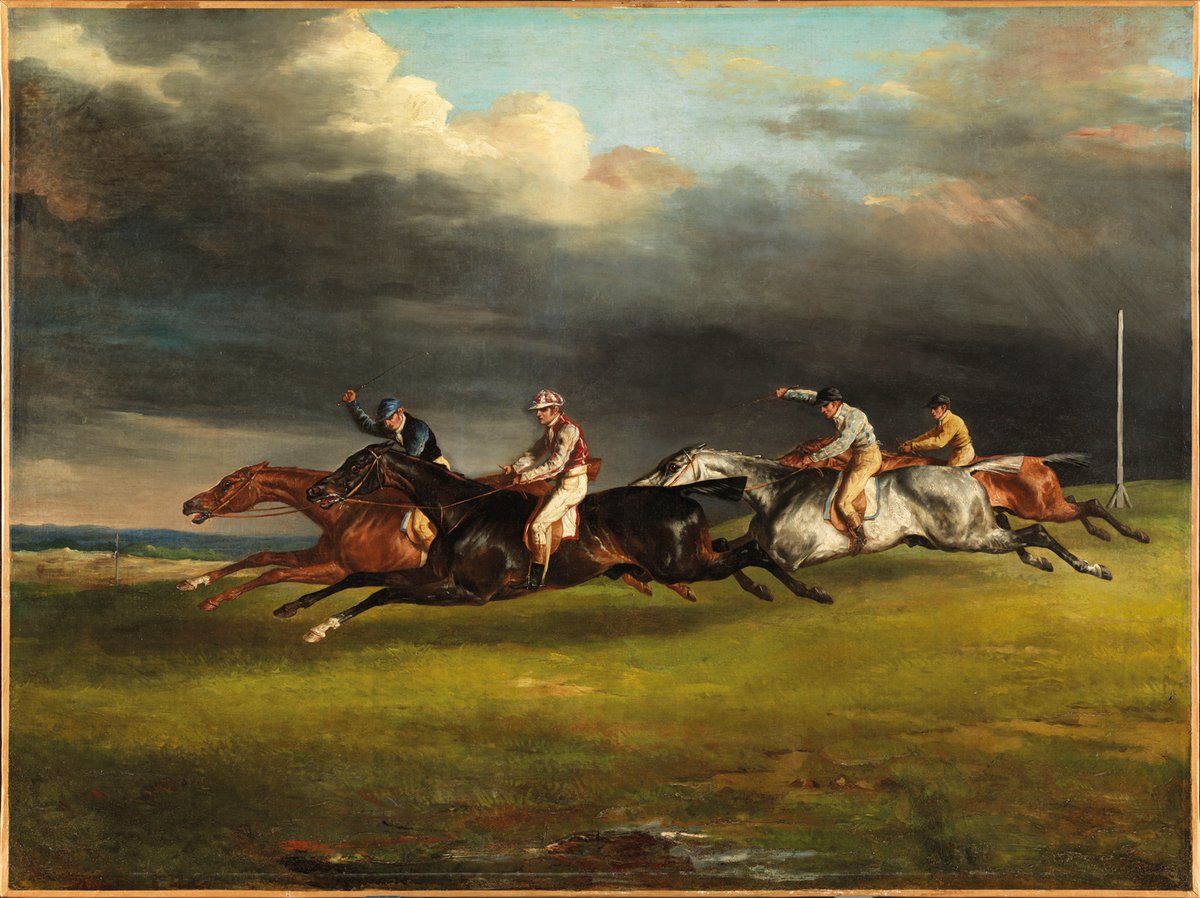
Théodore Géricault’s Epsom Derby (1821) painted after the artist trained in London RMN, Grand Palais—Philippe Fuzeau

Théodore Géricault’s Epsom Derby (1821) painted after the artist trained in London RMN, Grand Palais—Philippe Fuzeau

Animals moving at speed make a cruel yet addictive mistress for artists. Horse racing, where horseflesh combines with the curious societal mix of the crowd, proved a captivating subject matter for French and British artists throughout the 18th and 19th centuries, as illustrated by Painting the Races, the first exhibition concentrating on the development of the horse race painting tradition.

Chantilly, the spiritual home of French racing, makes a fitting location for the show of around 70 works (including paintings, drawings, sculptures, photographs and films), with a focus on George Stubbs, Théodore Géricault and Edgar Degas.

Organised in collaboration with the Museum of the Horse, the exhibition aims “to underline the equestrian culture and deep identity of the city”, says the co-curator Henri Loyrette. This is a peculiarly Franco-British obsession and is “a reflection of a specific equine culture, found in France and England”, Loyrette says. It was also lucrative: “Artists chose to depict horse races in order to expand their clientele,” Loyrette adds.

The show opens with anatomical studies and racing scenes by Stubbs, father of English sporting art, and makes the case for the influence of this British tradition upon French painters, specifically Géricault, as illustrated by the enormous Epsom Derby (on loan from the Louvre) painted by the French artist after training in London.

The exhibition also explores Degas’ use of racing as a means of reflecting the birth of modernity, which is carried on by artists such as Édouard Manet, Ernest Meissonier and Henri de Toulouse-Lautrec. In a nod to the birth of cinema, a film by Eadweard Muybridge of a horse galloping will be screened in the final room. In the age of the horseless carriage, capturing the horse in flight continued to be a metaphor for progress and modernity.

The main sponsor of the exhibition is the Swiss watchmaker Longines.

• Painting the Races, Domaine de Chantilly, Chantilly, 16 June-14 October
Subscribe to our daily newsletter

ExhibitionsPreviewPaintingFranceChantillyGeorge Stubbs
Share
Subscribe to The Art Newspaper’s digital newsletter for your daily digest of essential news, views and analysis from the international art world delivered directly to your inbox.
Newsletter subscribe
Information
About
Contact
Cookie policy
Data protection
Privacy policy
Frequently Asked Questions
Subscription T&Cs
Terms and conditions
Advertise
Sister Papers
Sponsorship policy
Follow us
Instagram
Bluesky
LinkedIn
Facebook
TikTok
YouTube
© The Art Newspaper

Related content

Exhibitionspreview
29 January 2018

Thomas Cole's Old World roots and art-world inspirations examined in transatlantic show

Exhibition on US painter opens at New York's Metropolitan Museum of Art before travelling to London

Donald Lee
Exhibitionspreview
23 June 2023

Beyond Picasso: the other Guernicas are brought together for exhibition in northern France

Artist responses to the 1937 bombing in the Basque Country include René Iché's disturbing sculpture and a piece by protégé of Henri Matisse

Claudia Barbieri Childs
Exhibitionspreview
2 March 2023

Degas and Manet’s ‘mix of friendship and rivalry’ chronicled in major new show

Despite disagreements and a spot of canvas slashing, it was one of the most significant relationships in art history—as a new exhibition at the Musée d’Orsay in Paris demonstrates

Ben Luke